
Category: Recommended Reading
The Writings of Bruno Schultz
Robert Looby at the Dublin Review of Books:
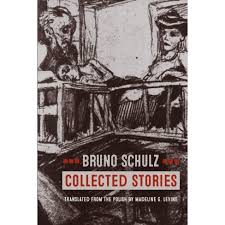 Lovers of a spare prose style, not to mention tight plotting, may be disappointed by Bruno Schulz:
The world lay mute, unfolding and rising somewhere above, somewhere behind and deep inside – blissfully powerless – and floated on. At times it slowed and vaguely resembled something, it branched out in trees, grafted onto the gray day a thick, glistening net of bird twittering that had been thrown over it, and moved deep into the subterranean snakelike tangle of roots, into the blind pulsing of worms and caterpillars, the muffled darkness of chernozem and clay.
Born in 1892 in a part of Poland that now lies in Ukraine, Schulz’s “biography was monotonous and largely unvaried – as grey as the life of a provincial drawing teacher can be”, writes Jerzy Jarzębski in Poland’s National Library edition of Schulz’s works. Jerzy Ficowski, dedicated student and biographer of the writer, calls Schulz’s three-week trip to Paris his only international excursion, although in an earlier book he writes that Schulz spent several months studying in Vienna. Schulz also visited Stockholm, in 1936, and corresponded with the likes of Julian Tuwim, Witkacy (Stanisław Ignacy Witkiewicz) and Witold Gombrowicz, leading lights of 1930s Polish literature, among whose ranks he has long been counted.
more here.
Why The Novel Matters
Howard Jacobson at the TLS:
 To read a novel by D. H. Lawrence is to acquire – not always without resistance – a language of the feelings that is new to us: words we thought we knew well already are made to work in unexpected ways, locating places in the human heart we didn’t know existed, even changing what we understand by human nature. What else, we now ask, were those words ever for? To read Henry James is to inhabit an unaccustomed grammar of thought. Some readers find James’s style tortuous; but those snaking parentheses sharpen our wits; without them we will not keep up with the moral quandaries and vacillations of his characters. They are markers, not just of our penetration, but of our emotional largesse. We are inclined to believe it’s the characters in a novel that extend our sympathies. “We are all of us born in moral stupidity”, George Eliot tells us, whereupon, chastened, we practise acts of reflective empathy on Mr Casaubon. But it is truer to say that it is first of all a novel’s language – its syntactical orchestration of our thinking and feeling faculties – that enables us to go where George Eliot wants us to go, to conceive another person’s equivalence of self with what she rather wonderfully calls “that distinctness which is no longer reflection but feeling”.
It’s good for us, morally – it makes us larger of mind – to see how well Tony Soprano loves his family while he’s wiping out other people’s. But we don’t feel his breath on our neck as we do that of the half-dead murderer Meursault in Camus’s The Stranger.
more here.
(Still) Rethinking the Origins of the Nag Hammadi Codices
Nicola Denzey Lewis at The Marginalia Review of Books:
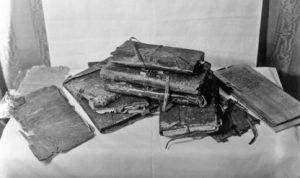 The find story of the Nag Hammadi codices is well known to anyone who works in the field of Gnosticism or early Christian literature. There is no point in rehearsing the beginning of the story here in detail; it can be distilled into these central themes: an illiterate peasant, a search for fertilizer gone awry, and the fortuitous discovery of a mysterious jar deep in the Egyptian wilderness containing ancient secret books. But the story does not end there. In this tale of intrigue, the codices themselves emerge as the new romantic heroines of the story. Narrowly escaping their own destruction by fire, the books are hidden and then smuggled, alternately recognized for their value and treated as virtually worthless, passed through multiple hands of people who only exploit them, and hastily dumped or traded for a scandalous price: some tea, some sugar, a bag of oranges. According to the common story, the codices are even witnesses to a gory act of murder, “the ultimate act of blood vengeance,” as Mohamed Ali al-Samman, the peasant in question, slaughters with his brothers the man who a few months before killed their father, tearing out his heart and “devouring it on the spot.”
Even as find stories of ancient documents go, this tale has many compelling elements: a mysterious and exciting discovery; an almost lovably superstitious protagonist; a clueless old woman who almost ruins everything by tossing precious manuscript pages in the fire; exotically dangerous fellaheen who ride through the desert on camels or in jeeps, brandishing rifles and scimitars and whatever else they use to slaughter one another; and finally a happy resolution as the codices are rescued from an ignominious fate and delivered safely into the knowing hands of Western scholars. It’s thoroughly Orientalizing, and, when you think about its lurid details, quite implausible.
more here.
Dying Organs Restored to Life in Novel Experiments
Gina Kolata in The New York Times:
 When Georgia Bowen was born by emergency cesarean on May 18, she took a breath, threw her arms in the air, cried twice, and went into cardiac arrest. The baby had had a heart attack, most likely while she was still in the womb. Her heart was profoundly damaged; a large portion of the muscle was dead, or nearly so, leading to the cardiac arrest. Doctors kept her alive with a cumbersome machine that did the work of her heart and lungs. The physicians moved her from Massachusetts General Hospital, where she was born, to Boston Children’s Hospital and decided to try an experimental procedure that had never before been attempted in a human being following a heart attack. They would take a billion mitochondria — the energy factories found in every cell in the body — from a small plug of Georgia’s healthy abdominalmuscle and infuse them into the injured muscle of her heart. Mitochondria are tiny organelles that fuel the operation of the cell, and they are among the first parts of the cell to die when it is deprived of oxygen-rich blood. Once they are lost, the cell itself dies. But a series of experiments has found that fresh mitochondria can revive flagging cells and enable them to quickly recover.
…The idea for mitochondrial transplants was born of serendipity, desperation and the lucky meeting of two researchers at two Harvard teaching hospitals — Dr. Emani at Boston Children’s and James McCully at New England Deaconess Hospital. Dr. Emani is a pediatric surgeon. Dr. McCully is a scientist who studies adult hearts. Both were wrestling with the same problem: how to fix hearts that had been deprived of oxygen during surgery or a heart attack. “If you cut off oxygen for a long time, the heart barely beats,” Dr. McCully said. The cells may survive, but they may never fully recover. While preparing to give a talk to surgeons, Dr. McCully created electron micrographs of damaged cells. The images turned out to be revelatory: The mitochondria in the damaged heart cells were abnormally small and translucent, instead of a healthy black.
…Dr. McCully moved to Boston Children’s, and he and Dr. Emani prepared to see if the new technique might help tiny babies who were the sickest of the sick — those surviving on Ecmo.
…He injected a billion mitochondria, in about a quarter of a teaspoon of fluid. Within two days, the baby had a normal heart, strong and beating quickly. “It was amazing,” Dr. Emani said.
More here.
Tuesday Poem
Nativity: For Two Salvadoran Women, 1986-87
Your eyes, large as Canada, welcome
this stranger.
We meet in a Juárez train station
where you sat for hours,
your offspring blooming in you
like cactus fruit,
dresses stained where breasts leak,
panties in purses tagged
“Hecho en El Salvador,”
your belts like equators,
mark north from south,
border I cannot cross,
for I am an American reporter,
pen and notebook, the tools
of my tribe, distance us,
though in any other era I might
press a stethoscope to your wounds,
hear the symphony of the unborn,
finger forth infants to light,
wipe afterbirth, cut cords.
It is impossible to raise a child
in the country.
Sisters, I am no saint, just a woman
who happens to be a reporter,
a reporter who happens
to be a woman,
squat in a forest, peeing
on pine needles,
watching you vomit morning sickness,
a sickness infinite as the war in El Salvador,
a sickness my pen and notebook will not ease,
tell me, ¿Por qué están aqui?
How did you cross over?
In my country we sing of a baby in a manger,
finance death sqauds,
how to write of this shame,
of the children you chose to save?
It is impossible to raise a child
in the country.
A North American reporter,
I smile, you tell me you are due
in December, we nod,
knowing what women know,
I shut my notebook,
watch your car rock
through the Gila,
a canoe hanging over the windshield
like the beak of an eagle,
babies turning in your wombs,
summoned to Belén to be born.
by Demeteria Martínez
from After Aztlan
David Godine, Publisher, 1992
~~~~~~~~~~~~~~~~~~~~~~
Gila- Gila National Forest, New Mexico USA
Belén – Belén, New Mexico USA
Monday, July 9, 2018
Perceptions

Passive Voice
by Gabrielle C. Durham
Folks love to pick on passive constructions. “Passive sentences are too wordy. They are unclear. They gave me a bruise.” Two out of three of these are objectively wrong. The third I can’t help you with.
Passive voice provides a valuable service. We all know when something bad happens, even if we do not know who or what caused the bad. The perfect opportunity to use the passive presents itself on such an occasion. If you insist on using active voice, you are forced to use the sloppy “someone” or “something” as the agents of nefariousness.
The house was destroyed, the livestock abducted, and the women were observed to be strangely beatific.
Something destroyed the house, someone abducted the livestock, and the absence of useless husbands pleased the women greatly.
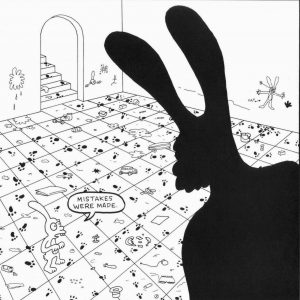
Don’t get it twisted: The passive is not going to fit the bill every time. Reagan’s professing that “Mistakes were made” illustrates the weakness of the passive voice. No one is accountable in the passive, unless you consider whatever mealy-mouthed alleged subject follows the preposition “by.”
Your bicycle was run into by me in my car.
Eww. This is the verbiage of bureaucratic nightmare. Read more »
Catspeak
by Brooks Riley

Where do you live?
by Christopher Bacas
Because we remained so long in Housing Court’s trash-strewn orbit, Management assigned us our own agent. Every week, I saw Hassidim in our lobby. One was bigger than the others, with a jellied midsection spilling over pants, bowing his long black lapels. He moved like a man barely acclimated to walking; legs chugging ahead, thighs rubbing, wisps of beard waving cilia-like from his jowls.
To introduce our new handler, Matthew, the property manager, came by. He was a small man who always spoke quickly, words folding back on each other, nervous laughter erasing their authority.
“This is Jo-El. He doesn’t work for me (chuckle, chuckle), the landlord brought him on to work with the building.”
In fact, our landlord’s name was posted on a public list of “New York’s Worst Landlords”. I submitted the open violations in our building to the Public Advocate and within days, his name appeared. The new arrangement was designed to get the owner off that embarrassing list. Jo-El wasn’t a lawyer by training, he was a fixer. His fixing kept broken things broken.
We shook hands. Jo-El didn’t smile. He pressed his lips together and looked down. Read more »
Parenting Tips From a Bachelor
by Max Sirak
 It turns out you learn a lot when you write a book. This may seem counterintuitive. Perhaps you think, “Well, that’s dumb. If you write a book about something you should already be an expert on it.”
That’s a fair way to feel and thing to say.
However, my situation is slightly more unique. See, I don’t write books on subjects I’m an expert in. (I’m not even sure if such subjects exist.) My job as a ghostwriter is to help other people write books in their fields of expertise. It goes like this: most people spend their lives practicing and learning all they can in their fields. Then, after years of gaining proficiency, there almost inevitably comes a time for them to share their hard- won wisdom. The best way to do this, they figure, is to write a book.
That’s where I come in. Usually, the process of becoming a badass in a given field doesn’t entail much writing. Sometimes it does, certainly. But most occupations don’t involve a lot of “writing.” Paperwork? Probably. Reports to fill and file? Likely. But there’s where the pen stops.
So, most folks have spent all their time working toward being the best whatever-it-is-they-are, not writing. I, on the other hand, write every day. Which means, when it comes time for others to share what they’ve learned with the masses, I can help.
And that, friends, is why you are now being treated to a single, kidless guy’s thoughts on parenting. Read more »
Sunday, July 8, 2018
The ‘Two Cultures’ Fallacy: Stop pitting science and the humanities against each other
Jennifer Summit and Blakey Vermeule in the Chronicle of Higher Education:
 When we were teaching at Stanford in the late 2000s, the terms “techie” and “fuzzy” became cultural touchstones: The “techies” majored in engineering and the sciences, the “fuzzies” in arts and the humanities. Faculty and administrators deplored those words, and students furiously debated them, but the terms — and the split they describe — have become an unshakable stereotype.
Of course, polarization between the humanities and the sciences is by no means unique to Stanford. We hear it when politicians challenge public universities to justify spending on departments outside STEM fields; we hear it when humanities scholars counter that the value of their fields transcends practical application. Defenders of the humanities insist that they teach foundational values and skills; their detractors taunt them for offering “worthless” degrees.
The terms of the debate have become so familiar that speakers on both sides, however vehement or heartfelt their arguments, appear to be reading from a well-worn script. So ingrained is this conflict that it is easy to believe it describes a fundamental division in human knowledge. Although we are literary scholars, we are not here to defend the humanities against the sciences, but instead to show how an age-old debate has both created the division and can show the way past it.
More here.
The Neuroscience of Pain
Nicola Twilley in The New Yorker:
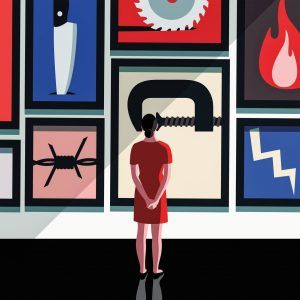 For scientists, pain has long presented an intractable problem: it is a physiological process, just like breathing or digestion, and yet it is inherently, stubbornly subjective—only you feel your pain. It is also a notoriously hard experience to convey accurately to others. Virginia Woolf bemoaned the fact that “the merest schoolgirl, when she falls in love, has Shakespeare or Keats to speak her mind for her; but let a sufferer try to describe a pain in his head to a doctor and language at once runs dry.” Elaine Scarry, in the 1985 book “The Body in Pain,” wrote, “Physical pain does not simply resist language but actively destroys it.”
The medical profession, too, has often declared itself frustrated at pain’s indescribability. “It would be a great thing to understand Pain in all its meanings,” Peter Mere Latham, physician extraordinary to Queen Victoria, wrote, before concluding despairingly, “Things which all men know infallibly by their own perceptive experience, cannot be made plainer by words. Therefore, let Pain be spoken of simply as Pain.”
But, in the past two decades, a small number of scientists have begun finding ways to capture the experience in quantifiable, objective data…
More here.
Essays That Make Sense of the Infinite and the Infinitesimal
Parul Sehgal in the New York Times:
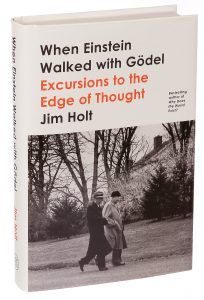 “My ideal is the cocktail-party chat,” [Jim Holt] writes in the preface to his new essay collection, “When Einstein Walked with Gödel,” “getting across a profound idea in a brisk and amusing way to an interested friend by stripping it down to its essence (perhaps with a few swift pencil strokes on a napkin). The goal is to enlighten the newcomer while providing a novel twist that will please the expert. And never to bore.”
In these pieces, plucked from the last 20 years, Holt takes on infinity and the infinitesimal, the illusion of time, the birth of eugenics, the so-called new atheism, smartphones and distraction. It is an elegant history of recent ideas. There are a few historical correctives — he dismantles the notion that Ada Lovelace, the daughter of Lord Byron, was the first computer programmer. But he generally prefers to perch in the middle of a muddle — say, the string theory wars — and hear evidence from both sides without rushing to adjudication.
The essays orbit around three chief concerns: How do we conceive of the world (metaphysics), how do we know what we know (epistemology) and how do we conduct ourselves (ethics).
More here.
The Original American Dogs Are Gone and The closest living relative of the precolonial canines isn’t even a dog, It’s a contagious cancer
Ed Yong in The Atlantic:

Between 14,000 and 18,000 years ago, the ancestors of today’s Native Americans first entered the land where they now live. They came from Asia, walking east across a broad land bridge that connected the two continents, snaking south past a stretch of retreating glaciers, and eventually spreading across a new land. A few millennia later, dogs followed them.
The origin of those indigenous American dogs is unclear—as is their fate. Some say they were wiped out after European colonizers arrived in the 15th century, bringing their own dogs with them. Others believe their genes still exist in modern-day Chihuahuas and Xolos.
A team of researchers, led by Laurent Frantz, Greger Larson, and Elizabeth Murchison, has now settled the debate. By analyzing DNA from 71 archeological dog remains and comparing them to the genomes of modern breeds, the team showed that the indigenous dogs all but died out. There are tiny traces of their DNA in modern dogs, but that genetic legacy is so faint that it might not be real.
More here.
Straight Talk on Trade: Ideas for a Sane World Economy
Jeff Madrick in the New York Review of Books:
 In 1997, when Dani Rodrik, a Turkish-born professor at Harvard’s Kennedy School of Government, published his brief book Has Globalization Gone Too Far?, progressive economists widely embraced his arguments that many free trade policies adopted by the US, which reduced tariffs and other protections, also weakened the bargaining power of American workers, destabilized their wages, and encouraged social conflict. “The danger,” Rodrik wrote presciently, “is that the domestic consensus in favor of open markets will ultimately erode to the point where a generalized resurgence of protectionism becomes a serious possibility.” I remember that Robert Kuttner, the coeditor of The American Prospect, was particularly enthusiastic about the book. Almost twenty years later, he again praised Rodrik for his continued devotion to an empirically grounded skepticism of what Rodrik now calls “hyperglobalization.”
Has Globalization Gone Too Far? challenged a mainstream economic belief that in 1997 was accepted with increasing fervor: that reducing tariffs to encourage trade almost always resulted in a healthier, more rapidly growing economy for all nations. If some workers in industries that directly competed with rising imports lost their jobs or had their wages reduced, it was assumed that the economy would create enough new jobs to compensate.
More here.
Fiction and lies stir Immigrant, “Montana” author Amitava Kumar
Charlie Smith in the Georgia Straight:
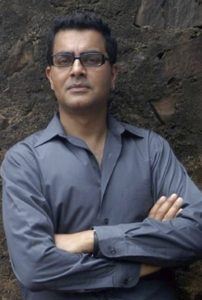 Novelist, poet, and essayist Amitava Kumar has often pondered the differences between a writer and a rioter.
The Indian-born Vassar College professor of English is well aware of how demagogues can provoke violence.
It’s occurred on several occasions in his country of origin: in 1984 with a pogrom targeting Sikhs, in 1992 with communal riots following the demolition of a mosque in Ayodhya, and in 2002 with a massacre of Muslims in the western state of Gujarat.
“What sets people’s imagination afoot so that they go crazy and burn down a neighbourhood?” Kumar asked in a recent phone interview with the Georgia Straight. “What is said by the person holding a megaphone inciting a crowd, or what is said by someone who incites a rumour? And what is the difference between that person and me, sitting in my room imagining something, telling a story?”
More here.
Sean Carroll – What Can We Know in a Super-Large Universe?
Women’s anger is not to be ignored
Melanie McFarland in Salon:
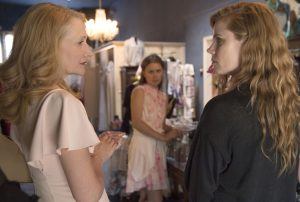 Some nightmares, the worst ones, move so slowly that you don’t wake up from them right away. The terror feels normal, even though you may know something’s not right. It’s a usual sort of bad feeling, typical enough to fool the mind into believing that you may be awake. That is, until the monster shows up. Only then does the brain recognize it is inside something that isn’t real. “Sharp Objects,” HBO’s latest limited series from “Dietland” creator Marti Noxon and Jean-Marc Vallée, and based on a novel by Gillian Flynn (“Gone Girl”), reproduces that sensation throughout the seven of its eight episodes that were provided for review.
…Flynn’s debut novel was published 12 years ago, and the mystery at its center could have been explored in any time and feel just as affecting. But if the vein of resentment and inwardly directed rage feels relevant to 2018, it’s because Flynn, Noxon and the series’ other writers are simply acknowledging that it has always been there. That said, “Sharp Objects” does not serve as a piece that speaks to the modern female insurgency in politics and culture as much as it states that a woman’s anger is evergreen, and not something to be ignored, chastised into complacence or medicated into invisibility. That the agency she gains as she matures into womanhood has value on its own. In the end, this is a story about control. Camille, a journalist for the St. Louis Chronicle, returns to the hometown she ran from to pursue a story about two missing girls, one her editor Curry (Miguel Sandoval) hopes may inspire prize-worthy coverage. And her presence agitates the place as much as the crime she’s looking into. Camille is an unwelcome bridge to a land the people of Wind Gap would rather not occupy, as much of an outsider as the Kansas City detective Richard Willis (Chris Messina) who comes in to investigate when girls start turning up dead. She’s an independent, unmarried woman in a “traditional” small Southern town.
More here.
Moorfield Storey
Geoffrey Austrian in Harvard Magazine:
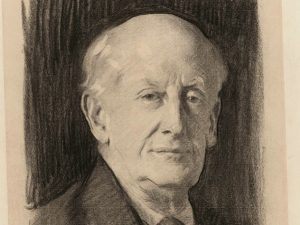 ON JUNE 15, 1898, when Moorfield Storey, A.B. 1866, stood up to speak in Boston’s historic Faneuil Hall, the United States had just invaded the Philippines, promising the inhabitants their freedom—only to quickly renege on its word. Storey was incensed. “A war begun to win the Cubans the right to govern themselves,” he proclaimed, “should not be made an excuse for extending our sway over other alien peoples.” His speech sparked a movement that raced across the country, and he became the first president of the newly formed Anti-Imperialist League. Born into a long-settled family, comfortable but not wealthy, Storey gained the sense of security he needed to chart an independent course. He inherited from his abolitionist mother, Elizabeth Moorfield, a tenacious adherence to the high principles that characterized his life.
…He was one of the prominent, mostly white, Americans who gathered, six months after a bloody race riot in Lincoln’s hometown of Springfield, Illinois, and founded the NAACP in February 1909; in 1910 he was named its president, a post he held until his death. As a former American Bar Association (ABA) president and noted constitutional lawyer, he contributed prestige and hard work to the new group as its legal counsel. In 1913, the NAACP filed its first brief, in Guinn v. United States, a case before the U.S. Supreme Court challenging the legitimacy of the so-called grandfather clause—a statutory provision in some Southern states that disenfranchised black voters by specifying that men whose grandfathers were not voters before the Civil War could not themselves vote. The court ruled in 1915 that such a clause was unconstitutional.
More here.