
Joshua Craze in Sidecar:
The 15 April marked the two-year anniversary of a civil war in Sudan that has left tens of thousands dead and millions displaced. I published an essay in Sidecar, ‘Gunshots in Khartoum’, two days after the war began, which tried to trace its emergent lineaments. The conflict initially pitted the Sudanese army against the Rapid Support Forces (RSF) – a paramilitary organization formed during the reign of dictator Omar al Bashir (1989-2019). In the war’s first weeks, the RSF overran much of Khartoum, Sudan’s capital, including the Presidential Palace. Initially constructed in 1825, during the Turkish-Egyptian colonisation of Sudan, the palace was the headquarters of an imperial regime intent on enslaving and plundering the rest of the country. The last governor of Turco-Egyptian Sudan (1820-1885), Charles Gordon, was killed by Mahdist insurgents on the steps of the palace in 1885. Successive regimes would retain both the exploitative tendencies of the Turco-Egyptian colonialists, and their obsession with the Presidential Palace. After the Mahdists demolished it, the British rebuilt it during their colonial occupation of Sudan (1898-1955). It became the ‘Republican Palace’ after Sudanese independence in 1956, and then – albeit briefly – the ‘People’s Palace’ during the reign of Jafaar Nimeiri (1969-1985). Bashir, who took power in a coup in 1989, ordered the construction of a new palace, next to the old one, built and funded by the Chinese. He didn’t get to stay long in his new abode. A wave of protests in 2018-19, triggered by cuts to grain and fuel subsidies, ended his regime.
A transitional government was established in 2019, which saw civilian politicians uncomfortably share power with the leaders of Sudan’s security services: Abdul Fattah Al Burhan, the chief of the Sudanese Armed Forces (SAF), was made the head of a Sovereign Council, while Mohamed Hamdan Daglo (also known as Hemedti), the RSF’s leader, became his deputy. The two men soon conspired to push the civilians out of power.
More here.
Enjoying the content on 3QD? Help keep us going by donating now.
 I
I For 23 years, A.O. Scott was a film critic for the New York Times. For the past five months, he has been the nation’s most prominent poetry critic, writing a monthly column that uses the Times’ interactive technology to analyze a single poem at a time. Scott isn’t coming to poetry as a true outsider. He finished all the coursework and exams for a Ph.D. in literature, and he was a literary critic before he started writing about movies. But when most writing about poetry is done by poets and lifelong academics, many of whom seem to view other poets and academics as their primary audience, that still makes Scott an unusual and welcome presence.
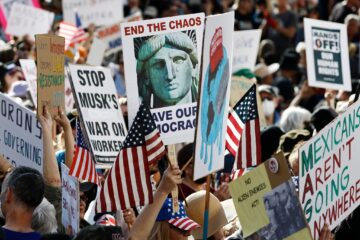 In the beginning there was agony. Under the empires of old, the strong did what they willed and the weak suffered what they must. But over the centuries, people built the sinews of civilization: Constitutions to restrain power, international alliances to promote peace, legal systems to peacefully settle disputes, scientific institutions to cure disease, news outlets to advance public understanding, charitable organizations to ease suffering, businesses to build wealth and spread prosperity, and universities to preserve, transmit and advance the glories of our way of life. These institutions make our lives sweet, loving and creative, rather than nasty, brutish and short.
 When
When 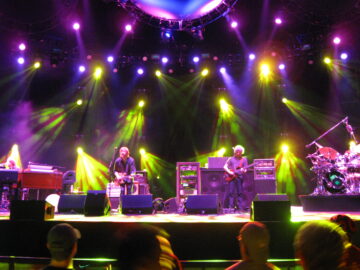 Last August, Phish hosted a four-day music festival at a racetrack in Dover, Delaware. It was called Mondegreen—the word for a misheard lyric or phrase—and it was the band’s first festival since 2015. Phish—the singer and guitarist Trey Anastasio, the keyboardist Page McConnell, the bassist Mike Gordon, and the drummer Jon Fishman—was scheduled to play at least two sets a night for four nights in a row. No other bands were on the bill.
 Steve Bannon, Trump’s first term whisperer, once described himself as a
 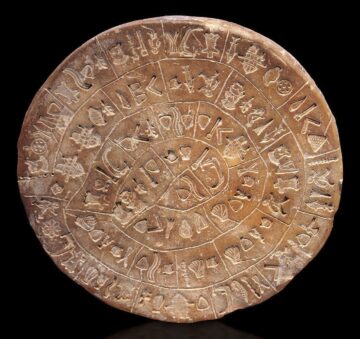 I am a glyph-breaker. I confess. Guilty as charged. A glyph-breaker who didn’t break anything, and that is quite paradoxical, because, to be a true glyph-breaker, you should have deciphered an undeciphered script, like Jean-François Champollion (the founder of Egyptology, who decoded the Ancient Egyptian hieroglyphs), Henry Rawlinson (who gave us the key to cuneiform) or Michael Ventris (who deciphered
  As with so many other scientific controversies in our political life, public opinion on Covid origins has come to track — and serve as a signifier for — partisan identity. This bodes ill for dispassionate investigation, which we must have if we want to know the truth about what actually threw the world into chaos for years and