
Peter Schjeldahl at The New Yorker:
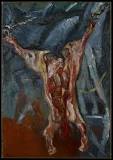 “Flesh,” the title of a small, potent, and timely Chaim Soutine retrospective, elegantly curated by Stephen Brown, at the Jewish Museum, is genteel. “Meat” would better fit the show’s focus on the ferocious paintings of plucked fowl and bloody animal carcasses that the great and, I believe, underrated Russian-French artist made in the mid-nineteen-twenties, in Paris. Other uses of “meat,” for an argument’s main point or for any solid content, apply as well. The centerpiece of the show, “Carcass of Beef” (circa 1925), on loan from the Albright-Knox Art Gallery, in Buffalo, activates all those meanings. Painted in reds and blues as luminous as those of Gothic stained glass, it communes with Rembrandt’s seventeenth-century masterpiece “The Slaughtered Ox,” which Soutine contemplated often and intensely in the Louvre, and it crackles with formal improvisations (one swift white line rescues a large blue zone from incoherence) and wild emotion. It’s an event—an emergence, an emergency—that transpires ceaselessly while you look. Soutine has long been a marginal figure in modern-art history. Clement Greenberg, in 1951, adjudged his work “exotic” and “futile,” owing to its lack of “reassuring unity” and “decorative ordering.” But today Soutine feels of the moment, amid quite enough reassurance and decorativeness in recent art.
more here.
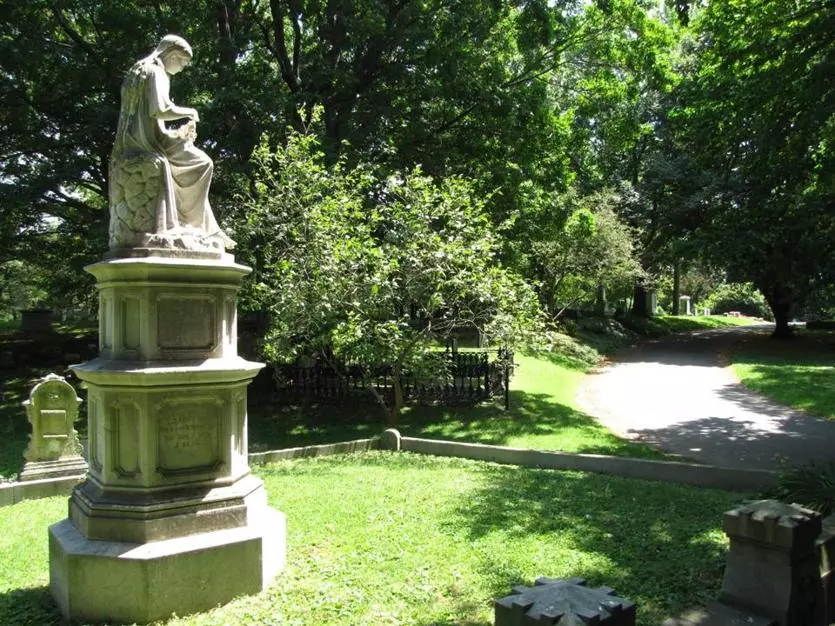
 Cemeteries face a sort of life-or-death crisis. The increasing popularity of cremation has meant that cemeteries are no longer critical to storing remains, while mourning on social media has removed the necessity of cemeteries as a primary place to mourn. Public mourning also has re-emerged with the widespread acceptance of roadside shrines, ghost bikes (white bikes placed on the roadside where a cyclist died), memorial vinyl decals for the back windows of cars, and memorial tattoos. While zombies roam the big and small screen, real death has returned to our streets, building walls, vehicles, and even bodies.
 What is morality? And are there any universal moral values? Scholars have debated these questions for millennia. But now, thanks to science, we have the answers.

 Our brains are obsessed with being social even when we are not in social situations. A Dartmouth-led study finds that the brain may tune towards social learning even when it is at rest. The findings published in an advance article of Cerebral Cortex, demonstrate empirically for the first time how two regions of the brain experience increased connectivity during rest after encoding new social information.
 WHEREVER YOU LOOK—the press release, the brochure, the fact sheet, the cornerstone—
 Every era gets its own Thomas Cole, the British-born, nineteenth-century artist who ushered in a new age of American landscape painting. In the 1930s and 1940s, he was a precursor to artists like Grant Wood. Come the 1960s and 1970s, MoMA linked his brushwork to abstract expressionism. In the late 1980s, he was part of a Reaganesque “Morning in America” campaign, a Chrysler-sponsored survey of American landscape paintings at the Met. Now, also at the Met, “Thomas Cole’s Journey: Atlantic Crossings” positions Cole as a challenge to Trumpian greed, as well as to the American landscape as imagined by Secretary of the Interior Ryan Zinke and EPA chief Scott Pruitt. But while Cole was undoubtedly concerned with the land he painted, he was not exactly the convenient social critic the Met portrays.
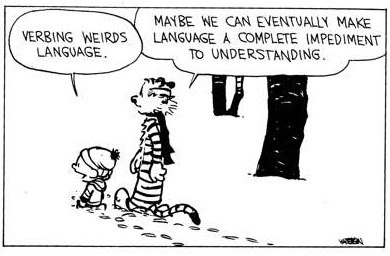 New words enter English in a variety of ways. They may be imported (
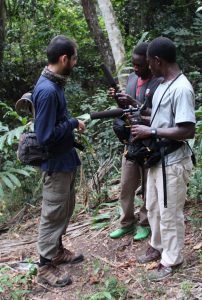 To investigate chimp communication, my colleagues and I follow chimpanzees through the forest as they go about their lives. We carry a hand-held “shotgun” microphone and a digital recorder, waiting for them to call.
 The encouragement that the fifty-five-year-old psychology professor offers to his audiences takes the form of a challenge. To “take on the heaviest burden that you can bear.” To pursue a “voluntary confrontation with the tragedy and malevolence of being.” To seek a strenuous life spent “at the boundary between chaos and order.” Who dares speak of such things without nervous, self-protective irony? Without snickering self-effacement?
 1. Your perspective on yourself is distorted.
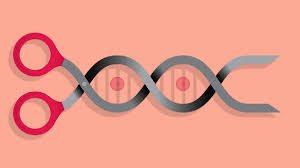 Since 2013,
 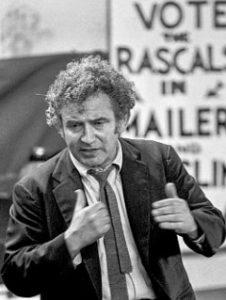 In 1954, on holiday in Mexico, Norman Mailer discovered weed. He had smoked it before, but this time was different. He experienced “some of the most incredible vomiting I ever had … like an apocalyptic purge”. But soon “I was on pot for the first time in my life, really on.” His second wife, the painter Adele Morales, was sleeping on a couch nearby. “I could seem to make her face whoever I wanted [it] to be,” Mailer wrote later, in the journal he kept during his marijuana years. “Probably could change her into an animal if I wished.” After that he got high on a regular basis. On “tea” (he called his weed diary “Lipton’s Journal”), he felt that “For the first time in my life, I could really understand jazz.” He also got to know the mind of the Almighty, which bore, he discovered, a marked resemblance to his own. Hotboxing in his car every night for a week, Mailer groped his way to the ideas that would shape his work during the 1960s and beyond. They were not, on the whole, very good ideas. But by 1954 Mailer was a desperate man. He was thirty-one and had published two novels: The Naked and the Dead (1948), which had been a smash, and Barbary Shore (1952), which had tanked. He felt like a failure. He needed “the energy of new success”. Eventually, of course, new success would come. But things had to get a lot worse before they could get better.