
Kelly Servick in Science:
 In a mysterious addition to the brain’s family of cells, researchers have discovered a new kind of neuron—a dense, bushy bundle (above) that is present in people but seems to be missing in mice. These “rosehip neurons,” were found in the uppermost layer of the cortex, which is home to many different types of neurons that inhibit the activity of other neurons. Scientists spotted the neurons in slices of human brain tissue as part of a larger effort to inventory human brain cells by combining microscopic study of brain anatomy and the genetic analysis of individual cells. The cells were small and compact, with a dense, bushy shape. At the points along their projections where they transmit signals to other cells—called axonal boutons—they had unusually large, bulbous structures, which inspired their name.
To precisely classify these cells, the scientists then analyzed their gene expression. That’s when they realized that the set of genes expressed in these inhibitory rosehip neurons doesn’t closely match any previously identified cell in the mouse, suggesting they have no analog in the rodent often used as a model for humans, the authors report today in Nature Neuroscience. The discovery also raises the question of whether these neurons are key to certain brain functions that separate us from mice.
More here.
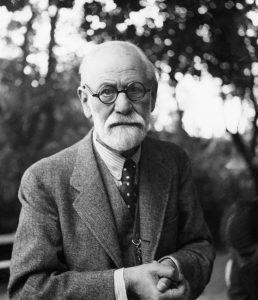 Originally, Freud analyzed only himself, and did so for five years, but he grew exhausted running back and forth between his chair and the couch. He then came up with the idea of analyzing patients, and continued to do so for the rest of his life. At first, Freud sat on the couch and the patient sat at his desk, but he changed places after discovering that his pens were disappearing.
 Official statistics say we are winning the War on Cancer. Cancer incidence rates, mortality rates, and five-year-survival rates have generally been moving in the right direction over the past few decades.
 Throughout most of American history, the idea of socialism has been a hopeless, often vaguely defined dream. So distant were its prospects at midcentury that the best definition Irving Howe and Lewis Coser, editors of the socialist periodical Dissent, could come up with in 1954 was this: “Socialism is the name of our desire.”
 A mostly overlooked component of
  While Zanzibar’s political landscape has shifted over the decades, Swahili coastal culture and tradition have remained central to island life. Haji Gora traces his love of language to ngoma, a hypnotic and exuberant drumming that hails from Congo. It’s a Bantu tradition that spread to Zanzibar via a harrowing history of slavery and trade between inland Africa and the Swahili coast, as well as the Arab Peninsula. There are various forms of ngoma, each with its own rhythms and sounds, but Haji Gora was drawn to Ngoma ya Kibati, which features quick, improvised dialogue set to drums while singers and dancers punctuate the rhythms with choral lines.
 Wanderlust is, historically, a German idea. Wandern, meaning to hike or to roam, and lust, of course, meaning to desire, began not as a leisure activity but as a serious existential exercise of going out into nature in order to go into oneself. The Romantics believed this is where happiness and self-contentment could be found. The Germans of the eighteenth century, especially, were enamored with Italy for its natural landscapes, but German men with the time and the means for long hikes tended mostly to traverse their own country’s varied landscapes, from the Rhine Valley to the Harz Mountains to the Elbe Sandstone Mountains, which straddle the Czech Republic nearby.
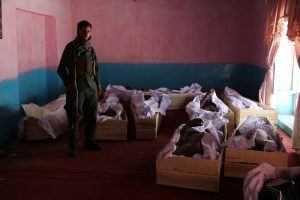 An equally pressing issue, which the US forces, especially, have yet to address, concerns the source, or sources, of all the Taliban’s new equipment. Providing logistics, massing fighters, and coordinating serial attacks around the country are the task of a well-drilled, well-supplied command structure. That is what Washington and Kabul are dealing with: a Taliban force, once considered a rag-tag army of militants, that now has the savvy of generals and the resources of a serious army.
 Replication is essential for building confidence in research studies

 The main job of ‘culture’ in a modern society seems to be shielding people from the demands of morality. In its intellectual role it justifies inequality between citizens. In its national history role it gives citizens a delusional sense of their country’s significance and entitlement, followed by a dangerous sense of grievance when this isn’t sufficiently recognised by the rest of the world. In its identitarian role it deflects demands for justification into mere proclamations of fact: ‘Why do we do this or that awful thing?… Because shut up. It is who we are.’
 On July 5 The Nation published a 14 line poem by Anders Carlson-Wee entitled “
 sickness was constantly diagnosed for the once powerful idea. And still, after the impressive Sanders campaign of 2016, the electoral success of Jeremy Corbyn in the 2017 general election, as well as the – for many – surprising victory of Alexandria Ocasio-Cortez in the democratic primary in New York, writers continue to assure us that the idea is, if not dead, having serious problems. In any case, the idea of socialism seemed until recently a relic of the industrial past with little to say about contemporary society.
 First came the books describing just how much worse economic inequality had become over the past 20 years, with all the dramatic political implications now impossible to ignore. Then there were the tomes about globalization (including my own, I admit), detailing the West’s unfettered pursuit of neoliberal policies that abetted all this unfairness.
 In a paper published today in the journal
  When I got to Walter Benjamin Platz, I figured I was in the wrong place. It wasn’t that I was lost, or had failed to follow the map correctly—it was that the place was wrong.