
by Thomas O’Dwyer
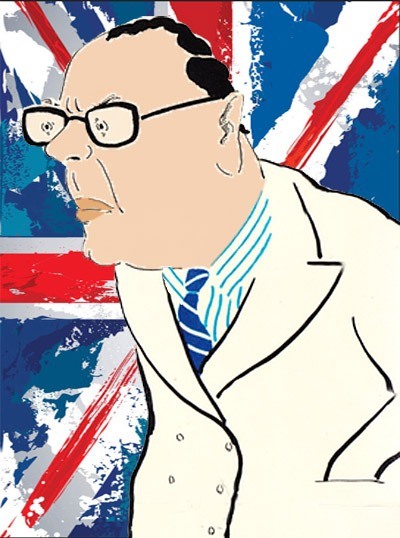 The career of Kenneth Widmerpool defined an era of British social and cultural life spanning most of the 20th century. He is fictional – a character in Anthony Powell’s 12-volume sequence, A Dance to the Music of Time – but he is as memorable as any historical figure. In the first volume, he is a colourless Eton public schoolboy. Across the series, he tunnels his way under British upper-class and bohemian society. A powerful and sinister self-made monster, he even gains a life peerage. In the final volume, the aged Widmerpool joins a hippie cult and dies naked while chasing girls in the woods. Widmerpool lived and prospered in the solid certainties of his acquired culture. He died in the midst of its fragmentation.
Widmerpool was an original snowflake – one who believed that he was so unique that greatness and adulation were his destiny. His lowly father sold fertilisers. His mother raised him to be this snowflake with an inflated uniqueness that would override his mediocrity. The metaphor then was poetic – snowflakes are lovely, and no two are alike.
Today, we have a “snowflake generation,” defined by British author Claire Fox in her 2016 book I Find That Offensive!: “It is a derogatory term for one deemed too vulnerable to cope with views that challenge their own, particularly in universities and other forums once known for robust debate.” With some irony, these delicate modern snowflakes are also called “new Victorians.”
The collapse of cultural certainties was most clear in Britain but rippled through all Western societies. The origin of certain culture-war debates, which erupt from time to time like temperamental volcanoes, is pinned on one Englishman, Lord Charles Percy Snow. A chemist and novelist, Snow in 1959 published The Two Cultures and the Scientific Revolution. He first delivered it as a lecture at Cambridge University. Snow observed that a group of educated people talking in a room would make allusions drawn from books and the arts. Not one of them would be expected to make, or understand, a reference to “the second law of thermodynamics.” Half of human culture – science – appeared to be non-existent for literary intellectuals.
Snow found this odd and alarming, and he considered it a problem whose solution was obvious. Read more »
 It’s a Saturday in May. I’m 17, and I’ve spent the morning washing and waxing my first car, a 1974 Gremlin. I’m so delighted that I drive around the block, windows down, Chuck Mangione playing on the radio. Feels so good, indeed. I’ve successfully negotiated a crucial passage on the road to adulthood, and I’m pleased with myself and my little car. Times change, though, and sometimes even people change. Forty years later, with, I hope, many miles ahead of me, I sold what I expect to be my last car.
 I like playing Scrabble, and part of the reason is creating new words. That and the smack talk. I played a game with the swain of the day decades ago, and he challenged my word, which was not in and of itself surprising. As you may recall, if you lose a challenge, you lose a turn. With stakes so stupendously high, you mount a vigorous defense. I ended up losing the battle (and probably won the war) and thought no more of it. The ex-boyfriend brought it up a few years ago; I think he has put that on-the-spot coinage next to a picture of me in his mind. It is a shame that the word he will forever associate with me is “beardful.”


 In the Municipal building on Livingston Street, two floors are reserved for Housing cases. In each court, dozens of people work and wait, a Bosch tableau with an international cast. HPD lawyers work the perimeter. They bring Respondents to the bench, confer with them in the hallway and negotiate with Petitioners on their behalf. HPD attorneys also lunch with landlord’s counsel. There is little ethical or proximate difference between Officers of the Court, save who signs their checks and the pay scales. To a person, they distribute a crushing weight, balancing malfeasance and negligence, plunder and systemic rot. The lasting effect of a day in Housing court isn’t the stipulation Management makes for repairs, nor the tenant’s payment (sometimes, less an abatement), it is feeling that force haul you down and watching others already borne off by it.
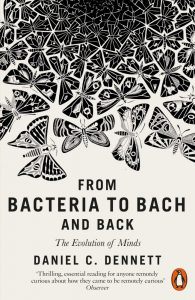 Despite Dennett’s training in philosophy (at Oxford, no less, under Ryle), his appointment in a well-regarded philosophy department, and his continued self-identification as a philosopher (“Philosophers, like me” (407)), I suspect that many professional philosophers find Dennett’s From Bacteria to Bach and Back, if they read it all with any care, barely philosophy. Dennett offers few structured arguments (with carefully numbered premises), no clear dilemmas/trillemas (etc.) nor the apparent paradoxes that are the staple of our profession nor does he deploy the conceptual distinctions
  Placards are being prepared. Photo-opportunities are being organised. A list of demands is being
  Samuel Moyn reviews A Foreign Policy for the Left by Michael Walzer in Modern Age:
 Before he died, Senator John McCain wrote a loving
  Sometimes I think my work may be seen eventually as some literary equivalent (obviously much reduced in scale) to Picasso. My vice, my strength, is beginnings. Usually I begin well—it is just that I seem to have little interest in finishing. It seems adequate to start a piece, go far enough to glimpse what the possibilities and limitations might be, and then move on. Which for that matter is close to the discrete temper of our time.
 John Horgan in Scientific American:
 Chris Mackin in TNR: