Olivia Goldhill in Quartz:
 A man is suing his parents for giving birth to him without his consent. That might sound ridiculous, but he has a point. The plaintiff behind the lawsuit, 27-year-old Raphael Samuel, believes in “anti-natalism,” namely the philosophical theory that parents do not have moral standing to bring an unwitting child into the world. And there are some seriously legitimate philosophers who advocate for this argument.
The best-known anti-natalist is David Benatar, head of the philosophy department at the University of Cape Town and author of the 2006 book Better Never to Have Been: The Harm of Coming into Existence. (Though Benatar is heralded as a philosopher, he’s controversial at the University of Cape Town for comments he’s made about race, and was dismissive of African philosophy in a recent interview with Quartz.) A 2012 New Yorker article on the theory highlights a central premise of Benatar’s work: If a couple have multiple hereditary genetic diseases and live in horrendous conditions, we might well agree they have a moral obligation not to procreate and so avoid bringing into the world a child who will suffer terribly. Conversely, if a couple is wealthy and disease-free, we would not consider them morally obliged to create a child.
More here.
 In his 2008
 The dystopia George Orwell conjured up in “1984” wasn’t a prediction. It was, instead, a reflection. Newspeak, the Ministry of Truth, the Inner Party, the Outer Party — that novel sampled and remixed a reality that Nazi and Soviet totalitarianism had already made apparent. Scary stuff, certainly, but maybe the more frightening dystopia is the one no one warned you about, the one you wake up one morning to realize you’re living inside.



 “Luddite” is a word that is thrown around a lot these days. It signifies someone who is opposed to technological progress, or who is at least not climbing on board the technological bandwagon. 21st century luddites tend to eschew social media, prefer presentations without PowerPoint, still write cheques, and may even, in extreme cases, get by without a cell phone. When used in the first person, “luddite” is often a badge of honour. “I’m a bit of a luddite,” usually means “I see through and am unimpressed by the false promise of constant technological novelty.” Used in the third person, though, it typically suggests criticism. “So-and-so’s a bit of a luddite,” is likely to imply that So-and-so finds the latest technology confusing and has failed to keep up with it, probably due to intellectual limitations.

 The traffic had been slow all day but by four pm, it was reduced to a trickle. Those cars that passed him on the street did so in two and threes as if they were sticking together for safety like lumbering animals caught out in a storm. It was, in fact, a very harsh winter day. The afternoon temperatures dipped well below zero: one of the coldest days ever recorded in Chicago. The only sounds now were from an occasional plane passing overhead, and from distant cackling from those venturesome neighbors who had left snug homes to experience the cold. He could hear the sound of his feet crunching through the snow.
 One of the biggest early 20th century philosophical challenges to the belief in God stemmed from the doctrine of verificationism.
 “I read books to read myself,” Sven Birkerts wrote in The Gutenberg Elegies: The Fate of Reading in an Electronic Age. Birkerts’s book, which turns twenty-five this year, is composed of fifteen essays on reading, the self, the convergence of the two, and the ways both are threatened by the encroachment of modern technology. As the culture around him underwent the sea change of the internet’s arrival, Birkerts feared that qualities long safeguarded and elevated by print were in danger of erosion: among them privacy, the valuation of individual consciousness, and an awareness of history—not merely the facts of it, but a sense of its continuity, of our place among the centuries and cosmos. “Literature holds meaning not as a content that can be abstracted and summarized, but as experience,” he wrote. “It is a participatory arena. Through the process of reading we slip out of our customary time orientation, marked by distractedness and surficiality, into the realm of duration.”

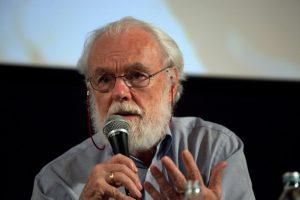 British scholar David Harvey is one of the most renowned Marxist scholars in the world today. His course on Karl Marx’s Capital is highly popular and has even been turned into a series on YouTube. Harvey is known for his support of student activism, community and labour movements.
 With his finely tuned editing ear, Benjamin Dreyer often encounters things so personally horrifying that they register as a kind of torture, the way you might feel if you were an epicure and saw someone standing over the sink, slurping mayonnaise directly from the jar.
 Davos 2019 was a downbeat affair. That at least is how regulars