
Richard Shiff at nonsite:
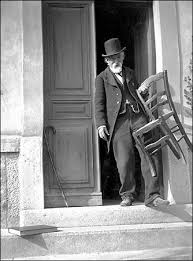 Cézanne’s kind of painting—the digital kind, composed of discrete marks—is so far removed from the analog illusions of photography that its engagement with cultural issues is of a divergent sort. By rendering its technique explicit, it revealed its liaison with living sensation, eye-to-hand. Artist-theorist André Lhote wrote in 1920: “A large part of the emotive power of Cézanne’s canvases derives from the fact that the painter, rather than hide them, shows his means.”21 Hiding generates an integrated, analog effect; showing generates a fractured, digital effect. The emotion Lhote addressed did not belong to the subject represented, which by 1920 could be arbitrary without being criticized as such. André Derain wrote to Henri Matisse in 1906 (the final year of Cézanne’s life) that both were fortunate to belong to the first generation at liberty to let their chosen material assume “a life of its own, independent of what one makes it represent.”22 So the emotionality of the art need no longer correspond to the artist’s thoughts about the model depicted, its cultural identity, and all it might connote. A stronger or more direct emotion derived from the material basis of the representational process. Viewers sensed this emotion to the extent that they perceived that a life had been lived mark to mark, moment to moment, sensation to sensation. Such was Cézanne’s life, his digital reality, lived at the same pace as that of the people, objects, and land he painted—lived along with his world.
more here.
 On a recent afternoon, Ivan Novak, a member of the Slovenian rock group Laibach, went for a walk in the hills overlooking the country’s capital, Ljubljana. In between stops to pet passing dogs, he explained what it was like when Laibach became the first Western band to perform in North Korea.
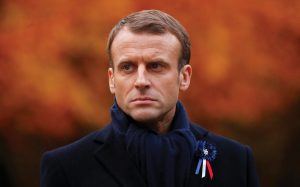 It says something about Lin-Manuel Miranda’s genius that he even managed to make fiscal integration catchy. In his musical Hamilton, the eponymous treasury secretary raps:
 You’d think that scientists at an international conference on obesity would know by now which diet is best, and why. As it turns out, even the experts still have widely divergent opinions. At a recent meeting of the Obesity Society, organizers held a
  The day before Thanksgiving I got this wonderfully understated text from a close friend:

 Our uniform was a shirt tucked into jeans. Sandi stretched the smallest size over well-proportioned breasts, her black bra peeking through a run of buttons. Mine hung long in the sleeves and fell over my waist.
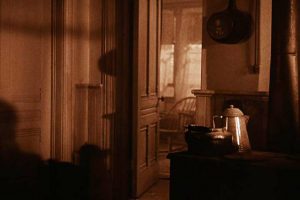
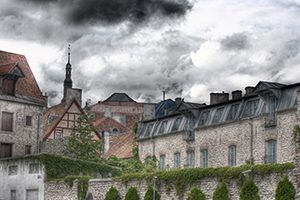 In the middle of the night of March 24, 1992, a pressure seal failed in the number three unit of the Leningradskaya Nuclear Power Plant at Sosnoviy Bor, Russia, releasing radioactive gases. With a friend, I had train tickets from Tallinn, in newly independent Estonia, to St. Petersburg the next day. That would take us within twenty kilometers of the plant. The legacy of Soviet management at Chernobyl a few years before set up a fraught decision whether or not to take the train.
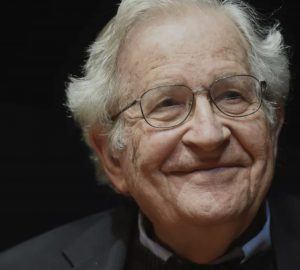 Noam Chomsky was aptly described in a New York Times book review published almost four decades ago as “arguably the most important intellectual alive today.” He was 50 then. Now he is 90, and on the occasion of his December 7 birthday, the German international broadcasting service Deutsche Welle
  In the spring of 2015, with my colleagues at the Breakthrough Institute, I helped to organize and publish
  Ivan Krastev’s last book landed like a warning shot on the desks of policymakers across the Continent. In his short 2017 volume, “After Europe,” the Bulgarian thinker warned that what had been until then widely regarded as a series of isolated shocks — the migration crisis, Brexit, the election of U.S. President Donald Trump, and the rise of
  You take a flight from New York to London. Thousands and perhaps millions of people — including ticket agents, baggage handlers, security personnel, air traffic controllers, pilots, and flight attendants, but behind the scenes also airline administrators, meteorologists, engineers, aircraft designers, and many others — cooperated to get you there safely. No one stole your luggage, no one ate your in-flight food, and no one tried to sit in your seat. In fact, the hundreds of people on the airplane, despite being mainly strangers, behaved in an entirely civilized and respectful manner throughout.