Jacob Silverman at The Baffler:
 China’s rise as a tech powerhouse has dovetailed with Silicon Valley’s growing, and often vividly expressed, distrust toward democracy itself. Always steeped in libertarian pique—not long ago, technologists expressed hope for floating ad-hoc nation-states or, as Larry Page put it, referencing Burning Man, “some safe places where we can try out some new things”— Silicon Valley now toys with Californian secessionism and Singapore-style authoritarian technocracy. That new horizon, that place of raucous experimentation with a frontier-like possibility at striking it rich, they believe, is in China.
Long the industrial producer of Silicon Valley’s gadgets, China has developed its own thriving startup scene, towered over by juggernauts like Alibaba, Xiaomi, Huawei, and Tencent, which are formidable rivals to Google, Facebook, Amazon, Microsoft, et al. From biotech to facial recognition systems, Chinese tech companies and their state backers are working intently on bleeding-edge technologies that can in turn be sold to governments in Central Asia and Africa, where China has funded numerous infrastructure projects while snapping up interests in mines, farmland, ports, and a Djiboutian military outpost.
more here.
 In her new book,
 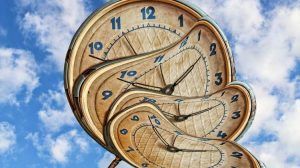 In 2015, when cognitive neuroscientist Devin Terhune was hit by a car, the impact took less than a second, but he felt it to be much longer. “I was riding [my bike] very fast, and so when I hit the car I went flying back around 15 feet or more,” he says. “Objectively, I’m sure the whole thing probably unfolded in less than a second but I experienced flying through the air as lasting at least 5 seconds—it felt very slow.” Time stretched out from milliseconds to seconds and Terhune lived first-hand something we experience in less dramatic ways each day. We measure time in set amounts— seconds, minutes, and hours. But the way time feels is more slippery. Ten minutes while you’re bored is an eternity and those same ten minutes with your best friend disappear like nothing. This flexibility in perceiving time is only enhanced when psychedelic drugs enter the mix. A
  There has been nothing so dramatic as a “war” in the Gaza Strip since 2014, but the Israeli military has nonetheless killed more than 200 Palestinians there this year. On a single Friday in March, snipers took the lives of 52 protesters. Most weeks, the casualties dribble in more slowly: two or three or seven are shot while demonstrating along the fence that confines them; or, unsuspecting, they are blown apart by missiles fired from drones and F16s. Only when the toll is particularly high, or an unusual proportion of the dead are children, do the international media take notice. Then there is the siege that Israel has imposed on the territory since Hamas took power in 2007 and the many deaths that this has more obliquely caused – along with the shortages of nearly all goods necessary for survival, regular power outages and lack of drinking water. Most Gazans are unable to travel even for emergency medical care outside the narrow boundaries of the Strip, generating a sense of suffocation and despair. You may have skimmed an article reporting that the UN predicted, in 2015, that the privations of the
  Many writers and an increasingly sizable cadre of readers admire John Williams’s novel, Stoner, without reservation. Stoner itself is not about drugs; rather, it evokes a character both monumental and flinty. A third-person account of a farm boy who becomes, laboriously, a college professor of English, it celebrates in measured prose the integrity of one whose name (as John Keats wrote for his own epitaph) “was writ in water.”
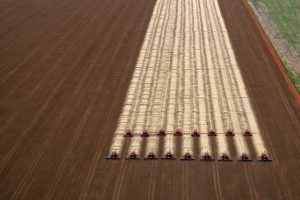 If the world hopes to make meaningful progress on climate change, it won’t be enough for cars and factories to get cleaner. Our cows and wheat fields will have to become radically more efficient, too.
 Despite its obvious significance, Brexit is a mere sideshow when compared to the muffled but more fundamental disintegration taking place across the European Union. The political center is not holding in the key member states. Nationalism is on the march everywhere. Even pro-European governments have, in practice, abandoned all blueprints for genuine consolidation and are increasingly drifting toward re-nationalization of banking systems, public debt, and social policy.
 You’re probably used to hearing Sir David Attenborough’s sonorous, British voice describe the miracles of
 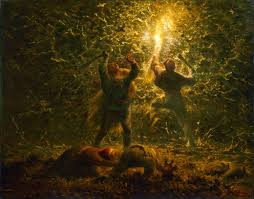 This expungement was part of a global shift in the way the night sky would come to be viewed, not as particular to the individual cultures in whose lives they played both practical and mythical parts but rather, as the historian Elizabeth Green Musselman writes, a “celestial blanket [that] covered the globe in one fabric.” The blanket of stars heralded “a one-world empire,” and those with the telescopes named each point of light and the constellations they formed when strung together, overlaying the vast kaleidoscope of names and stories that the heavenly bodies held for peoples in every tiny portion of the globe. The International Astronomical Union would eventually standardize the constellations with official names in order to avoid what one modern astronomer called “a chaotic situation.”
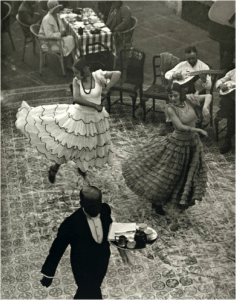 My classes occupy me fully. Codo means elbow. Rodilla means knee. Tobillo means ankle, Muy pronunciado means very steep. Adquirido means acquired. Me llena means it satisfies me, it fills me up. The classes exhaust and complete me. When I come home, I lie down and keep the shutters closed. My t-shirt is always damp and sweaty. I think about kissing and open my mouth to the air. The patterns of the dance repeat even when I am lying down; they won’t leave and this is confusing and pleasurable. One teacher tells us to tip our foot outward to show off its “lady parts.” My ankle hurts every day. “Don’t just do the steps,” she says, “dance.” I make a kind of friendship of glances with the body next to mine day after day. Some days, there is a raised eyebrow about the other woman who races ahead of the beat. No corré! the teacher yells. No corré! Joder. You’re fucking us up. Uno dos tres. Quatro cinco seis. Seite. Ocho. Nueve. Diez. Un Dos. Uno dos tres. In the changing room, it is so loud, you have to shout in five different languages. There is more Spanish than English, more English than German, more German than Japanese, more Japanese than French. Everyone is racing, stripping off stretchy tops, baring sweaty breasts, wriggling into dry tops, stepping out of silly long black lycra skirts.
 Publishing loves a trend, and the current one is for books by and about women. As many women as possible, in some cases: books such as Can We All Be Feminists?: Seventeen writers on intersectionality, identity and finding the right way forward for feminism (Virago), edited by the activist June Eric-Udorie, anthologize many voices to better illustrate the complexities of modern “feminisms”. Eric-Udorie’s title is a response to
  The philosopher Daniel Dennett has described evolution as a sort of “universal acid” that “eats through just about every traditional concept, and leaves in its wake a revolutionized world-view, with most of the old landmarks still recognizable, but transformed in fundamental ways.” Fearing this corrosive idea, opposition in the US to evolution mainly came from Right-wing evangelical Christians who believed God created life in its present form, as described in Genesis.
 Democracy is an information system.
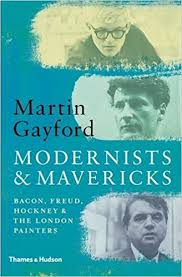 Bacon’s various London studios became notorious for their chaotic admission of decadence and squalor. The most famous of these was his studio at 7 Reece Mews in South Kensington, which was posthumously donated in its entirety to the Hugh Lane Gallery in 1998. The first-floor studio at Reece Mews was reached by climbing a steep wooden staircase with a thick rope used as a makeshift handrail. Visitors entering through the narrow studio door were immediately confronted by a deluge of materials. Detritus mounds of old paint tins, tubes and slashed canvasses reached up toward the pale skylight. The floorboards were covered in a congealing mass of magazines, photographs, catalogues. Bacon’s maxim was that “chaos breeds images” and he absorbed the anarchic atmosphere of his studio space into his developing art practice and aesthetic. Spontaneity and chance were portals of discovery. He drew inspiration for his nightmarish scenes from the photographic collage of screaming dictators, hysterical patients, bullfighters and wrestlers strewn beneath his easel across the studio floor. Images suddenly suggested themselves on the rough unprimed canvass in the slip of a brush or an accidental spatter of pigment. A single strong stroke could define the outline of a man’s jaw, a cloth smearing animate a recoiling movement. Bacon even brashly mixed dust from the floorboards into one of his early paintings to capture the charcoal texture of a suit lapel.