
Matt Kaplan in The New York Times:
 In the winter of 1994, a young man in his early twenties named Tim was a patient in a London psychiatric hospital. Despite a happy and energetic demeanour, Tim had bipolar disorder and had recently attempted suicide. During his stay, he became close with a visiting US undergraduate psychology student called Matt. The two quickly bonded over their love of early-nineties hip-hop and, just before being discharged, Tim surprised his friend with a portrait that he had painted of him. Matt was deeply touched. But after returning to the United States with portrait in hand, he learned that Tim had ended his life by jumping off a bridge.
Matthew Nock now studies the psychology of self-harm at Harvard University in Cambridge, Massachusetts. Even though more than two decades have passed since his time with Tim, the portrait still hangs in his office as a constant reminder of the need to develop a way to predict when people are likely to try and kill themselves. There are plenty of known risk factors for suicide — heavy alcohol use, depression and being male among them — but none serve as tell-tale signs of imminent suicidal thoughts. Nock thinks that he is getting close to solving that. Since January 2016, he has been using wristbands and a phone application to study the behaviour of consenting patients who are at risk of suicide, at Massachusetts General Hospital in Boston. And he has been running a similar trial at the nearby Franciscan Children’s Hospital this year. So far, he says, although his results have not yet been published, the technology seems able to predict a day in advance, and with reasonable accuracy, when participants will report thinking of killing themselves.
More here.
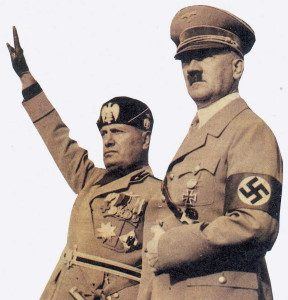 Observing political and economic discourse in North America since the 1970s leads to an inescapable conclusion: The vast bulk of legislative activity favours the interests of large commercial enterprises. Big business is very well off, and successive Canadian and U.S. governments, of whatever political stripe, have made this their primary objective for at least the past 25 years.
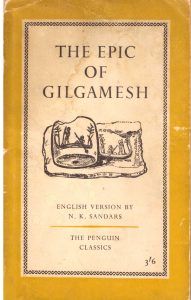 By chance, I chose as holiday reading (awaiting my attention since student days) The Epic of Gilgamesh, a Penguin Classics bestseller, part of the great library of Ashur-bani-pal that was buried in the wreckage of Nineveh when that city was sacked by the Babylonians and their allies in 612 BCE. Gilgamesh is a surprisingly modern hero. As King, he accomplishes mighty deeds, including gaining access to the timber required for his building plans by overcoming the guardian of the forest. But this victory comes at a cost; his beloved friend Enkidu opens by hand the gate to the forest when he should have smashed his way in with his axe. This seemingly minor lapse, like Moses’ minor lapse in striking the rock when he should have spoken to it, proves fatal. Enkidu dies, and Gilgamesh, unable to accept this fact, sets out in search of the secret of immortality, only to learn that there is no such thing. He does bring back from his journey a youth-restoring herb, but at the last moment even this is stolen from him by a snake when he turns aside to bathe. In due course, he dies, mourned by his subjects and surrounded by a grieving family, but despite his many successes, what remains with us is his deep disappointment. He has not managed to accomplish what he set out to do.
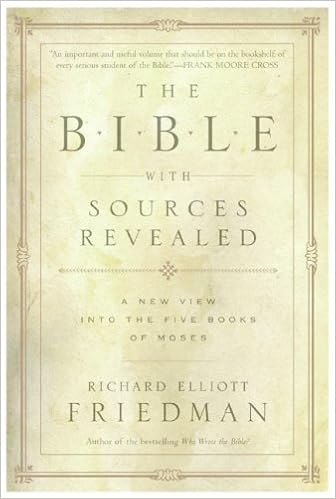 On his journey, Gilgamesh meets the one man who has achieved immortality, Utnapishtim, survivor of a flood remarkably similar, even in its details, to the Flood in the Bible. Reading of this sent me back to Genesis, and hence to two other books,
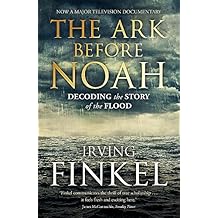 Comparing Hebrew with Cuneiform may seem like a suitable gentlemanly occupation for students of ancient literature, but of no practical importance. On the contrary, I maintain that what emerges is of major contemporary relevance.
 “They all go the same way. Look up, then down and to the left,” the EMT said. “Always.”
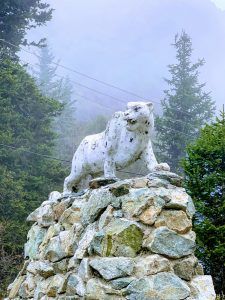 In Tian Shan mountains of the legendary snow leopard, errant wisps of mist float with the speed of scurrying ghosts, there is a climbers’ cemetery, Himalayan Griffin vultures and golden eagles are often sighted, though my attention is completely arrested by a Blue whistling thrush alighting on a rock— its plumage, its slender, seemingly weightless frame, and its long drawn, ventriloquist song remind me of the fairies of Alif Laila that were turned to birds by demons inhabiting barren mountains.
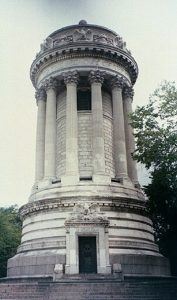 On a recent windy morning, walking past the Soldiers’ and Sailors’ Monument on West 89th Street in New York City, seeing the flag at half mast, just days before the
  Ronald Reagan was elected President in 1980 with an attitude and agenda similar to Trump’s—to restore America to its rightful place where “someone can always get rich.” His administration arrived in Washington firm in its resolve to uproot the democratic style of feeling and thought that underwrote FDR’s New Deal. What was billed as the Reagan Revolution and the dawn of a New Morning in America recruited various parties of the dissatisfied right (conservative, neoconservative, libertarian, reactionary and evangelical) under one flag of abiding and transcendent truth—money ennobles rich people, making them healthy, wealthy and wise; money corrupts poor people, making them ignorant, lazy and sick.
 When my grandfather died last fall, it fell to my sisters and me to sort through the books and papers in his home in East Tennessee. My grandfather was a nuclear physicist, my grandmother a mathematician, and among their novels and magazines were reams of scientific publications. In the wood-paneled study, we passed around great sheaves of papers for sorting, filling the air with dust.
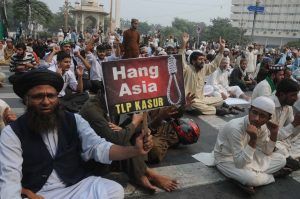 After spending eight years on death row, Asia Bibi, a Christian, was acquitted by Pakistan’s Supreme Court this week. For many here it seemed like a good day. The country’s highest court had finally delivered justice and released a woman whose life has already been destroyed by years in solitary confinement. The court decision quoted Islamic scriptures, bits of letters by the Prophet Muhammad and a smattering of Shakespeare. A great wrong was righted.
 Donald Trump’s election in 2016 as president of the United States can be taken as a striking example of the rise of right-wing populism around the world.
 LAST WEEK, AS
  The word Victorian tends to evoke old-fashioned ideas: women confined in corsets, strict gender roles, and a prudishness about all things sexual. In a world where conspicuous consumerism and self-expression rule, these nineteenth-century notions of self-restraint and self-denial seem hopelessly outdated.
 When Ammar Campa-Najjar was nine years old, his Palestinian father moved his family to Gaza, the narrow strip of Palestinian territory that has been under an Israeli blockade for over a decade. His family was living there when the second intifada broke out in 2000, and Israeli security forces crushed a violent Palestinian uprising with deadly and often indiscriminate force. He remembers when the electricity and water supply were cut off and sheltering in his kitchen while his neighbourhood was bombed. He remembers how a military Hummer crashed into his family’s car, causing him to burn his back and fracture his thigh and putting his younger brother into a coma.
 “Will no one rid me of this meddlesome priest?” asked Henry II as he instigated the murder of the Archbishop of Canterbury, Thomas Becket, in 1170. Down through the ages, presidents and princes around the world have been murderers and accessories to murder, as the great Harvard sociologist Pitirim Sorokin and Walter Lunden documented in statistical detail in their masterwork