
Sheldon Lee Glashow in Inference Review:
 IN THE ANNUS MIRABILIS of 1905, Albert Einstein made several seminal contributions to science. Among them were the special theory of relativity and the recognition of the wave-particle duality of light—the latter a characteristic of the quantum theory soon to emerge. Modern physics rests on quantum mechanics and relativity. Both revert to classical physics under everyday circumstances: quantum mechanics for things sufficiently large; special relativity for things sufficiently slow. Within their domains, both theories have consequences that seem crazy, counterintuitive, and contrary to experience. For decades I have striven to convey the delights of modern physics to science-averse undergraduates, but many of them persist in rejecting the concepts as either unacceptable or unbelievable.
Antoine Lavoisier and James Prescott Joule were wrong! Relativity revealed energy and mass to be interconvertible, satisfying a single, unified conservation law. Who could believe that simultaneity is relative, or that no missile nor missive can travel faster than light? A clock in motion, said Einstein, ticks more slowly than an identical clock at rest. Relativistic time dilation is ordinarily negligible, except to science fiction writers, philosophers, and physicists who study rapidly moving particles.
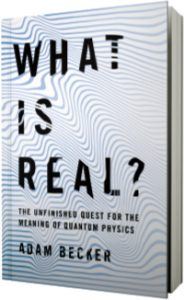
What Is Real? is a book focusing on the counterintuitive nature of quantum theory, the difficulties in its interpretation, and the various doomed attempts to introduce hidden variables into its structure. I found it distasteful to find a trained astrophysicist invoking a conspiracy by physicists and physics teachers to foist the Copenhagen interpretation upon naive students of quantum mechanics.
More here.
 An increasingly visible school of heterodox macroeconomics, Modern Monetary Theory (MMT), makes the case for functional finance—the view that governments should set their fiscal position at whatever level is consistent with price stability and full employment, regardless of current debt or deficits. Functional finance is widely understood, by both supporters and opponents, as a departure from orthodox macroeconomics. We argue that this perception is mistaken: While MMT’s policy proposals are unorthodox, the analysis underlying them is entirely orthodox. A central bank able to control domestic interest rates is a sufficient condition to allow a government to freely pursue countercyclical fiscal policy with no danger of a runaway increase in the debt ratio. The difference between MMT and orthodox policy can be thought of as a different assignment of the two instruments of fiscal position and interest rate to the two targets of price stability and debt stability. As such, the debate between them hinges not on any fundamental difference of analysis, but rather on different practical judgements—in particular what kinds of errors are most likely from policymakers.
 So, again, why is there no socialism in the United States? Perhaps when the millennial generation comes to power, the question will no longer make much sense. But if these enthusiastic young fans of socialist democracy are ever to win big in American electoral politics, it’s going to be because they will have figured out a new way to talk about class in America. And to do that, they will need to understand some of the different ways that Americans have thought—and felt—about class. And to do that, they might want to read a neglected classic of American sociology—The American Perception of Class, by Reeve Vanneman and Lynn Cannon, just reissued as an open access title by Temple University Press and available for
 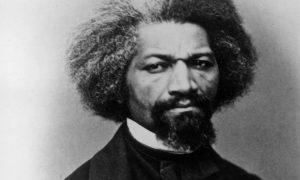 “Douglass engaged in a lifelong autobiographical quest for a coherent story of ascendance and familial identity,” Blight writes, and “for the healing of his own wounds”. Douglass himself thundered that slavery “converted the mother that bore me into a myth, it shrouded my father in mystery, and left me without an intelligible beginning in the world”. He yearned for “a bright gleam of a mother’s love”.
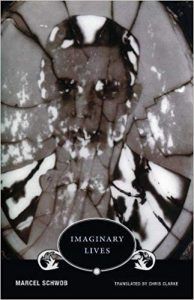 Imaginary Lives (1896) was Schwob’s last book of fiction. He composed its twenty-two chapters—each one the story of a life, recounted in fewer than a dozen pages, with all of these lives arranged in chronological order—between 1893 and 1896. Early in its composition, at the age of twenty-six, Schwob suffered the first attack of a mysterious intestinal ailment whose painful effects and questionable treatments (ether, opium, morphine) would lead to his death at thirty-seven. Schwob’s physical condition to some extent shaped his fiction, and though all the chapters of Imaginary Lives culminate, naturally enough, in their subjects’ deaths, these deaths are often unnaturally violent. Lucretius the Poet is poisoned by his lover. Clodia the Licentious Matron is strangled, robbed, and dumped in the river Tiber. Gabriel Spenser the Actor is stabbed in the lung by Ben Jonson the playwright. And the three pirates of the book (Captain Kidd, Walter Kennedy, Stede Bonnet) are hanged and left to rot upon the rope. Imaginary Lives is, among other things, a study of human violence, proceeding from the sun-stroked era of ancient Greek gods and demigods to the soot-blackened nineteenth-century Edinburgh of the serial murderers Burke and Hare.
 This year has been exhausting in so many ways, asking us to accept more than it seems we can, more than it seems should be possible. But really, in the end, today’s harsh realities are not all that surprising for some of us — for people of color, or for people from marginalized communities — who have long since given up on being shocked or dismayed by the news, by what this or that administration will allow, what this or that police department will excuse, who will be exonerated, what this or that fellow American is willing to let be, either by contribution or complicity. All this is done in the name of white supremacy under the guise of patriotism and conservatism, to keep things as they are, favoring white people over every other citizen, because where’s the incentive to give up privilege if you have it? Now more than ever I believe fiction can change minds, build empathy by asking readers to walk in others’ shoes, and thereby contribute to real change. In “Friday Black,” Nana Kwame Adjei-Brenyah has written a powerful and important and strange and beautiful collection of stories meant to be read right now, at the end of this year, as we inch ever closer to what feels like an inevitable phenomenal catastrophe or some other kind of radical change, for better or for worse. And when you can’t believe what’s happening in reality, there is no better time to suspend your disbelief and read and trust in a work of fiction — in what it can do.
 Linguist and long-time political gadfly Noam Chomsky argued in an interview Friday that President Donald Trump’s poisonous and violent rhetoric fueling hatred in the United States has a deep lineage in the country — and also accentuates the country’s role in an “alliance of reactionary and repressive states” worldwide. Asked by Democracy Now’s Amy Goodman to reflect on the recent
  In her New York Times op-ed “
 Aasia bibi
 In his 1927 essay “Supernatural Horror in Literature,” the influential horror writer H.P. Lovecraft declares that “the oldest and strongest emotion of mankind is fear, and the oldest and strongest kind of fear is the fear of the unknown.” The contemporary Swedish poet
 I will
 How democratic is the United States? According to a
  You are what you eat. The atoms in your body come from the food and drink you consume – and, to some extent, from the air you breathe. That is not terribly surprising. What few people realise, however, is that about half the nitrogen atoms in your body have passed through something called a Haber-Bosch reaction. This chemical process, invented just before the first world war, did as much to change the
  W
W The
The