
by Samia Altaf

“Let’s go look at the flowers outside,” I say, as I sense Dad sinking into the recesses of his fading memory. I wheel him out. Look at the petunias. What a riot—purple, pink, white, that ordinary pedestrian flower in such abundant glory. I hold a bunch to his nose and he takes a deep breath. “Wow,” he says, and opens his eyes. The misty and faraway look hits me hard. It is like looking inside a bombed-out building that has few windows left intact and very little light. But he tries, never having been one to give up; he blinks shortsightedly at the greenery, the flowers, and the blue sky, and shakes his head at the wonder of it all—and of him being there in the middle of it. He struggles to say something but gives up halfway—words too have faded. “Wow,” he says again.
Dad has steadily and imperceptibly lost all memory to Alzheimer’s. Memories of his children, friends, family, his wife now gone. Only shards of crystallized knowledge—encoded so deeply—remain beyond the cognitive deterioration, He recognizes the simple beauty of flowers, they are still real. We look at the yellow rose bush, the petunias and the marigolds, this lovely spring evening. His face lights up. “Wow,” he says, over and over. And then: “I have these in my house” and “when will I go there?” He asks, a complete sentence, and looks anxiously at me, his brow scrunched with a look fit to break your heart. That he remembers—his house and the feeling of wanting to go there. One he had to leave when he and mom got to be too sick to live on their own. Do memories plague his ears, like flies?
“Do memories plague their ears like flies?
They shake their heads. Dusk brims the shadows.
Summer by summer all stole away,
The starting gates, the crowds and cries.”
(Philip Larkin)
 “Luddite” is a word that is thrown around a lot these days. It signifies someone who is opposed to technological progress, or who is at least not climbing on board the technological bandwagon. 21st century luddites tend to eschew social media, prefer presentations without PowerPoint, still write cheques, and may even, in extreme cases, get by without a cell phone. When used in the first person, “luddite” is often a badge of honour. “I’m a bit of a luddite,” usually means “I see through and am unimpressed by the false promise of constant technological novelty.” Used in the third person, though, it typically suggests criticism. “So-and-so’s a bit of a luddite,” is likely to imply that So-and-so finds the latest technology confusing and has failed to keep up with it, probably due to intellectual limitations.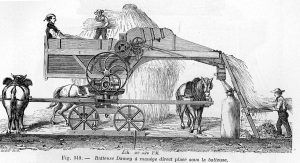
 The traffic had been slow all day but by four pm, it was reduced to a trickle. Those cars that passed him on the street did so in two and threes as if they were sticking together for safety like lumbering animals caught out in a storm. It was, in fact, a very harsh winter day. The afternoon temperatures dipped well below zero: one of the coldest days ever recorded in Chicago. The only sounds now were from an occasional plane passing overhead, and from distant cackling from those venturesome neighbors who had left snug homes to experience the cold. He could hear the sound of his feet crunching through the snow.
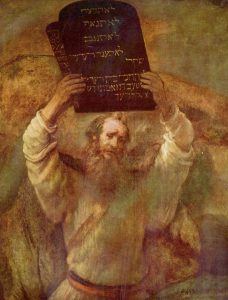 One of the biggest early 20th century philosophical challenges to the belief in God stemmed from the doctrine of verificationism.
 “I read books to read myself,” Sven Birkerts wrote in The Gutenberg Elegies: The Fate of Reading in an Electronic Age. Birkerts’s book, which turns twenty-five this year, is composed of fifteen essays on reading, the self, the convergence of the two, and the ways both are threatened by the encroachment of modern technology. As the culture around him underwent the sea change of the internet’s arrival, Birkerts feared that qualities long safeguarded and elevated by print were in danger of erosion: among them privacy, the valuation of individual consciousness, and an awareness of history—not merely the facts of it, but a sense of its continuity, of our place among the centuries and cosmos. “Literature holds meaning not as a content that can be abstracted and summarized, but as experience,” he wrote. “It is a participatory arena. Through the process of reading we slip out of our customary time orientation, marked by distractedness and surficiality, into the realm of duration.”
 British scholar David Harvey is one of the most renowned Marxist scholars in the world today. His course on Karl Marx’s Capital is highly popular and has even been turned into a series on YouTube. Harvey is known for his support of student activism, community and labour movements.
 With his finely tuned editing ear, Benjamin Dreyer often encounters things so personally horrifying that they register as a kind of torture, the way you might feel if you were an epicure and saw someone standing over the sink, slurping mayonnaise directly from the jar.
 Davos 2019 was a downbeat affair. That at least is how regulars
  Donald Trump campaigned for the presidency and continues to govern as a man who is anti-intellectual, as well as anti-fact and anti-truth. “The experts are terrible,” Trump said while discussing foreign policy during the 2016 campaign. “Look at the mess we’re in with all these experts that we have.” But Trump belongs to a long U.S. tradition of skepticism about the role and motivations of intellectuals in political life. And his particularly toxic version of this tradition raises provocative and difficult questions: Are there occasions when anti-intellectualism is defensible or justified? Should we always dismiss charges that intellectuals are out of touch or too protective of established ways of thinking? In 1963 the historian Richard Hofstadter published Anti-Intellectualism in American Life, in which he traced a recurring mode of thought prevalent, as he saw it, in U.S. religion, business, education, and politics. “There has always been in our national experience a type of mind which elevates hatred to a kind of creed,” he wrote. “[F]or this mind, group hatreds take a place in politics similar to the class struggle in some other modern societies.” On the list of widely hated groups were Masons, abolitionists, Catholics, Mormons, Jews, black Americans, immigrants, international bankers—and intellectuals.
 In January 1817 nearly 3,000 African American men met at the Bethel A.M.E. Church (popularly known as Mother Bethel AME) in Philadelphia and denounced the American Colonization Society’s plan to resettle free blacks in West Africa. This gathering was the first black mass protest meeting in the United States. The black leaders who summoned the men to the church endorsed the ACS scheme and fully expected the black men who gathered there to follow their leadership. Instead they rejected the scheme and forced the black leaders to embrace their position.
 If you don’t speak Japanese but would like, momentarily, to feel like a linguistic genius, take a look at the following words. Try to guess their meaning from the two available options:
 Introduction — John P. Wright, Ph.D.
 I’m talking about loudness as a measure of sound within a particular recording. Our ears perceive loudness in an environment by reflexively noting the dynamic range — the difference between the softest and loudest sounds (in this case, the environment is the recording itself, not the room you are playing it in). A blaring television commercial may make us turn down the volume of our sets, but its sonic peaks are no higher than the regular programming preceding it. The commercial just hits those peaks more often. A radio station playing classical music may be broadcasting a signal with the same maximum strength as one playing hip-hop, but the classical station broadcast will hit that peak perhaps once every few minutes, while the hip-hop station’s signal may peak several times per second.