
Holly White in Scientific American:
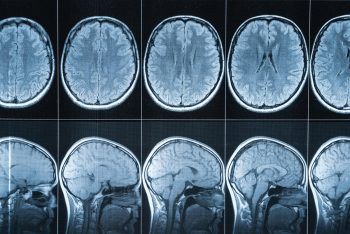
 Attention-deficit/hyperactivity disorder (ADHD) is typically described by the problems it presents. It is known as a neurological disorder, marked by distractibility, impulsivity and hyperactivity, which begins in childhood and persists in adults. And, indeed, ADHD may have negative consequences for academic achievement, employment performance and social relationships.
But ADHD may also bring with it an advantage: the ability to think more creatively. Three aspects of creative cognition are divergent thinking, conceptual expansion and overcoming knowledge constraints. Divergent thinking, or the ability to think of many ideas from a single starting point, is a critical part of creative thinking. Previous research has established that individuals with ADHD are exceptionally good at divergent thinking tasks, such as inventing creative new uses for everyday objects, and brainstorming new features for an innovative cell phone device. In a new study, college students with ADHD scored higher than non-ADHD peers on two tasks that tapped conceptual expansion and the ability to overcome knowledge constraints. Together with previous research, these new findings link ADHD to all three elements of the creative cognition trio.
Prior knowledge can be an obstacle to creativity. When we look to a prior model or example for inspiration, we may actually become stuck: designers refer to this as “fixation.” In creative generation research, when participants are given examples before a task that requires them to invent something new, such as a new toy, their inventions tend to incorporate aspects of the examples—and thus are less novel. The ability to overcome recently presented information is therefore essential to creative thinking.
More here.
 The word “immortals” is entwined in my mind with the Jorge Luis Borges’ story titled The Immortals. The story is an exploration of immortal beings imprisoned in the infinite and seeking to understand their condition. This passage in particular speaks a truth about our ideas of immortality.
 As Boeing hustled in 2015 to catch up to Airbus and certify its new 737 MAX, Federal Aviation Administration (FAA) managers pushed the agency’s safety engineers to delegate safety assessments to Boeing itself, and to speedily approve the resulting analysis.
 Last week, Nature, one of the top scientific journals in the world, ran
  Until the 1970s, Saudi Arabia was simply a docile U.S. ally and source of cheap oil. That began to change with the OPEC-engineered price hikes, masterminded by the Saudi government. The Saudi government then subsidized the spread of radically fundamentalist Islam through the Muslim world. The stakes increased with the attacks of 9/11 (the majority of the skyjackers were Saudi). But throughout this era, Washington continued to indulge Riyadh, either because of the politics of oil, plain conflicts of interest, the fact that the Saudi policy toward Israel was covertly not as hostile as it might have been, or all three. With the ascension of MBS, a newly bellicose kingdom has emerged. Saudi has reached out to allies in Asia who neglect human rights and are happy to displace U.S. influence. It has engaged in monstrous violations of diplomatic norms, of which the Khashoggi hit was only the most extreme case.
  The East in you never leaves, I thought, after leaving the immigration bureau. Thirty years after the fall of the Berlin Wall, here I was in Manhattan, and felt deeply and fully ‘eastern’. What does that mean for somebody who was only ten years old in 1989, whose memories of communism mostly relate to a monument she loved to climb on Gellért Square in Budapest? Simply put, it means a bodily sensation of inexplicable fear at the border. My deep-rooted anxiety about border-guards and law enforcement was back, even in the country where I have chosen to live; where, despite all the problems the United States now faces, I feel deeply at home. In that sense, your ‘eastern’ identity never leaves you, I thought, not even after three decades.
 The sun was setting in Hawaii on a spring day in 1995, when W. S. Merwin invited me into his study to hear him recite a new poem, and since he did not care to turn on the lights I listened to the last stanzas of his “Lament for the Makers” in near darkness. His study had a sacred aspect—its door was to remain locked whenever I house-sat for him and his wife, Paula, during their travels to the mainland and then to their place in the Dordogne. This atmosphere was heightened by his melodic voice, which in my mind bore traces of the hymns he had composed as a child for his Presbyterian minister father in Scranton, Pennsylvania. A palm frond crashed into the ravine beyond the lanai, on which a pair of sleeping chow chows did not stir. William recalled his departed poet-friends: “One by one they have all gone / out of the time and language we / had in common which have brought me”—and here his voice began to crack: “to this season after them.”
 The data gap is particularly dangerous, and maddening, in medical research. Women are severely under-represented in clinical trials, which means we could be missing out on drugs that work for us and are regularly prescribed inappropriate drugs, or inappropriate doses. As a result, women are significantly more likely than men to suffer adverse drug reactions. Scientists don’t even know the specific effects on women of a huge number of existing medications. This is alarming. We now know, for instance, that one commonly prescribed drug for high blood pressure lowers heart-attack deaths among men but increases them for women. One of my mother’s closest friends died of a heart attack within a few hours of visiting her GP, complaining of excruciating abdominal pain. Women are more likely than men to suffer fatal heart
 They come to New York City every week, in buses and trains and cars, carrying bags, carrying ambitions, carrying the fabulous clothes on their backs. They’re the fashion kids, the art kids, the theatre kids, the who-knows-what kids—creative renegades of nineteen or twenty or twenty-five. They’ve heard what we’ve all heard: that downtown is dead, that the rent is too damn high, that someone has paved paradise and put up a Duane Reade. Still, they keep coming, against all odds, tricked out in spangles, torn shirts, and tattoos, seeking a place where they can find themselves, and one another.
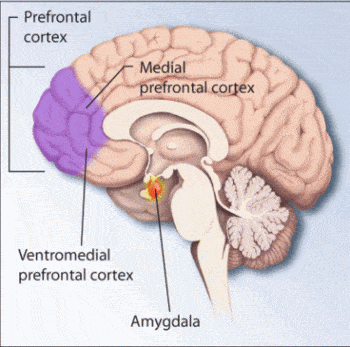 Researchers may have found a way to improve a common treatment for post-traumatic stress disorder (PTSD) by changing how the brain learns to respond less severely to fearful conditions, according to research published in Journal of Neuroscience. The study by researchers at The University of Texas at Austin Dell Medical School suggests a potential improvement to exposure therapy—the current gold standard for PTSD treatment and anxiety reduction—which helps people gradually approach their trauma-related memories and feelings by confronting those memories in a safe setting, away from actual threat.
 I was struck by a sentence in Susan Orlean’s The Library Book: “If nothing lasts, nothing matters.” This line was part of a discussion of memory, the fear of being forgotten, and the value of passing things on to future generations. I share a passion for the idea of continuity between generations (and I highly recommend Orlean’s book), but ultimately I don’t think that something has to last to matter. Alan Watts, in his book This Is It, says that “This—the immediate, everyday, and present experience—is IT, the entire and ultimate point for the existence of a universe.” It’s not about connecting with anything but what’s here in front of me now. (Easier said than done, of course.)
 I teach two kinds of group exercise classes, and part of the certification processes for both disciplines devoted no small amount of attention to how to speak to your minions, uh, students.
 “…And now to introduce our second panelist: Martha. Martha does believe that academic philosophy is worth pursuing, and she has – of course – written a book about it. Martha, can you briefly summarize your argument?”
 My answering machine whirrs. From an echoing room, the chainsaw-voice shouts into a speaker phone:
 Abdullah, the delightful septuagenarian protagonist of Hussain M. Naqvi’s latest novel The Selected Works of Abdullah the Cossack, might be a ‘Cossack’ (having successfully imbibed his way to earning that name), but Naqvi himself is nothing short of a veritable Vaslav Nijinsky when it comes to negotiating the balletics of Pakistani Anglophone writing. Erudite yet entertaining, the Cossack’s story, in spite of his literally heavyweight frame and metaphorically heavyweight influence, gracefully pirouettes its way through the landscape of both Abdullah’s witty mind as well as the geographical terrain of Karachi in general, and Garden East in particular.