
Category: Recommended Reading
Dick Dale (1937 – 2019)
https://www.youtube.com/watch?v=Fwx2pephwKU
Sunday Poem
Lament for the Makers
Not bird not badger not beaver not bee
Many creatures must
make, but only one must seek
within itself what to make
My father’s ring was a B with a dart
through it, in diamonds against polished black stone.
I have it. What parents leave you
is their lives.
Until my mother died she struggled to make
a house that she did not loathe; paintings; poems; me.
Many creatures must
make, but only one must seek
within itself what to make
Not bird not badger not beaver not bee
Teach me, masters who by making were
remade, your art.
By Frank Bidart
from Star Dust
Farrar, Straus and Giroux, 2005
Saturday, March 23, 2019
Gwern’s AI-Generated Poetry
Scott Alexander in Slate Star Codex:
Gwern has answered my prayers and taught GPT-2 poetry.
GPT-2 is the language processing system that OpenAI announced a few weeks ago. They are keeping the full version secret, but have released a smaller prototype version. Gwern retrained it on the Gutenberg Poetry Corpus, a 117 MB collection of pre-1923 English poetry, to create a specialized poetry AI.
I previously tested the out-of-the-box version of GPT-2 and couldn’t make it understand rhyme and meter. I wrongly assumed this was a fundamental limitation: “obviously something that has never heard sound can’t derive these complex rhythms just from meaningless strings of letters.” I was wrong; it just didn’t have enough training data. Gwern’s retrained version gets both of these right, and more too. For example:
Thou know’st how Menoetiades the swift
Was dragged, of Hector and the fierce compeers
And Phrygian warriors. So, we will dispatch
Your bodies, then, yourselves to burn the ships
In sacrifice; with torches and with bells
To burn them, and with oxen to replace
Your gallant friends for ever. But I wish
That no man living has so long endured
The onset of his foes, as I have power
To burn or storm; for mighty Hector erst
Was slain, and now returns his safe return
This is all perfect iambic pentameter. I know AP English students who can’t write iambic pentameter as competently as this.
More here.
The Neanderthal renaissance
Rebecca Wragg Sykes in Aeon:
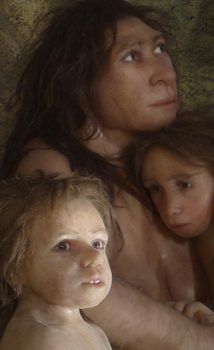 Who were the Neanderthals? Even for archaeologists working at the trowel’s edge of contemporary science, it can be hard to see Neanderthals as anything more than intriguing abstractions, mixed up with the likes of mammoths, woolly rhinos and sabre-toothed cats. But they were certainly here: squinting against sunrises, sucking lungfuls of air, leaving footprints behind in the mud, sand and snow. Crouching to dig in a cave or rock-shelter, I’ve often wondered what it would be like to watch history rewind, and see the empty spaces leap with shifting, living shadows: to collapse time, reach out, and allow my skin to graze the warmth of a Neanderthal body, squatting right there beside me.
The business of archaeology is about summoning wraiths from the graveyards of millennia, after the vagaries of decay and erosion have done their work. Everything begins as fragments. Yet in recent years, poring over these shards has produced a revolution in our understanding of Neanderthals. Contrary to what we once thought, they were far from brutish, ‘lesser’ beings, or mere evolutionary losers on a withered branch of our family tree. Rather, the invention of new dating techniques, analysis of thousands more fossils and artefacts, and advances in ancient DNA research have collectively revealed the extent to which the lives of Neanderthals are braided together with our own.
More here.
Democracy — What Would That Be Like?
David Byrne at his own website:
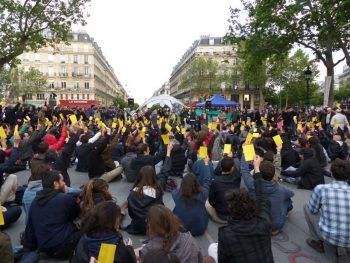 Our system—as evidenced by studies at Princeton University and Northwestern University and other research—is not a true representative government. The will of the majority of people in the US is not represented—except in those cases when the desires of the majority match the policies favored by the wealthy and powerful. Their interests are more often enacted into law. We, therefore, do NOT live in a democracy.
As Tim Wu points out in the New York Times, the wishes of the majority are often all but ignored:
About 75 percent of Americans favor higher taxes for the ultrawealthy. The idea of a federal law that would guarantee paid maternity leave attracts 67 percent support. Eighty-three percent favor strong net neutrality rules for broadband, and more than 60 percent want stronger privacy laws. Seventy-one percent think we should be able to buy drugs imported from Canada, and 92 percent want Medicare to negotiate for lower drug prices. The list goes on.
I saw Astra Taylor’s documentary What Is Democracy? recently, and it got me thinking—which is what this film is meant to do. It’s not a movie that hands out answers, and it never mentions “Individual 1”. I’m not an expert on any of this, but especially considering the times we live in, I have taken an amateur’s passionate interest in wondering what this thing we claim to love so much really is.
Cornel West was at the screening (he also appears in the film), and he made the point that democracy alone is not going to solve our problems or lead to some of the big changes that are needed in the US or other countries. Brown v. Board of Education, the Civil Rights Act and Women’s Suffrage did not happen because they were put to a vote. In fact, West pointed out, if some of these things had been put to a vote, they probably would have been rejected. The voice of the people—which is heard via voting—needs to be coupled and linked with other institutions for the whole thing to work. The rule of law, a drive for justice, a free press…I would also venture to say that if there’s too much economic inequality, you can’t have democracy as well. In such situations, democracy is not possible.
More here.
Saturday Qawwali: Farid Ayaz & Abu Muhammad sing “Bazeecha e Atfal Hai Duniya”
How Translation Obscured the Music of The Bible
Robert Alter at berfrois:
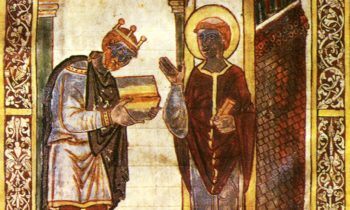 An essential fact about the Hebrew Bible is that most of its narrative prose as well as its poetry manifests a high order of sophisticated literary fashioning. This means that any translation that does not attempt to convey at least something of the stylistic brilliance of the original is a betrayal of it, and such has been the case of all the English versions done by committee in the modern period.
It might be objected that the books of the Bible are, after all, fundamentally religious texts, not works of literature but, for reasons we cannot altogether fathom, this tiny Israelite realm, though rather crude in comparison with its larger and more powerful ancient Near Eastern neighbours in regard to visual art and material culture, produced writers of genius who chose to express their vision of the new monotheistic worldview in artful narrative and finely evocative poetry. If a translation fails to get much of its music across, it also blurs or even misrepresents the depth and complexity of the monotheistic vision of God, history, the realm of morality, and humankind.
more here.
‘Brilliant Imperfection: Grappling with Cure’ by Eli Clare
Ashley Miller at the Quarterly Conversation:
 This “the ideology of cure” also focuses on the future of the disabled individual rather than on their present. Clare points out how various forms of activism often promote cure as the only response to body-mind difference and loss. For example, charity walks and runs exclude disabled individuals from participation and focus on the fear of becoming different or acquiring disability through a disease like cancer or cerebral palsy, rather than strive toward health and longevity of life for those that are suffering.
In his final two chapters, Clare prompts his readers to turn away from the “normal.” He challenges us to stop attempting to locate the body-minds of strangers on maps—diagnostic maps, racial and ethnic maps, gender maps. The book challenges preconceived notions of disability and difference, as Clare explores the meanings of cure, the connections between disability and social/environmental injustices, and the violence done by categorizing body-minds as “abnormal” and “unnatural.” He argues that there is nothing inherently wrong with disabled body-minds, even as they differ from the norm.
more here.
Roland Topor’s Blood, Shit, and Sex
Andrew Hodgson at The Paris Review:
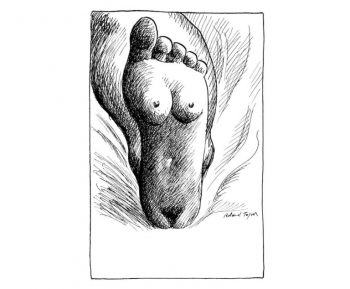 While he is best known in his native France as an artist, and perhaps for his turn as Renfield in Werner Herzog’s Nosferatu (1979), Roland Topor’s written works are still generally unacknowledged. In the scant body of critical writing surrounding his books, they are classed as “post-surrealist horror” that demonstrate “the same half-sane magnifications that strike home in Kafka.” And yet to read his novels, short stories, and plays is to enter a world far from the sleek poeticisms of Breton’s Nadja (1928) or indeed the safety of a barricaded room in which Gregor Samsa hides his transformation in The Metamorphosis (1915). Topor’s writing, much like his illustrations, plunges the reader again and again into predicaments in which grotesque metamorphoses are encountered already in advanced states of development and resultant crisis. In this way, the narratives lead us in a sense to the ground where Breton and Kafka leave off.
more here.
Understanding Our Origins
From The Chronicle of Higher Education:
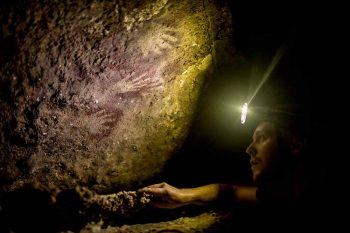 For years, archaeologists thought Europe was the site of the first creative impulses, with famous cave drawings like those at Chauvet, France, putting humans’ innate artistic expression on display. Only in the past decade has that assumption begun to shift, and thanks in large part to the explorations of researchers from the Australian Research Centre for Human Evolution (ARCHE) at Griffith University in Queensland, Australia.
Shortly after completing his Ph.D., Maxime Aubert heard about undated cave art on the Indonesian island of Sulawesi and his curiosity was piqued. Using uranium-series dating, a technique that had not been applied to the paintings before, Aubert — who is now a Professor of archaeological science at Griffith University and researcher both at ARCHE and at the Griffith Centre for Social and Cultural Research — showed that images on the walls and ceilings of the caves had been there for almost 40,000 years, making them at least as ancient as those in Europe, if not even older. The resulting article — published in Nature in 2014 — took the world by storm. Science magazine ranked the research among the top ten discoveries of that year, and noted that it, “could rewrite the history of a key stage in the development of the human mind.” The finding turned the previous theory that human creativity had originated in Europe on its head.
“Essentially they were saying that when humans left Africa they didn’t become collectively modern until they reached Europe — which is not true. We killed that idea,” Aubert says. “It’s more likely that when modern humans left Africa maybe 100,000 years ago they were fully modern.”
More here.
The Moral Clarity of ‘Slaughterhouse-Five’ at 50
Kevin Powers in The New York Times:
 There is an eminently useful thought experiment with which I suspect you are familiar. It goes something like, “What would an alien think of ____?” The blank is typically filled in with something like sex, or our destructive relationship to the natural world, or money. War is sometimes used to fill that blank, too. The point of the thought experiment is to invent a kind of critical distance between a particular aspect of human behavior and ourselves, the ones behaving un-self-consciously like humans. This thought experiment is useful precisely because it forces a perspective so separate, or alien, that with a little luck we gain some insight into why we are the way we are or why we do the things we do, like procreate, or poison our habitat, or hoard digital proxies for paper proxies for bits of rare but not all that rare metals, or watch old people get machine-gunned to death, or firebomb medium-size German cities. I’ve often thought that “Slaughterhouse-Five” is a variation on this kind of thought experiment; it has few if any equals in creating the kind of distance that can offer insight into the mass insanity of modern warfare.
But it is so much more than a uniquely useful thought experiment on war. It is equally remarkable in the innovative way its structure is married to, and made necessary by, the story itself. Just before his capture by the Germans during the war, our hero, Billy Pilgrim, becomes “unstuck in time.” Later in the narrative we learn that this is a consequence of Billy’s subsequent abduction by Tralfamadorians, aliens who happen to be unbound by the normal limitations of time and space. Through this ingenuous device Kurt Vonnegut shows the past as an irresistible force, particularly in the case of those who have trauma at the center of their experience. The war intrudes on Billy’s later life in a way that will be immediately familiar to those who have fought in one. His past arrives without invitation, bouncing between the war, his childhood and his unremarkable later life as an optometrist, which is itself punctuated by visits to mental and veterans hospitals. As the narrative progresses we begin to understand that for a man who has witnessed the horrors that Billy has, the Tralfamadorians’ belief that the past, present and future are merely the primitive notions of Earthlings starts to sound like a comforting explanation for the intrusive nature of traumatic experience.
More here.
Saturday Poem
When I Meet the Last Taushiro
I ask him why his folk settled at the mouth of the Aucayacu River
instead of plodding north. He tells me they meant to live.
instead of plodding north. He tells me they meant to live.
The conference begins & a man hands him a card. Several follow.
The day before, he’d gathered rainwater & buttered up some yucca
as he headed toward the mount. He prowled until nighttime, he believes.
I ask him why he won’t satanize those who snub his fears & wants.
The last speaker of a language that forgoes p’s & b’s longs to teach us
his a’s & c’s. Last year, he met a woman who could muster a few sentences,
but not nearly enough for it to matter. He used to have a Bible in Taushiro
that “got stolen ages ago,” he says. I ask him who translated it.
He doesn’t need it anymore. He sings. He talks to himself & never forgets.
As a young man, he could climb a tree the way his mother taught him.
Nobody else for miles knew how to get those paltas from up there.
Yet he never fell. Ask anyone around. He could do it again, he thinks,
but only for a little while. It’s getting late & he’ll run out of game.
.
by P.L. Sanchez
from Rattle #62, Winter 2018
.
by P.L. Sanchez
from Rattle #62, Winter 2018
Friday, March 22, 2019
Signs and Wonders
Delia Falconer in the Sydney Review of Books:
 In ancient Rome, priests and officials called augurs would look for omens of the future in the weather, the movement of animals (especially animals encountered out of place), or the flights of birds. These days, we’re scrutinising the same things to tell the future, not as signs of the gods’ will but our own actions.
Were the gale-force winds last November simply unseasonal, I heard people asking in the playground, or evidence of global warming? Where are the summer cicadas, my mother asks — she can’t remember hearing any on Sydney’s north shore for years—and why have brush turkeys and rabbits started appearing in her garden?
Scientists are pursuing these questions with more rigour: modern augurs, staring at birds’ intestines, they are trying read both the accumulated past and the future.
More here.
This essay explains how quantum computers work
Andy Matuschak and Michael Nielsen in Quantum Country:
 It’s not a survey essay, or a popularization based on hand-wavy analogies. We’re going to dig down deep so you understand the details of quantum computing. Along the way, we’ll also learn the basic principles of quantum mechanics, since those are required to understand quantum computation.
Learning this material is challenging. Quantum computing and quantum mechanics are famously “hard” subjects, often presented as mysterious and forbidding. If this were a conventional essay, chances are that you’d rapidly forget the material. But the essay is also an experiment in the essay form. As I’ll explain in detail below the essay incorporates new user interface ideas to help you remember what you read. That may sound surprising, but uses a well-validated idea from cognitive science known as spaced-repetition testing. More detail on how it works below. The upshot is that anyone who is curious and determined can understand quantum computing deeply and for the long term.
More here.
White Supremacism Isn’t Insanity
Shadi Hamid in Foreign Policy:
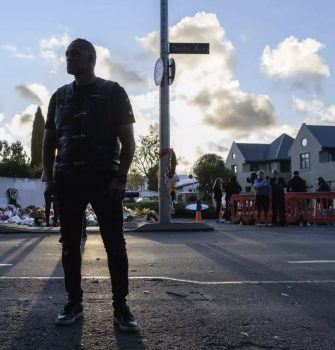 It is reasonable that we would want to cast such an attack outside the realm of rationality, to tell ourselves that expressions of evil are random and unpredictable; it’s the same impulse many had when faced with the brutality and terror of the Islamic State and other jihadi extremists. To rationalize evil as something irrational makes it easier to take on horrifying news. But to do that here would be a mistake.
I won’t link to the accused shooter’s manifesto. But I think it’s important for analysts and government officials to read it carefully. This is what many of us did when the Islamic State would release its recordings and statements. We tried to understand why young Tunisians would travel to Syria to fight in disproportionate numbers for a group that seemed so ostentatious in its savagery. In the process, the analytical and policy community was able to reach a fairly sophisticated understanding of not just the group’s objectives but also of its particular way of looking at the world, including the end times. In dealing with an apparent global rise in violent white supremacism, we may, once again, be obliged to immerse ourselves in a disturbing, sometimes terrifying universe of thought that will, at least at first, seem foreign.
More here.
John Oliver on the power of public shaming, good and bad
A Last Conversation with Carolee
Alison Knowles with Carolee Schneemann:
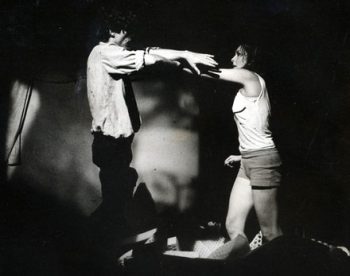 Schneemann: We would go mushroom hunting with him. And Higgins made these incredible mushroom dinners, right? They made you poop like crazy, but they were delicious. And John was very close with Tenney. Tenney produced Cage’s concerts early on, while nobody was supporting us or helping us. He was forming a group called Tone Roads at the time with Malcolm Goldstein and Philip Corner, and Phil Glass and Steve Reich were participants. I always cherished time with Jim and John talking about sound and natural formulations, but we were divisive on politics. John didn’t want to have conflict, it was his defining position. He didn’t discourage us from going to anti-Vietnam war marches, but he wouldn’t join in any way. We loved him. He was generous, spirited, engaging.
What about George Maciunas? He hated me! He said I was narcissistic, overly sensuous, operatic, involved in self-display—everything that was against his principles for Fluxus. And he sent out a broad sheet at some point instructing true Fluxus artists to having nothing to do with me whatsoever, but we had layers of friendship and association.
more here.
Agustín Fernández Mallo’s Contemporary Epic
Jessica Loudis at The Nation:
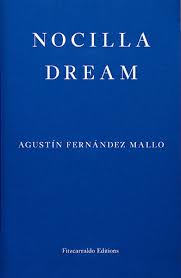 One of the paradoxes of Nocilla Dream is that it is an apolitical book that owes its success in part to politics. Mallo was born in 1967, only eight years before Francisco Franco’s dictatorship gave way to Spain’s nascent democracy. He came of age in the midst of La Movida, the Madrid-based countercultural movement that released decades of pent-up desire for sex, drugs, and rock and roll. Through music, art, and, most notably, the early films of Pedro Almodóvar, La Movida introduced young Spaniards to a world beyond their own borders. At its height, Mallo was living in Madrid as a full-fledged punk in the first year of a physics degree, skipping parties to stay in and write. It was a heady time for artists, and in his insightful introductory essay, Bunstead draws a parallel between “the trilogy’s fractured chaos and its huge, almost yearning emphasis on order” and “the wider Spanish experience of this period,” which saw the country struggling to define itself in the absence of Franco.
more here.
Free Trade in Medieval England
Paul Strohm at Lapham’s Quarterly:
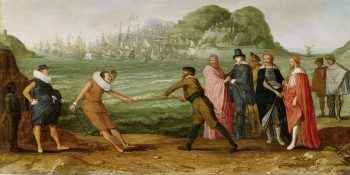 Giano’s killing was one episode in the larger story of international trade and its accompanying rivalries in the later European Middle Ages. The so-called Dark Ages were never as dark as their name would imply; hucksters, peddlers, chapmen, and other minor players had always plied Europe’s roads and dealt their goods. But it was in the fourteenth and fifteenth centuries that high-volume international trading seriously resumed, with trade in wool one of its major drivers. In those centuries, the Port of London alone handled almost a thousand arriving and departing trading vessels a year, and numerous other English ports (including the newly active ports of Dover and Southampton) were claiming a role. Half this activity was devoted to wool, and it generated immense wealth for the realm, conferring fortunes on a small and monopolistic group of men. These successful profiteers were not the sheepherders and shearers of the provinces, nor the merchant sailors who braved the seas, but the entrepreneurial middlemen who collected revenues on exported wool. A close-knit group of at most several hundred men, they formed allegiances and confederations throughout the mercantile establishment that dominated the leading guilds and ran the city of London.
more here.