The Accompanist
Don’t play too much, don’t play
too loud, don’t play the melody.
You have to anticipate her
and to subdue yourself.
She used to give me her smoky
eye when I got boisterous,
so I learned to play on tip-
toe and to play the better half
of what I might. I don’t like
to complain, though I notice
that I get around to it somehow.
We made a living and good music,
both, night after night, the blue
curlicues of smoke rubbing their
staling and wispy backs
against the ceilings, the flat
drinks and scarce taxis, the jazz life
we bitch about the way Army pals
complain about the food and then
re-up. Some people like to say
with smut in their voices how playing
the way we did at our best is partly
sexual. OK, I could tell them
a tale or two, and I’ve heard
the records Lester cut with Lady Day
and all that rap, and it’s partly
sexual but it’s mostly practice
and music. As for partly sexual,
I’ll take wholly sexual any day,
but that’s a duet and we’re talking
accompaniment. Remember “Reckless
Blues”? Bessie Smith sings out “Daddy”
and Louis Armstrong plays back “Daddy”
as clear through his horn as if he’d
spoken it. But it’s her daddy and her
story. When you play it you become
your part in it, one of her beautiful
troubles, and then, however much music
can do this, part of her consolation,
the way pain and joy eat off each other’s
plates, but mostly you play to drunks,
to the night, to the way you judge
and pardon yourself, to all that goes
not unsung, but unrecorded.
by William Matthews
from Poetry 180
Random House 2003
 In the opening of The Other Americans, Laila Lalami’s fourth novel, a man is killed in a hit-and-run collision. The victim is Driss Guerraoui, an immigrant and small business owner who, after fleeing political unrest in Casablanca, eventually settles in a small town in California’s Mojave Desert to open a business and raise his family. His immigrant story is one his younger daughter Nora, a jazz composer, considers with mixed feelings. “I think he liked that story because it had the easily discernible arc of the American Dream: Immigrant Crosses Ocean, Starts a Business, Becomes a Success.” And it’s this clichéd American-immigrant narrative that Lalami sets out to deconstruct in her book.
 This week, amid devastating
  If someone says, “I guess it’s in my DNA,” you never hear people say, “DN—what?” We all know what DNA is, or at least think we do.
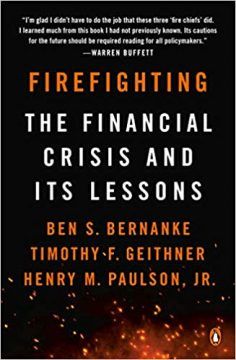 For a few months in 2008 and 2009 many people feared that the world economy was on the verge of collapse…
 Cyril Connolly once wrote: “The more books we read, the clearer it becomes that the true function of a writer is to produce a masterpiece and that no other task is of any consequence.” This is tosh, of course, for if every book were a masterpiece, no book would be a masterpiece and we could not know a masterpiece when we read it. They also serve who only sit and write trash. To know the good, we have to know the bad. The precise quantity and degree of the bad that we have to know in order to appreciate the good is debatable, and certainly there is no great difficulty in finding the bad, whether it be bad food, bad films, bad theatre productions, bad behaviour or bad books. Indeed, the only thing that can be said in favour of the current overwhelming prevalence of the bad is that it adds to the pleasure of finding the good — the piquancy both of discovery and relief.
 OVER THE PAST FEW YEARS—
 If you don’t stand for something, you’ll fall for anything,” as an old piece of political folk wisdom holds. The
  When
When  Soraya Roberts in Longreads:
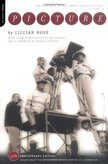 First published in 1952, Lillian Ross’s Picture, an eyewitness report of director John Huston’s adaptation of The Red Badge of Courage, remains the paradigm of a slim genre, the nonfiction account of a movie’s making (and unmaking): from shooting to editing to studio meddling to publicity planning to preview screening to more studio meddling to, finally, theatrical release. The book is populated by raffish heroes (Huston) and tyrannical philistines (Louis B. Mayer), by the beleaguered (producer Gottfried Reinhardt) and the overweening (MGM head of production Dore Schary), and by various hypocrites, toadies, greenhorns, and wives. Envisioned by Ross as “a fact piece in novel form, or maybe a novel in fact form,” Picture endures as a key work of proto–New Journalism. Though Ross, a writer for more than sixty years at the New Yorker—where Picture, under the title “Production Number 1512,” was first published, in five installments—was renowned for her fly-on-the-wall reporting, she is not always invisible in the book; “I” pops up intermittently.
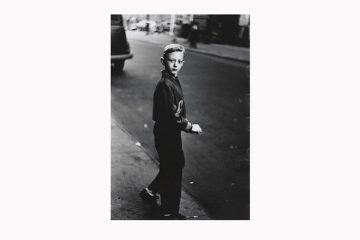 In the era of Instagram and YouTube, when photography has mostly become a means of projecting oneself into the world to gauge its reaction, it takes an imaginative leap to recognize how revolutionary Diane Arbus’s murky photographs of some of the more disturbing corners of
  I
I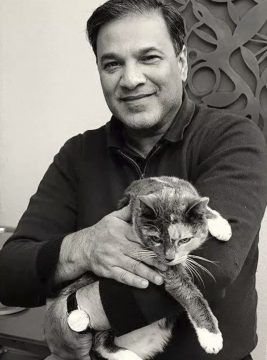 In this episode Fred Weibull interviewed Abbas to learn about the origins and intentions of 3QD, the reasons behind its extraordinary commitment to public service and the emphasis on the art of curation over content production. Abbas expands on 3QD’s process of locating and discerning content, about the organisation of the editorial team, scattered across the world and the particular work discipline and practices of a skilled curator…