Michael Ruse in Alternet:
 As the French novelist Albert Camus said, life is “absurd,” without meaning. This was not the opinion of folk in the Middle Ages. A very nice young Christian and I have recently edited a history of atheism. We had a devil of a job – to use a phrase – finding people to write on that period. In the West, Christianity filled the gaps and gave life full meaning. The claims about our Creator God and his son Jesus Christ, combined with the rituals and extended beliefs, especially about the Virgin Mary, meant that everyone’s life, to use a cliché from prince to pauper, made good sense. The promises of happiness in the eternal hereafter were cherished and appreciated by everyone and the expectations put on a godly person made for a functioning society.
Then, thanks to the three Rs, it all started to crumble. First the Renaissance, introducing people to the non-believers of the past. Even the great Plato and Aristotle had little place for a Creator God. Then the Reformation tore into established beliefs such as the importance of the Virgin Mary. Worse, the religious schism suggested there was no one settled answer. Finally, the (Scientific) Revolution, showed that this plant of ours, Earth, is not the center of the universe but a mere speck in the whole infinite system. This system works according to unbreakable laws – no miracles – and God became, in the words of a distinguished historian, a “retired engineer.” There was still the problem of organisms, whose intricate design surely had to mean something. Blind law just leads to rust and decay. And yet, organisms defy this. If a clever technician set out to make an instrument for spotting things at great distances, the eye of the hawk is built exactly as one would predict. There had to be a reason. As the telescope had a telescope designer, so the eye surely pointed to The Great Optician in the Sky. Along came Charles Darwin with his theory of evolution. He showed, through his mechanism of natural selection – the survival of the fittest – how blind law could indeed explain the eye. Thanks to population pressures, there is an ongoing struggle for existence, or more importantly struggle for reproduction. Simply, those organisms with better proto-eyes did better in this struggle, and over time there was general improvement. The hawks with keener sighthad more babies! They were “naturally selected.”
…That is the secret, the recipe, for a meaningful life in this Darwinian world. First, family and the love and security that that brings. Then society, whether it be going to school, shopping at the supermarket, or simply having a few drinks with friends, and sometimes strangers. Third, the life of the mind. Shakespeare’s creative works are about people and their relationships – happy (Twelfth Night), sad (Romeo and Juliet), complex (Hamlet), doomed (Macbeth), triumphant (Henry V). This is the life of meaning. Take life for what it is. Enjoy it to the full, realizing that the secret of true happiness is being fully human, taking from and giving to others. And stop worrying about the future. There may be one. There may not. There is a now.
More here.

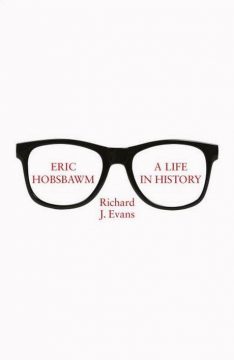 In early 1933, in the final days of the Weimar Republic, Eric Hobsbawm was in Berlin. He had lost his parents, and his uncle and aunt had taken him to Berlin where he joined his younger sister. As a teenaged student, Hobsbawm saw Germany falling into the hands of the Nazis. Hitler’s Brownshirts were unleashing widespread violence on the streets of Berlin. The country’s economy was in a shambles. Political instability was at its peak and the Nazi party was growing in popularity. Those were the formative years of the political Hobsbawm. “In this highly politicised atmosphere, it was perhaps hardly surprising that Eric soon became interested in the communist cause,” writes Richard J. Evans in Eric Hobsbawm: A Life in History, a biography of one of the most renowned historians of the 20th century.
 Imagine the outcry if, at the 2016 Summer Olympics, the legendary United States swim team – Michael Phelps, Ryan Lochte, Conor Dwyer and Townley Haas – still obliterated the competition, coming first in the men’s 4 x 200m freestyle relay, but only Haas, Lochte and Dwyer received medals, with nothing, not even a silver, for Phelps. ‘Unfair!’ you’d cry. And you’d be right.
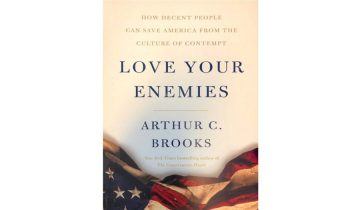 Arthur Brooks is one of the limitless number of policy analysts who toil in Washington. He stands out both because he is prolific and his work has had an impact. He has already written 10 books on a wide range of subjects, served as president of the influential center-right American Enterprise Institute, and writes a column for the Washington Post. His background sets him apart. An accomplished classical musician, he spent 12 years playing in a symphony orchestra. He worked his way through college and attended Thomas Edison State University in New Jersey – not exactly a “big name” school in the corridors of power (though he did earn a Ph.D. in public policy from the Rand Institute). On a personal level, he is deeply religious (Roman Catholic) and calls the Dalai Lama a friend and mentor.
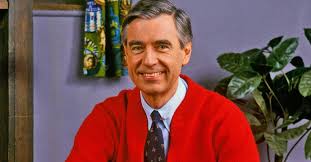 For me — and, I suspect, for many others — my crush on Rogers has something to do with seeing a man play, and make-believe, and talk openly about his feelings; it’s about what it means to see a man not acting like “a man” at all. And the excitement of that — political, ethical, and, yes, sexual. What would it be like, I wonder as I watch Rogers, to fuck a man who rejects masculinity? How does Rogers, embodying this alternative, make us think about sex, about who it is safe to do it with, and how, and why, and who we become when we fuck, and what hurts when we do, and what might feel good, and what never did, and why our sex is so often marked by violence, physical or mental or emotional. The Rogers phenomenon is about what masculinity might look like if one rejects its patriarchal construction; it’s about the fear of — and intense desire for — a radical alternative.
 What Overton proposes is a sort of grand unified theory of suicide bombing, tracing a thread of bloody utopian thinking through a century or so of self-destructive murder, where the act prefigured either an idea of self-sacrifice for a greater good or reflected the religious conviction that the self continues.
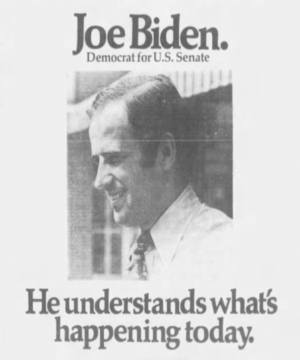 “Joe Biden. He understands what’s happening today.”
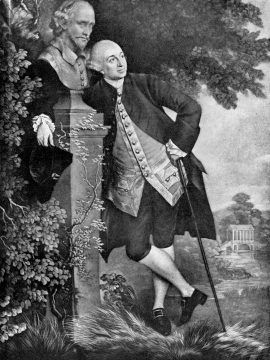 Shakespeare’s power to endure has been ensured by twin track modes of survival: his life on the page and on the stage. His texts are pored over scrupulously by academics, read dreamily by kids and scanned with soft remembrance by the sere. At any given moment, his dramatic verse is sung, shouted, muttered and sometimes spoken with the warm assurance it needs, from hundreds of stages to thousands of eager spectators.
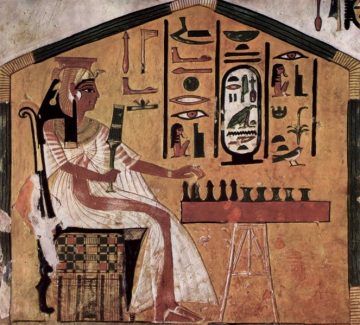 Ten thousand years ago, in the Neolithic period, before human beings began making pottery, we were playing games on flat stone boards drilled with two or more rows of holes.
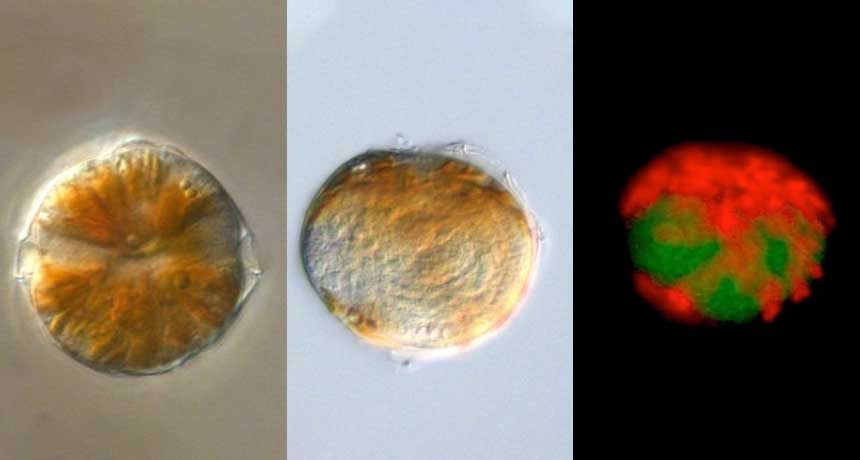 One parasite that feeds on algae is so voracious that it even stole its own mitochondria’s DNA.
 Halfway through his first five-year term, U.N. Secretary General
  P
P “I’ll be wearing a blue anorak,” he said to me on the phone, so I could identify him when we met. We were more like immediate siblings than date possibilities for each other, and I repeated this line about a blue anorak to him for twenty years. He claims there was no blue anorak and what the fuck is an anorak, anyhow? But that’s what I remember. We went to see a Gerhard Richter show at Marian Goodman. I was aware that Alex’s grandfather Alexander Lippisch was a famous Luftwaffe aeronautical engineer who was recruited to White Sands Missile Range after the war. Looking at Richter’s paintings together, I immediately associated Richter’s blend of formal precision and German trauma with Alex’s. From the gallery, we walked into Central Park. We sat on a rock and Alex told me that one day, on a very similar rock, he’d been on acid with his friend the painter Alexander Ross. As they sat on this rock, tripping, they watched Alex Katz approach a Sabrett cart and buy a hot dog. Three painters named Alex: two on acid, one eating a hot dog. They left and went to Alex Brown’s place on Forsyth Street and, still tripping, walked into the scene of a dramatic drug bust.