Harry T Dyer in LiveScience:
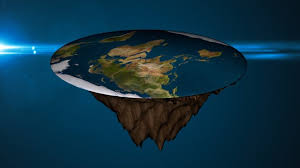 Speakers recently flew in from around (or perhaps, across?) the earth for a three-day event held in Birmingham: the UK’s first ever public Flat Earth Convention. It was well attended, and wasn’t just three days of speeches and YouTube clips (though, granted, there was a lot of this). There was also a lot of team-building, networking, debating, workshops – and scientific experiments. Yes, flat earthers do seem to place a lot of emphasis and priority on scientific methods and, in particular, on observable facts. The weekend in no small part revolved around discussing and debating science, with lots of time spent running, planning, and reporting on the latest set of flat earth experiments and models. Indeed, as one presenter noted early on, flat earthers try to “look for multiple, verifiable evidence” and advised attendees to “always do your own research and accept you might be wrong”.
While flat earthers seem to trust and support scientific methods, what they don’t trust is scientists, and the established relationships between “power” and “knowledge”. This relationship between power and knowledge has long been theorised by sociologists. By exploring this relationship, we can begin to understand why there is a swelling resurgence of flat earthers.
Let me begin by stating quickly that I’m not really interested in discussing if the earth if flat or not (for the record, I’m happily a “globe earther”) – and I’m not seeking to mock or denigrate this community. What’s important here is not necessarily whether they believe the earth is flat or not, but instead what their resurgence and public conventions tell us about science and knowledge in the 21st century. Multiple competing models were suggested throughout the weekend, including “classic” flat earth, domes, ice walls, diamonds, puddles with multiple worlds inside, and even the earth as the inside of a giant cosmic egg. The level of discussion however often did not revolve around the models on offer, but on broader issues of attitudes towards existing structures of knowledge, and the institutions that supported and presented these models.
More here.

 The more general critiques take up larger intellectual currents in the eighteenth century. The era’s systematic forays into physical anthropology and human classification laid the foundation for the noxious race science that emerged in the nineteenth century. So did the rise of materialism: it became harder to argue that our varying physical carapaces housed equivalent souls implanted by God. A heedless sense of universalism, in turn, might encourage the thought that the more advanced civilizations were merely lifting up those more backward when they conquered and colonized them.
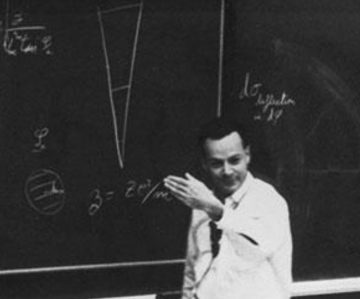 Feynman was born 100 years ago May 11. It’s an anniversary inspiring much celebration in the physics world. Feynman was one of the last great physicist celebrities, universally acknowledged as a genius who stood out even from other geniuses.
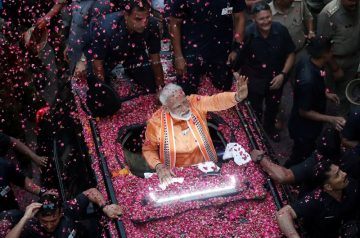
 The title of this essay may sound redundant: aren’t all Stoics unemotional, making it their business to go through life with a stiff upper lip? Actually, no, and neither was Marcus, whose 1,898th birthday falls on April 26th of this year. It is true that he wrote in the Meditations, his personal philosophical diary: ‘When you have savouries and fine dishes set before you, you will gain an idea of their nature if you tell yourself that this is the corpse of a fish, and that the corpse of a bird or a pig; or again, that fine Falernian wine is merely grape-juice, and this purple robe some sheep’s wool dipped in the blood of a shellfish; and as for sexual intercourse, it is the friction of a piece of gut and, following a sort of convulsion, the expulsion of mucus.’ (VI.13)
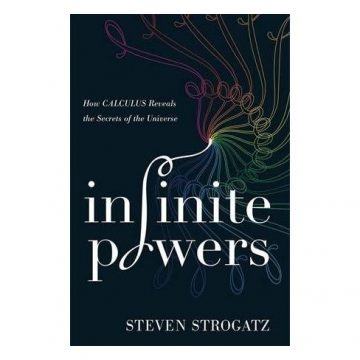 Michael J. Barany in the LA Review of Books:
 Dennis Overbye in the NYT:
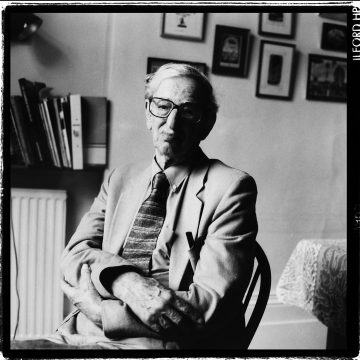 Corey Robin in The New Yorker:
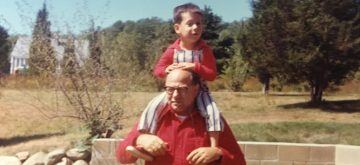 David A. Bell in Dissent:
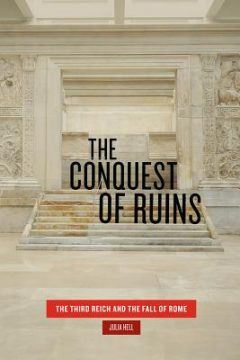 Empires are strange creatures. Obsessed with their own end-time, they enlist the help of the katechon—a form of political sovereignty that “delays or maintains the end of time”—to postpone the inevitable, and stretch out time before the end. The obsessive fear of decline and an active engagement with trying to delay the end of empire is something that links contemporary right-wing movements to Himmler’s, Spengler’s, and Friedrich Ratzel’s temporal understandings of the basis for the National Socialist empire. The difference between then and now is that Hitler’s “solution” to the racial diversity he diagnosed as one of the core problems contributing to the cyclicity of empires and their inevitable decline was the murder of those the National Socialist regime deemed to be barbarians.
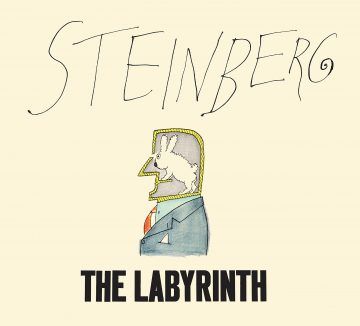 SAUL STEINBERG CALLED HIMSELF “a writer who draws.” Harold Rosenberg called him “a writer in pictures.” Critics compared him to Klee and Picasso, but reviews were just as likely to namedrop Joyce and Stendhal. He was friends with Nabokov as well as Saul Bellow, Primo Levi, William Gaddis, Donald Barthelme, John Hollander, Charles Simic, and Ian Frazier. Ulysseswas his favorite novel. Nabokov’s essay on Gogol was his guidebook.
 S
S