Leonard Sax in Psychology Today:
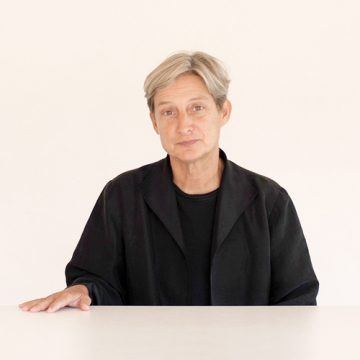
If there are superstar scholars, Berkeley professor Judith Butler is a superstar. She is best known for pioneering the idea that “male” and “female” are merely social constructs. She writes that “because gender is not a fact, the various acts of gender creates the idea of gender, and without those acts, there would be no gender at all.” For this insight, she has been rewarded with an avalanche of scholarly honors and prizes, including the Mellon Prize, which carries with it a $1.5 million cash award. (By comparison, the Nobel Prize gets you just $1.1 million.)
Butler is a professor of comparative literature, not a neuroscientist, but her ideas about gender have become widely accepted worldwide in the nearly 30 years since the publication of her book Gender Trouble. In 2017, Cordelia Fine, professor of historical and philosophical studies at the University of Melbourne, published a book titled Testosterone Rex: Unmaking the myths of our gendered minds. Following Butler, Fine asserted that any claims that women and men differ significantly in brain or behavior are simply myths perpetuated by the heteronormative patriarchy. Fine’s book promptly received the Royal Society’s prestigious prize for best science book of the year.
The worldview promulgated by Butler, Fine, and their followers now constrains what neuroscientists are allowed to say in public.
More here.
 The modern world is full of technology, and also with anxiety about technology. We worry about robot uprisings and artificial intelligence taking over, and we contemplate what it would mean for a computer to be conscious or truly human. It should probably come as no surprise that these ideas aren’t new to modern society — they go way back, at least to the stories and mythologies of ancient Greece. Today’s guest, Adrienne Mayor, is a folklorist and historian of science, whose recent work has been on robots and artificial humans in ancient mythology. From the bronze warrior Talos to the evil fembot Pandora, mythology is rife with stories of artificial beings. It’s both fun and useful to think about our contemporary concerns in light of these ancient tales.
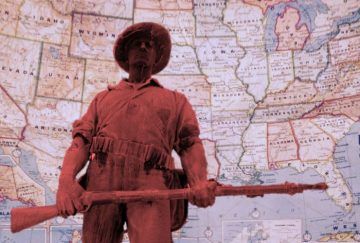 I recently stumbled across a statue in Baltimore that celebrates the young men of the city who fought in the “Spanish War.” On a narrow triangle in a residential neighborhood, this lone soldier stands at ease, holding a rifle across his body and staring into the distance, unperturbed by the city buses screeching past or the litter that collects below his feet. The pedestal records the years, from 1898 to 1902, when these brave Americans fought against Spain’s weak imperialist hold on the Philippines, Cuba, and Puerto Rico. Known as “The Hiker,” fifty or so versions of this statue still quietly dot city streets and parks across the United States. The bulk were erected in the 1920s in northern states, with Baltimore’s in 1943, and the last in 1965 near Arlington Cemetery.
 Last year saw the publication of a book that could well turn out to be a future classic of art writing. Jack Whitten’s Notes From the Woodshed was released just a few months after the painter’s death in New York at the age of 78. More than 500 pages of journal entries, written between March 24, 1962, and December 27, 2017, Notes From the Woodshed gives as true a sense of how the life of an artist is lived, and how it’s lived for the sake of his work, as any I’ve read. The book’s hallmarks are a kinetic energy of thought and immediacy of expression that trump literary style or even good spelling. By the end of his life, Whitten knew that his notes would be published—he wrote a prefatory essay in September 2015, more than two years before his last journal entry—but he didn’t gussy them up. They have been abridged, though, partly because he could be as critical of his fellow artists as he could be generously enthusiastic about them, and “a few of his writings have been redacted here to protect the living,” notes the book’s editor, Katy Siegel, who also curated last year’s exhibition, “Odyssey: Jack Whitten Sculpture, 1963–2017,” at the Baltimore Museum of Art and the Met Breuer.
 The subsequent outpouring of creativity at the Bauhaus has since become the stuff of legend. Yet despite its popularity among teachers and students, the school and its methods were consistently controversial. As the clouds of nationalism gathered over Germany, many in Weimar were troubled by the blatant internationalism of the Bauhaus. Others attacked the emphasis on freedom and experimentation as inappropriately indulgent for a state-funded school. The economic uncertainties of the early 1920s only increased the pressure on Gropius. In 1925, the authorities in Weimar closed the school, forcing its relocation to Dessau, about 100 miles to the northeast.
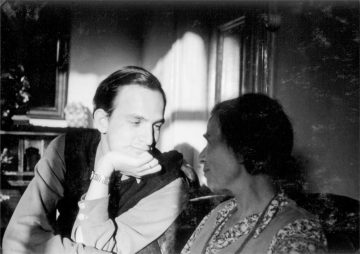 This familiar Strindbergian theme is underscored in The Best Intentions by an ingenious device to which the author turns more than once: the juxtaposition of some ostensibly documentary evidence from the “real life” that he’s fictionalizing—a photograph he has found of this or that relative or an entry in someone’s diary—with his novelistic reconstruction of the person or incident in question. This technique can shed ironic light on the characters. A passage, for instance, when Bergman quotes a diary entry by Henrik’s mother, Alma, after she meets her future daughter-in-law for the first time: “Henrik came with his fiancée. She is surprisingly beautiful and he seems happy. Fredrik Paulin called in the evening. He talked about tedious things from the past. That was inappropriate and made Henrik sad.”
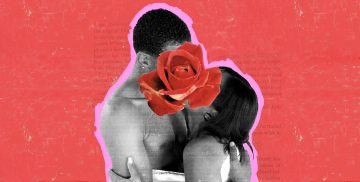 Romance readers compound the sin of liking happy, sexy stories with the sin of not caring much about the opinions of serious people, which is to say, men. They are openly scornful of the outsiders who occasionally parachute in to report on them. In late 2017, Robert Gottlieb – the former editor of the New Yorker and unsurpassable embodiment of the concept “august literary man” – wrote
 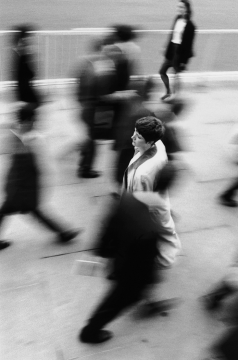 Not long ago I diagnosed myself with the recently identified condition of sidewalk rage. It’s most pronounced when it comes to a certain friend who is a slow walker. Last month, as we sashayed our way to dinner, I found myself biting my tongue, thinking, I have to stop going places with her if I ever want to … get there! You too can measure yourself on the “Pedestrian Aggressiveness Syndrome Scale,” a tool developed by University of Hawaii psychologist Leon James. While walking in a crowd, do you find yourself “acting in a hostile manner (staring, presenting a mean face, moving closer or faster than expected)” and “enjoying thoughts of violence?”
 The
The 
 We are at an inflection point in the Democratic Party’s history, and in the economic history of the country; similar, perhaps, to the mid-1930s and the late-1970s. In the first period, the country embraced Keynesian, demand-side economics. In the second, during a time of pummeling inflation and wage stagnation, the country turned away from Keynes and toward Milton Friedman and supply-side economics.
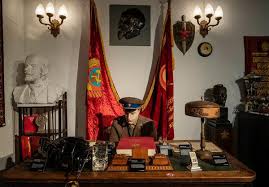 I had recently been forced to break off a collaboration with another writer over her Russiagate sympathies. Though she was smart and talented, I didn’t feel I could work with someone who considered Russian “interference” in the 2016 election to be a politically significant topic or a major compromise to what passes for American democracy these days. I consider the recent obsession with Russia a sort of liberal hysteria that feeds off of resentment over losing the election to Trump—the nadir of elite entitlement and a pathological state of denial over the fact that their candidate was a dud, and that the electorate rightly holds the Democratic Party in contempt. It’s the bitter delusion of an asshole who lost his girl to a different kind of asshole, and responds with incredulity and conspiratorial rage. What’s more, it’s clearly an attempt to conjure up a totally anachronistic paranoia over the late Soviet Union, a country that hasn’t even existed for nearly thirty years.
 Here are some things you can learn from Peattie: sequoias are, of course, the largest of all trees, and the most massive freestanding organisms in the world. They live as long as three thousand five hundred years, longer than all trees but the Chilean alerce and the bristlecone pine, which grows east of here, over the Sierra crest and across the Owens Valley. I like to stand at certain vantage points in the Sierras and imagine that I can look north to the three-thousand-year-old Bennett juniper, west to the sequoias, east to the bristlecones, and south to the ancient clonal stands of Mojavean creosote bush, and be somehow at the center of a circle of inexplicable, primordial genetic wisdom.
 It’s said the British never stop remarking on their weather. How will they cope in decades to come, when life is all weather, all the time? The country ran a brief test a few weeks ago: in mid- to late February the sun blazed, spring surprised itself, and the temperature in London, where I live, reached over 20°C (68°F). Boon or portent? Meteorological holiday or climate-change hell? Beautiful or sublime? Britons could not agree. It’s now mid-March, and I was awoken at five this morning by rattling windows and the rising shriek of a storm called Gareth (not the direst of names). Abruptly, spring is canceled, and London’s squares are littered with the corpses of premature blossoms.
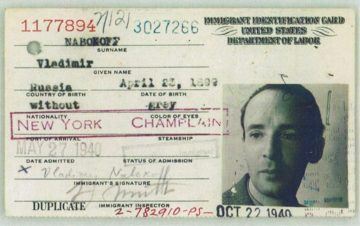 Amid frantic, last-minute negotiations, under a spray of machine-gun fire, Vladimir Nabokov fled Russia 100 years ago this week. His family had sought refuge from the Bolsheviks in the Crimean peninsula; those forces now made a vicious descent from the north. The chaos on the pier at Sebastopol could not match the scene that met the last of the Russian imperial family, evacuated the same week: In Yalta, terrified families mobbed a quay littered with abandoned cars. Nor were the Nabokovs’ accommodations as good. The Romanovs made their escape on a British man-of-war. The Nabokovs crowded into a filthy Greek cargo ship. Overrun by refugees, Constantinople turned them away. For several days they lurched about on a rough sea, subsisting on dog biscuits, sleeping on benches. Only the family jewelry traveled comfortably, nestled in a tin of talcum powder. On his 20th birthday, Nabokov disembarked finally in Athens. He would never again set eyes on Russia.
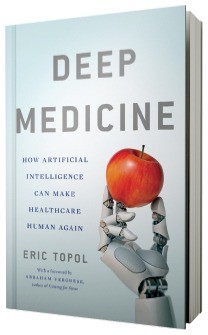 In 1970 in The New England Journal of Medicine, William Schwartz predicted that by the year 2000, much of the intellectual function of medicine could be either taken over or at least substantially augmented by “expert systems”—a branch of artificial intelligence (AI). Schwartz hoped that the medical school curriculum would be “redirected toward the social and psychologic aspects of health care” and that medical schools would attract applicants interested in “behavioral and social sciences and … the information sciences and their application to medicine.” But Schwartz’s dream of smart medical technologies, for the most part, remains just that. Eric Topol, however, is optimistic about the future of health care. In Deep Medicine, he anticipates that new machine learning technologies will improve the precision and accuracy of disease diagnosis, thus providing a better way to identify the best therapies. Like Schwartz, he hopes that the time freed up by these approaches will be devoted to reviving humane medical practices.