
Bill McKibben in Rolling Stone:

Oh, it could get very bad.
In 2015, a study in the Journal of Mathematical Biology pointed out that if the world’s oceans kept warming, by 2100 they might become hot enough to “stop oxygen production by phyto-plankton by disrupting the process of photosynthesis.” Given that two-thirds of the Earth’s oxygen comes from phytoplankton, that would “likely result in the mass mortality of animals and humans.”
A year later, above the Arctic Circle, in Siberia, a heat wave thawed a reindeer carcass that had been trapped in the permafrost. The exposed body released anthrax into nearby water and soil, infecting two thousand reindeer grazing nearby, and they in turn infected some humans; a twelve-year-old boy died. As it turns out, permafrost is a “very good preserver of microbes and viruses, because it is cold, there is no oxygen, and it is dark” — scientists have managed to revive an eight-million-year-old bacterium they found beneath the surface of a glacier. Researchers believe there are fragments of the Spanish flu virus, smallpox, and bubonic plague buried in Siberia and Alaska.
Or consider this: as ice sheets melt, they take weight off land, and that can trigger earthquakes — seismic activity is already increasing in Greenland and Alaska. Meanwhile, the added weight of the new seawater starts to bend the Earth’s crust.
More here.
 What has the Event Horizon Telescope actually seen?
 Since the late 1990s, yearly rates of overdose deaths from legal “white market” opioids have consistently exceeded those from heroin. According to the Centers for Disease Control and Prevention, between 1999 and 2017, opioid overdoses killed nearly 400,000 people with 68 percent of those deaths linked to prescription medications. Moreover, as regulators and drug companies tightened controls on diversion and misuse after 2010, the American Society of Addiction Medicine determined that at least 80 percent of “new heroin users started out misusing prescription pain killers.” Some data sets point to even higher numbers. In response to a 2014 survey of people undergoing treatments for opioid addiction, 94 percent of people surveyed said that they turned to heroin because prescription opioids were “far more expensive and harder to obtain.”
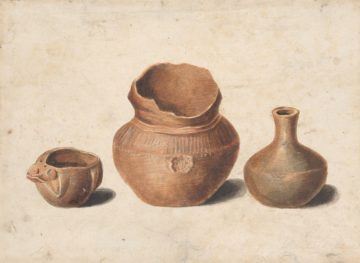 Almost nothing in this exhibition was created for aesthetic admiration alone. Whether it’s the way a Diné blanket’s lines break into daring geometric forms when placed across a person’s shoulders, or the transformation that a mask undergoes during a ritual, the full beauty of these objects has to be activated by the people who use them. One wishes those people were present. The more time one spends looking at the works on display at the Met, the more one suspects that they could only ever be seen as they are meant to be seen when used as they were meant to be used. Placed behind glass under the banner of “art,” they look abandoned.
 Was
Was  Nowadays, not many philosophers are prominent enough to get nicknames. In medieval times the practice was more popular. Every scholastic worth their salt had one: Bonaventure was the “seraphic doctor”, Aquinas the “angelic doctor”, Duns Scotus the “subtle doctor”, and so on. In the Islamic world, too, outstanding thinkers were honoured with such titles. Of these, none was more appropriate than al-shaykh al-raʾīs, which one might loosely translate as “the leading sage”. It was bestowed on Abū ʿAlī Ibn Sīnā (d.1037 AD), who was known to all those medieval scholastics by the Latinized name “Avicenna”. And not just known, but renowned. Avicenna is one of the few philosophers to have become a major influence on the development of a completely foreign philosophical culture. Once his works were translated into Latin he became second only to Aristotle as an inspiration for thirteenth-century medieval philosophy, and (thanks to his definitive medical summary the Canon, in Arabic Qānūn) second only to Galen as a source for medical knowledge in Europe.
 By a strange twist of fate, I read this book while on a visit to the Falkland Islands, where the British victory over Argentina in the 1982 war feels as though it might have happened last week. Outside Port Stanley, on treeless uplands whose names ring distant bells – Goose Green, Mount Harriet, Tumbledown – the conflict is still unofficially memorialised by chunks of crashed war planes and the wires of field telephones from a pre-digital age. Machines Like Me, Ian McEwan’s new novel, also turns in part on the Falklands conflict, eternalising a version of that year’s events, though in the book’s fictional world things have turned out rather differently.
 The
The  Thomas J. Sugrue (TJS): I began as an economic determinist. That is, I wanted to write about work and housing, but I hypothesized that work, labor, and industry were the driving factors in the transformation of Detroit and other cities like it. Housing and the city’s neighborhood racial politics would follow. When I began doing my research, it very quickly became clear to me that drawing an artificial line between race and class or between work and neighborhood made no sense. The two needed to be understood as mutually constitutive. To pull them apart would do injustice to the way the political economy worked in post–World War II America.
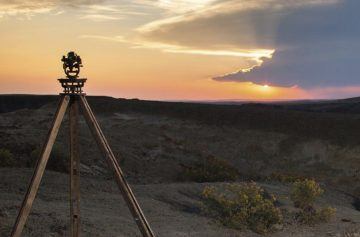 If, on a certain evening about sixty-six million years ago, you had stood somewhere in North America and looked up at the sky, you would have soon made out what appeared to be a star. If you watched for an hour or two, the star would have seemed to grow in brightness, although it barely moved. That’s because it was not a star but an asteroid, and it was headed directly for Earth at about forty-five thousand miles an hour. Sixty hours later, the asteroid hit. The air in front was compressed and violently heated, and it blasted a hole through the atmosphere, generating a supersonic shock wave. The asteroid struck a shallow sea where the Yucatán peninsula is today. In that moment, the Cretaceous period ended and the Paleogene period began.
 Astronomers announced on Wednesday that at last they had seen the unseeable: a black hole, a cosmic abyss so deep and dense that not even light can escape it.
 When things fall apart, it is not surprising that people cling to forces they associate with an earlier age of stability. The voters of Kiskunhalas sent a socialist to the Budapest parliament in 1994 and elected the same individual to be their mayor from 2002 to 2010. He was formerly a communist and a director at the State Farm, yet some claim that he did more to help small businessmen than his Free Democrat predecessor. According to Ferenc he did not do enough, for example in the way of reducing the local tax burden. No post-Socialist mayor has so far been able to attract any large-scale external investment to the town. Disaster struck in 2008 when Lévi-Strauss decided to close its factory and relocate to Romania, where costs were apparently significantly lower. Almost 500 jobs were lost at short notice.
 Peak Car offers a compelling story of vast riches and better living. Yet the evidence is thin. The rate at which young people get their licenses has indeed been falling, but the trend began in 1983, when the internet was still a science experiment. Today, the three best-selling vehicles in the US by far are pickup trucks. Most of those trucks are used as personal vehicles, as their pristine empty beds make clear. Whatever madness causes Americans to drive empty-bedded trucks around is not something Uber or Lyft can cure. And for those of us in the suburbs, minivans and three-row SUVs are more than transportation. They are waiting rooms, warm cabins on a cold day, and a place to leave the squash racket so we don’t forget it every week. It may be possible to find a Lyft big enough to carry the soccer team, but piling in with muddy cleats and leaving behind lost balls will earn you the dreaded one-star rating. Do it regularly and you’ll get you banned from the app.
 ‘A
‘A Lynn Lear finished her final round of chemotherapy for breast cancer in December. To help keep the cancer from coming back, Lear’s doctor told her about a new medication she could take called Nerlynx. Lear, who is 46, wanted to do everything she could to remain healthy, so she asked her doctor to order the drug for her. Unlike, say, an antibiotic or an antidepressant, a Nerlynx prescription can’t be filled at a neighborhood CVS or Walgreens. Instead, Nerlynx is dispensed either through certain doctors’ offices or through
  How much do Americans know about science? There’s a new science quiz from Pew Research Center. You can test yourself