
Sissela Bok in The American Scholar:
Conscience: The Origins of Moral Intuition by Patricia S. Churchland
The War For Kindness: Building Empathy in a Fractured World by Jamil Zaki
 These two new books give lucid, stimulating accounts of recent discoveries in neuroscience and psychology. Both authors aim to challenge antiquated views of the brain and human behavior. In so doing, they help us think through perennial debates about the sources of morality and the degree to which we inherit or can enhance traits like empathy. Both are careful to evaluate the cogency of the research they cite, noting when it remains inconclusive or unpersuasive. Jamil Zaki, a professor of psychology at Stanford, who also directs its Social Neuroscience Laboratory, usefully includes an appendix summarizing the evidence for the findings he cites and giving them a 1 to 5 rating, from weaker to stronger. Oddly, however, neither book mentions, much less rates, possible moral problems with some of the research, whether by neuroscientists injecting substances into the brains of rats or monkeys or by social scientists subjecting students to deceptive scenarios.
Early on, Churchland, professor emerita of philosophy at the University of California–San Diego, sets forth a working formulation of conscience as “an individual’s judgment about what is morally right or wrong, typically, but not always, reflecting some standard of a group to which the individual feels attached.” Later, she states that conscience “is a brain construct rooted in our neural circuitry, not a theological entity thoughtfully parked in us by a divine being.” The intervening chapters show in fascinating detail the path leading from the first to the second formulation. They explain the role of the cortex for mammals, culminating in the unusually large one of humans, and argue that an attachment to mothers—and in some cases to fathers, kin, and friends—is fundamental to social behavior and in turn to moral behavior. Human moral responses are therefore rooted in the cortex, supported by more ancient structures, such as basal ganglia and neurochemicals such as dopamine, sex hormones, and the neurohormones of oxytocin and vasopressin. Studies show how these factors combine, specifying their different roles, as for oxytocin in strengthening social bonds. When it comes to psychopaths, however—people with no moral compass who lack feelings of guilt or remorse and exhibit no empathy toward people they have injured—it has, so far, proved harder to locate specific brain abnormalities. The same is true of persons exhibiting self-destructive moral behavior, known as scrupulosity.
More here.
 It is easy to make fun of the Aristotelian idea that humans are rational animals. In fact, a bit too easy. Just look at the politicians we elect. Not so rational. Or look at all the well-demonstrated biases of decision-making, from confirmation bias to availability bias. Thinking of humans as deeply irrational has an illustrious history, from Francis Bacon through Nietzsche to Oscar Wilde, who, as so often, came up with the bon mot that sums it all up: “Man is a rational animal who always loses his temper when he is called upon to act in accordance with the dictates of reason.”
 Is “discussion” really so wonderful? Does “communication” actually exist? What if I were to deny that it does?
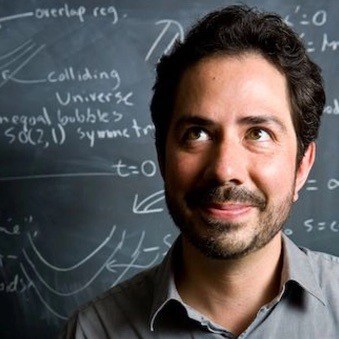 Cosmologists have a standard set of puzzles they think about: the nature of dark matter and dark energy, whether there was a period of inflation, the evolution of structure, and so on. But there are also even deeper questions, having to do with why there is a universe at all, and why the early universe had low entropy, that most working cosmologists don’t address. Today’s guest, Anthony Aguirre, is an exception. We talk about these deep issues, and how tackling them might lead to a very different way of thinking about our universe. At the end there’s an entertaining detour into AI and existential risk.
 Debates about political correctness on college campuses can be extremely frustrating. On one side you have those, like New York magazine’s Jonathan Chait, who
 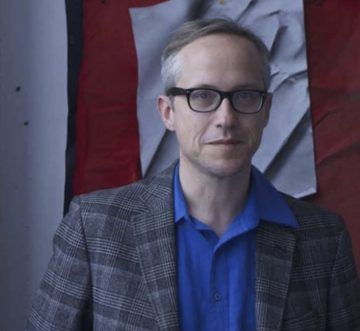 In his new book, “Irrationality: A History of the Dark Side of Reason” philosopher Justin Smith presents a fascinating narrative that reveals the ways in which the pursuit of rationality often leads to an explosion of irrationality. Smith, a professor of the history and philosophy of science at the University of Paris, acknowledges that we are living in an era when nothing seems to make sense. Populism is on the rise, pseudoscience is still around and there is no shortage of of conspiracy theories. Smith discusses the core of the problem that the rational gives birth to the irrational and vice versa in an endless cycle, and any effort to permanently set things in order sooner or later ends in an explosion of unreason.
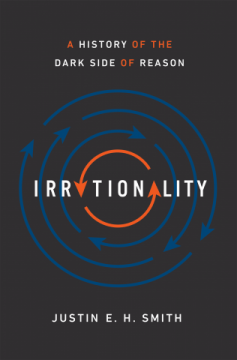 He notes that despite the fact logic and reason are well understood, methods and practises that were supposed to have been setup to counter irrationality, ended up mired in the very problem that they were meant to solve, and that is irrationality.
 Simpson’s benevolent yet piercing approach to life is not far from how her art grasps us under the guise of beautiful images of models from magazine spreads. Her unassuming warmth and determination to always look into my eyes during our conversation melts the breeze emanating from her paintings of mountainous ice chunks gloriously standing at remote corners of the world. She blows up images culled from science publications and prints them onto gessoed fiberglass, after adding occasional cutouts of text. Then, the surface is hers to paint into blue, horizontally or on the floor, letting the blues build serpentine paths on the surface. In the far corner of her spacious studio, blown up images of women pulled from Ebony and Jet magazine ads stare in convincing perfection. Arguably her most extensively know works, her collages of women from vintage magazine ads have over the decades evolved into bridges between America’s past and present histories of race and visibility.
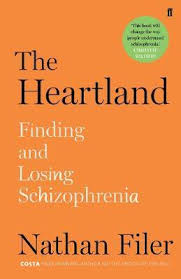 Madness is deep-rooted in the human imagination. The mad are unreachable, unfathomable, alarmingly other. They unsettle us. Yet we also romanticise madness. Great poetry and art spring from transcendent states at the edge of sanity, don’t they? And falling in love is a kind of madness, a stumbling into a dream world of irrationality and delusion. The lunatic, the lover and the poet are of imagination all compact. One line of thought is that madness is the price Homo sapiens has paid for the jewel of human consciousness. Perhaps it is.
 There is so much sound, movement, and energy in Liz Johnson Artur’s first solo museum show, “Dusha,” at the Brooklyn Museum, that walking through the galleries feels like attending a party at a local Pan-African community center. The exhibit showcases Artur’s “Black Balloon Archive,” which consists of images of the global African diaspora captured in the course of decades. Here are two boys spinning each other on the sidewalk, surrounded by a crowd of onlookers. Nearby is Brother Michael, in a black suit and white tie, selling Nation of Islam newspapers. A group of women show off their matching head wraps, and precocious schoolgirls relax outside a classroom. A man wearing Ankara prints and sunglasses mugs for the camera. All that is missing is the line for jollof and the music of Fela Kuti.
 With its gold-striped spine, crimson endpapers and silky leaves, My Seditious Heart is a handsome edition of previously published essays by Booker-winning writer
  Precision medicine flips the script on conventional medicine, which typically offers blanket recommendations and prescribes treatments designed to help more people than they harm but that might not work for you. The approach recognizes that we each possess distinct molecular characteristics, and they have an outsize impact on our health. Around the world, researchers are creating precision tools unimaginable just a decade ago: superfast DNA sequencing, tissue engineering, cellular reprogramming, gene editing, and more. The science and technology soon will make it feasible to predict your risk of cancer, heart disease, and countless other ailments years before you get sick. The work also offers prospects—tantalizing or unnerving, depending on your point of view—for altering genes in embryos and eliminating inherited diseases.
 President Trump is now calling for expanding the death penalty so it would apply to drug dealers and those who kill police officers, with an expedited trial and quick execution. A majority of Americans (56 percent,
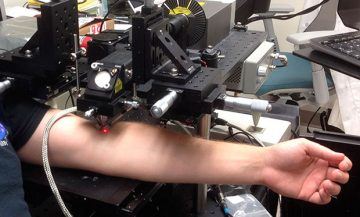 Tumor cells that spread cancer via the bloodstream face a new foe: a laser beam, shined from outside the skin, that finds and kills these metastatic little demons on the spot.
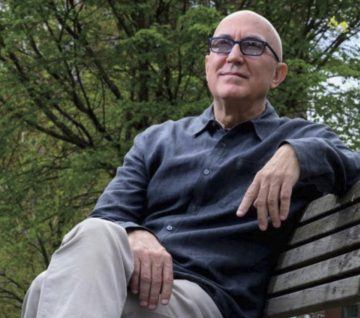 On July
 Across the continent, many had anticipated further gains for far-right parties that masquerade in populism but spit raw racism. Thankfully, the so-called populist surge has been halted for the moment.
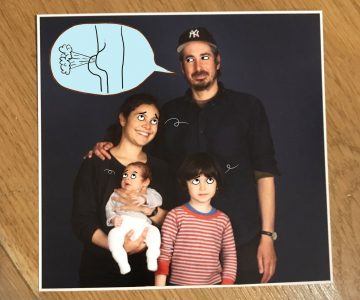 I’m a comedy critic, so being a dad can seem like an occupational hazard. It may be professional suicide to admit, but since having children, I often find myself making lame puns as well as poop jokes. In subway stations, I have been known to silently mouth words to my daughters when a loud train goes by until the noise quiets and I add: “ … and that’s the secret to life.” Look, I’m not proud. The demise of a dad’s sense of humor begins in early parenthood while workshopping jokes in front of babies, tiny philistines who think peekaboo is a hilarious bit of misdirection. It isn’t long before these drooling rubes turn into trash-talking toddlers and fall in love with the scatological. Like so many lazy comics, we parents pander. If jokes work, they stay in the set. Gradually, we become hooked on cheap laughs. Some of us even delude ourselves into thinking we are actually funny.