Kate Stanley at the LARB:
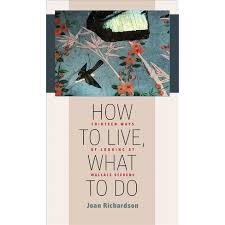 CAN POEMS TEACH US how to live? What does it mean to approach poetry as a source of self-help? It’s not hard to call to mind examples of poetry that rouse or soothe or refocus a reader, lifting or quieting the mind like a deep breath. Yet much of the poetry encountered in literature classrooms and canonical anthologies may not readily reflect the self that is reading it, and therefore may not readily become a tool of self-improvement. The work of many modernist poets in particular is placed under the banner of “art for art’s sake,” a motto meant to explicitly free such poetry from the responsibility of serving a didactic or utilitarian function. The poems of Wallace Stevens, for instance, are frequently taken to epitomize the kind of high modernist difficulty that in its slippery symbology and ambiguous affect would seemingly resist being reliably employed for any useful purpose.
more here.
 W
W There is a scene toward the end of Ian McEwan’s new novel, Machines Like Me, when the narrator, Charlie, is pushing his lifelike prototype robot, Adam, in a wheelchair through a demonstration in Trafalgar Square. The demonstrators are protesting about everything under the sun – “poverty, unemployment, housing, healthcare, education, crime, race, gender, climate, opportunity”. The suggestion being presented by McEwan and his narrator, however, is that here, unnoticed in their midst, is the one thing they should be most concerned about: a man-made intelligence greater than their own. There is a Cassandra tendency in McEwan’s fiction. His domestic dramas routinely play out against a backdrop of threatened doom. Since the portent-laden meditation on war and terrorism,
 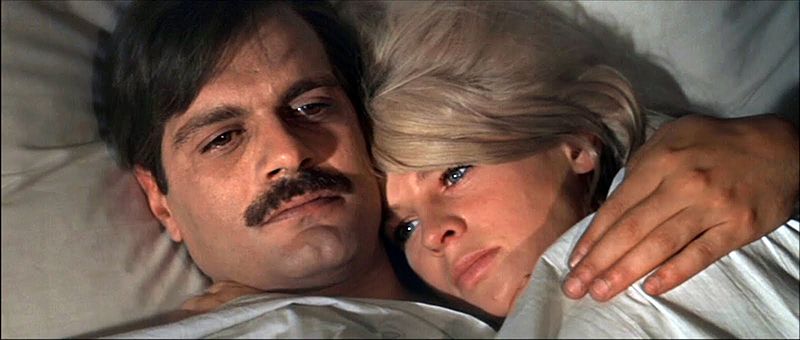 In 1956, Sergio D’Angelo made a journey by train from Moscow southwest to the Soviet-made writers’ colony Peredelkino. He was there to meet the rock-star famous writer Boris Pasternak, whose poetry was so beloved that, if he paused during a reading, audiences would shout the missing words. But Pasternak’s original work hadn’t seen daylight in years; the Soviet government didn’t possess quite the same warm feeling toward Pasternak as his fans, doubting his loyalty to the Communist Party, which controlled the publishing industry. He’d been translating classic works of literature, such as Shakespeare’s plays, into Russian instead since the 1940s.
 In just over an hour, a
 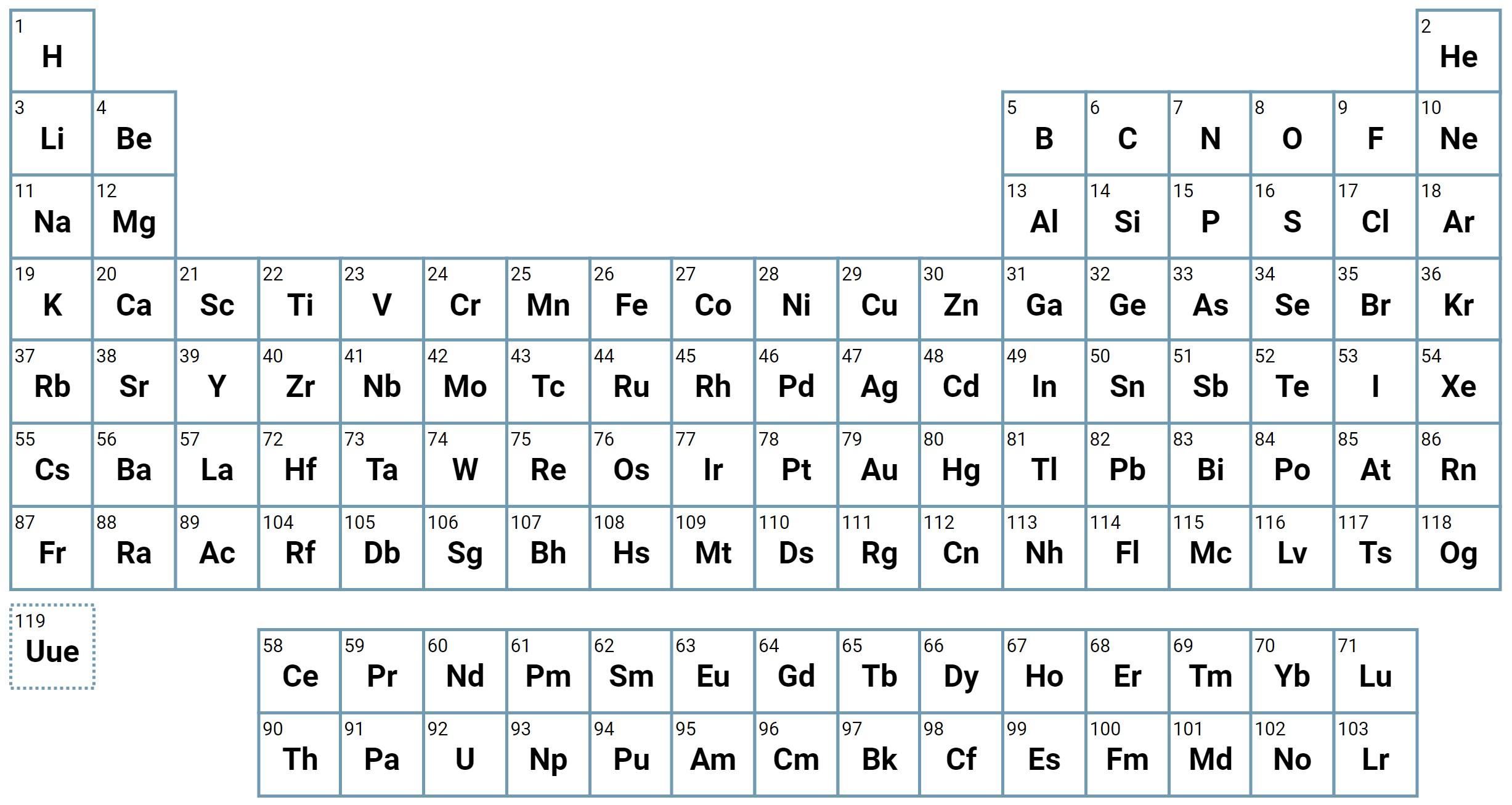 A review of the Periodic Table composed of 119 science haiku, one for each element, plus a closing haiku for element 119 (not yet synthesized). The haiku encompass astronomy, biology, chemistry, history, physics, and a bit of whimsical flair. Click or hover over an element on the Periodic Table to read the haiku.
 Israel’s legislative elections on 9 April were a tribute to Binyamin Netanyahu’s transformation of the political landscape. At no point were they discussed in terms of which candidates might be persuaded by (non-existent) American pressure, or the ‘international community’, to end the occupation. This time it was a question of which party leader could be trusted by Israeli Jews – Palestinian citizens of Israel are now officially second-class – to manage the occupation, and to expedite the various tasks that the Jewish state has mastered: killing Gazans, bulldozing homes, combatting the scourge of BDS, and conflating anti-Zionism with anti-Semitism. With his promise to annex the West Bank, Netanyahu had won even before the election was held. It wasn’t simply Trump’s recognition of Israeli sovereignty over the Golan Heights that sped the incumbent on his way; it was the nature of the conversation – and the fact that the leader of the opposition was Benny Gantz, the IDF commander who presided over the 2014 ‘Operation Protection Edge’, in which more than 2000 Gazans were killed.
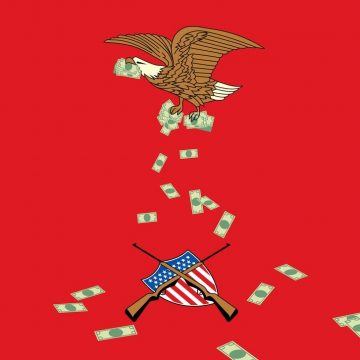 This winter, members of the National Rifle Association—elk hunters in Montana, skeet shooters in upstate New York, concealed-carry enthusiasts in Jacksonville—might have noticed a desperate tone in the organization’s fund-raising efforts. In a letter from early March, Wayne LaPierre, the N.R.A.’s top executive, warned that liberal regulators were threatening to destroy the organization. “We’re facing an attack that’s unprecedented not just in the history of the N.R.A. but in the entire history of our country,” he wrote. “The Second Amendment cannot survive without the N.R.A., and the N.R.A. cannot survive without your help right now.”
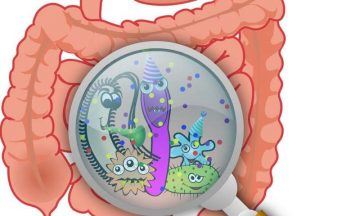 The human gut harbors trillions of invisible microbial inhabitants, referred to as the microbiota, that collectively produce thousands of unique small molecules. The sources and biological functions of the vast majority of these molecules are unknown. Yale researchers recently applied a new technology to uncover microbiota-derived chemicals that affect human physiology, revealing a complex network of interactions with potentially broad-reaching impacts on human health.
 At 3 p.m. on a Monday afternoon, death announced it was coming for him. He was only eight years old; his cancer cells were not responding to treatment anymore. His body’s leukemic blast cell counts were doubling daily. Bone marrow was no longer making red or white blood cells, not even platelets. The marrow was only churning out cancer cells. In a process similar to churning butter, his blood was thickening with homogenous, malicious content: cancer. And like churning butter, it was exhausting work. The battered remnants of his healthy self were beaten down by chemo. And yet, every fiber pressed on.

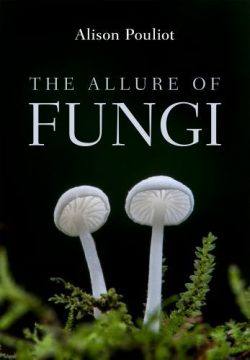 As Nicholas Money puts it in Mushrooms: A Natural and Cultural History, thinking of the mushroom in place of the whole mushroom-forming organism is ‘a bit like using a photograph of a large pair of testicles to represent an elephant’. (The flaw in this memorable comparison is that the spore inside a mushroom is ready to grow into next-generation fungus, so long as it’s launched into congenial conditions, whereas an elephant sperm cell only contains half the chromosomes needed to begin a baby elephant.) Like the testicle, the mushroom is just one component of an organism, relatively peripheral to the organism’s viability, if essential to the continuation of its species. Unlike the elephant testicle (and hence the force of Money’s comparison), it is the part of the organism to which human cultures have in general paid the most attention. It’s this spore-disperser, not the hard-working mycelium, that we might consider dining on, illustrating, ingesting for hallucinatory or medicinal purposes, founding a taxonomic system around, deploying in the assassination of an unlikeable Roman emperor, or photographing on our nature rambles. It’s what appears in the field guides, the cookbooks, and the mythologies.
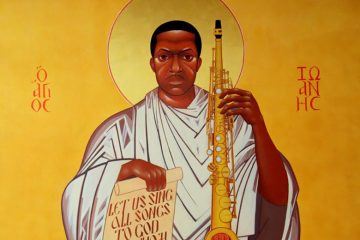 Yet Coltrane’s commercial clout, transient or permanent, should not detract from his huge artistic stature. Next to Miles Davis, he is the post-war jazz musician most likely to be on the radar of those who do not consider themselves jazz fans. His allure as a figure entirely dedicated to, if not consumed by, his work (to the point where he was often seen in public with theory books such as Nicolas Slonimsky’s Thesaurus Of Scales And Melodic Patterns), makes him a role model for all students of “serious” music. Coltrane is the archetypal creative obsessive intent on finding unheard approaches to the building blocks of music, from the arc of his melodies to the rhythmic drive of his solos to the harmonic framework for his songs.
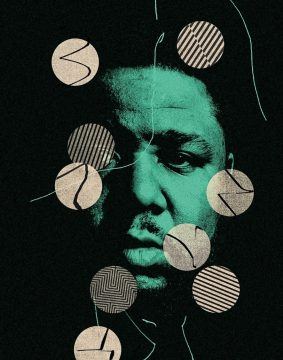 There is something awesomely confounding about the music of Tyshawn Sorey, the thirty-eight-year-old Newark-born composer, percussionist, pianist, and trombonist. As a critic, I feel obliged to describe what I hear, and description usually begins with categorization. Sorey’s work eludes the pinging radar of genre and style. Is it jazz? New classical music? Composition? Improvisation? Tonal? Atonal? Minimal? Maximal? Each term captures a part of what Sorey does, but far from all of it. At the same time, he is not one of those crossover artists who indiscriminately mash genres together. Even as his music shifts shape, it retains an obdurate purity of voice. T. S. Eliot’s advice seems apt: “Oh, do not ask, ‘What is it?’ / Let us go and make our visit.”
 “I’ve never cried for a building, until now,” I wrote to my aunt Lou Ann. Then I had a moment’s hesitation. Did I not cry for the World Trade Center back in 2001? I was living in New York, after all. We watched the Towers fall from a roof in Williamsburg, Brooklyn. I know that I shed some tears that day. Tears of shock and grief and loss. But I was not, in truth, crying for the Towers themselves. I don’t think anyone cried for the Towers themselves. Because they were not loved. I remember a Greek friend of mine once commenting that he found the Towers ridiculous in their doubleness. He put it like this: “It is absurd that there are two of them.” One giant monstrous imposing monolith would have been enough. But to make two of them? It is like, my friend said, a couple of guys who are bragging and competing about who has the largest schlong. And then a third guy walks up and says, “I’ve got you both beat. I’ve got two of them.” But has he really won? Did he even understand the game? The Twin Towers were like that. They won the giant building game. But at what cost?