
Nell Painter at The Nation:
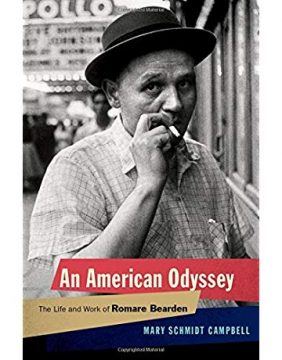 Campbell’s extraordinarily rich biography offers its readers many rewards. Nowhere here is the awkwardness of critics unfamiliar with the history of black art or who isolate it from its frames of reference or consider only how black artists ought to criticize race in America. Hers is a self-confident study of an artist’s life in all its contexts.
The assurance of Campbell’s narrative and the strength of her critical insights stem from the depth of her experience as an art historian and her leading roles at the Studio Museum in Harlem and New York University’s Tisch School of the Arts. She also has the advantage of having known and corresponded with Bearden for years, even curating an exhibit, “Mysteries: Women in the Art of Romare Bearden,” in 1975. Campbell’s proximity to Bearden allows her to capture his generosity as a colleague and mentor as well as his larger role in the art world.
more here.
 IT BEGINS THE WAY
 A
A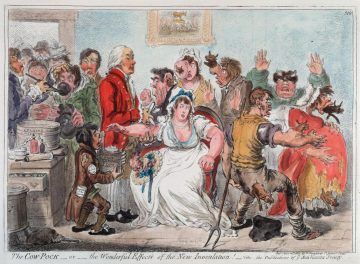 In September 1798 a self-published book with an outlandish premise was about to change the world. At first sight, “An Inquiry into the Cowpox” looked more like a piece of vanity publishing than one of the greatest landmarks in the history of medicine. Its author, a doctor called Edward Jenner, was largely unknown outside rural Gloucestershire. In a 75-page illustrated manual, Jenner explained how people could protect themselves from smallpox – a horrific brute of a disease that killed one person in 12 and left many survivors scarred for life – by inoculating themselves with cowpox, an obscure disease that affected cattle. This extraordinary process was to be known as vaccination, from the Latin for cow.
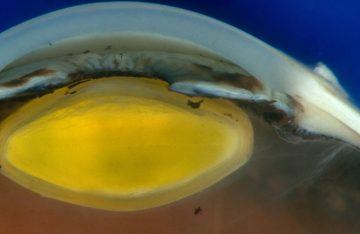 A Japanese woman in her forties has become the first person in the world to have her cornea repaired using reprogrammed stem cells. At a press conference on 29 August, ophthalmologist Kohji Nishida from Osaka University, Japan, said the woman has a disease in which the stem cells that repair the cornea, a transparent layer that covers and protects the eye, are lost. The condition makes vision blurry and can lead to blindness.
 It is hard work to write a book, so there is unavoidable irony in fashioning a volume on the value of being idle. There is a paradox, too: to praise idleness is to suggest that there is some point to it, that wasting time is not a waste of time. Paradox infuses the experience of being idle. Rapturous relaxation can be difficult to distinguish from melancholy. When the academic year comes to an end, I find myself sprawled on the couch, re-watching old episodes of British comedy panel shows on a loop. I cannot tell if I am depressed or taking an indulgent break. As Samuel Johnson wrote: “Every man is, or hopes to be, an Idler.” As he also wrote: “There are … miseries in idleness, which the Idler only can conceive.”
 “The so-called ‘female’ brain,” says Rippon, “has suffered centuries of being described as undersized, underdeveloped, evolutionarily inferior, poorly organised and generally defective.” Such assertions were, and still are, so widespread that Rippon admits feeling as though she’s playing “Whac-a-Mole”. She has barely disproved the newest study professing to demonstrate how men and women’s brains differ, when another is published.
 In early June 2018, in an interview to the BBC in London, Prime Minister Benjamin Netanyahu seemed relaxed and upbeat. Sitting in a room overlooking the river Thames, he celebrated the newfound cooperation between Israel and Arab states, hinting at Israel’s strengthening relationship with Gulf states. When asked about relations with the Palestinians, Netanyahu was less enthusiastic. He blamed Palestinian leadership for refusing negotiations. Prompted to spell out his vision for a peaceful resolution of the century-old Israel-Palestine conflict, he proposed a model in which “they’ll have all the rights to govern themselves, and none of the powers to threaten us […] we would have the overriding security responsibility.” Would this be a Palestinian state? Netanyahu deflected: “state minus, autonomy plus – I don’t care how you call it.” He dismissed the notion that the West Bank was Occupied Palestinian territory. “Who says it’s their land?” As for the relevance of international law, Netanyahu scoffed “I don’t buy current fads.”
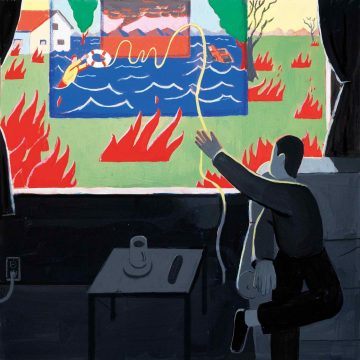 About 70 percent of Americans
  Greta Thunberg, the Swedish teenager who inspired the now-global movement, has become a primary target. On Wednesday, the 16-year-old arrived in New York after completing her voyage across the Atlantic aboard an environmentally friendly yacht. She faced a barrage of attacks on the way. “Freak yachting accidents do happen in August,”
  In the weeks I spent listening to Malcolm Gladwell’s podcast, I learned that lobsters have serotonin, that Elvis Presley suffered from parapraxis and that Mr. Gladwell adheres to a firm life rule that he drink only five liquids: water, tea, red wine, espresso and milk. On the afternoon I met the author and journalist, I had just listened to an episode in which he interviews an intimidating guest. His audio recorder malfunctions, and he has to sprint to Staples to get a replacement. “I was embarrassed,” Mr. Gladwell confides in the podcast. “I worried that he would think I was pathetic.” It sounded mortifying. And yet when I sat down to interview Mr. Gladwell, at the kitchen table of his Manhattan apartment, I went ahead and trusted my own recorder.
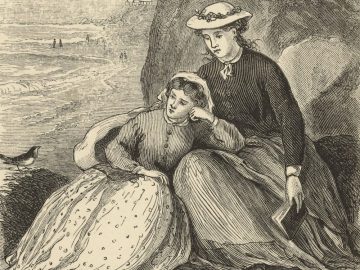 People who have studied anything about Little Women know that the novel is based, roughly, on Louisa’s family, a clan of thinkers, artists, and transcendentalists who rubbed elbows with some of the premier minds of their time: Ralph Waldo Emerson, Henry David Thoreau, Margaret Fuller.
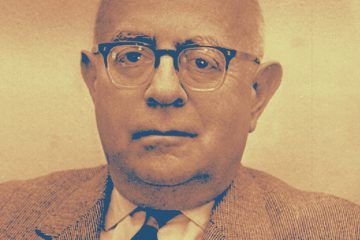 Perhaps Adorno’s greatest legacy for philosophers lies in the two books that most absorbed his scholarly attention in the 1960s and overlapped with the courses he was teaching: Negative Dialectics (1966) and Aesthetic Theory, published posthumously in 1970. Together with a volume he had planned on moral philosophy but did not live to write, these are the books Adorno himself wanted to have “weighed in the balance”. Both are complex and uncompromising summations of Adorno’s philosophy; the first focused on questions about experience, knowledge, history and metaphysics, and the second addressing aesthetics, beauty, art and society.
 Michael Kazin and Atossa Araxia Abrahamian in Dissent:
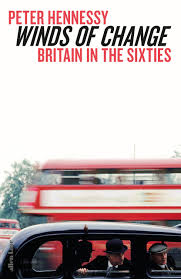 It is entirely characteristic of Hennessy to leave space in this seismic account for the free play of individual quirks. The Soviet leader
  Lenore Palladino in Boston Review: