
Morgan Meis in The Porch Magazine:
 Consider the opening shots of the movie Human Desire, directed by Fritz Lang and released by Columbia Pictures in 1954. We see a man on a train. He’s the engineer. He sits at the front of the train, driving it along the tracks. His demeanor is one of comfort and ease. Then we move to another shot. The camera has been positioned at the side of the train looking forward. Another train comes into view moving toward us, on the opposite track. It seems, for a moment, that there is not enough space for the two trains to pass one another safely. A collision is imminent. But then, with a whoosh, the trains pass one another without incident. We’ve all experienced this fear as two trains pass at high speeds. The margin of error is so small. The violence of the rush of air smacking both trains is startling.
The first few minutes of Human Desire are a study in the joys and contradictions of train travel, back and forth, back and forth between the scary almost overwhelming power of this form of locomotion, and the quiet contemplation that is the unexpected byproduct of a train’s motion along its fixed track. Finally, the train pulls into a station. It is difficult to describe the sense of comfort and completion in this final terminus. And then the giant hanger looms into view, ushering the train into a place of rest.
These opening scenes of Human Desire are a direct tribute to another film. That’s La Bête humaine by Jean Renoir (1938).
More here.
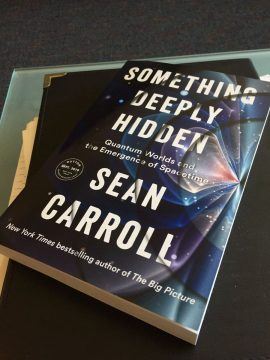 I suspect most loyal Mindscape listeners have been exposed to the fact that I’ve written a new book,
  Everything was unfolding as it usually does. The academics who gathered in Lisbon this summer for the International Society of Political Psychologists’ annual meeting had been politely listening for four days, nodding along as their peers took to the podium and delivered papers on everything from the explosion in conspiracy theories to the rise of authoritarianism.
 Has the behaviour of another person ever made you feel ashamed? Not because they set out to shame you but because they acted so virtuously that it made you feel inadequate by comparison. If so, then it is likely that, at least for a brief moment in time, you felt motivated to improve as a person. Perhaps you found yourself thinking that you should be kinder, tidier, less jealous, more hardworking or just generally better: to live up to your full potential. If the feeling was powerful enough, it might have changed your behaviour for a few minutes, days, weeks, months, years or a lifetime. Such change is the result of a mechanism I shall call ‘moral hydraulics’.
 A small clinical study in California has suggested for the first time that it might be possible to reverse the body’s epigenetic clock, which measures a person’s biological age. For one year, nine healthy volunteers took a cocktail of three common drugs — growth hormone and two diabetes medications — and on average shed 2.5 years of their biological ages, measured by analysing marks on a person’s genomes. The participants’ immune systems also showed signs of rejuvenation. The results were a surprise even to the trial organizers — but researchers caution that the findings are preliminary because the trial was small and did not include a control arm.
 Power’s book didn’t offer much discussion of failure, of the limitations of intervention, even in places where it was unclear that American efforts could have succeeded. In Rwanda, which is often cited as an example of U.S. inaction, most of the killing was done so swiftly—eight hundred thousand people in three months—that it’s hard to imagine the American bureaucracy and military orchestrating a response quickly enough to make a difference, and then staying around long enough to insure that violence didn’t recur. But in 2002 the notion that America could police the world didn’t seem so far-fetched. nato had recently taken on three new members. China’s economy was a tenth of its present size. The World Trade Center had been destroyed, but the U.S. had toppled the Taliban government in Afghanistan. The invasion of Iraq was still a year away.
 So what is to be done? What might seem like an esoteric crisis in Augustinian scholarship suddenly reflects a crisis about how we think, and how that thinking might give rise to a whole host of other predicaments. In which case, perhaps the resolution of one can aid us in resolving the other. In Augustine’s case, Kenyon argues that we should approach him in a holistic way and cease strip-mining his work for this or that argument or literary trope. We should especially not get bogged down in attempts to historically recreate Augustine’s psyche, but turn to the “overarching arguments and rhetorical strategy instead of individual passages” and “prefer interpretations that make sense of a text as a whole.” What we find, Kenyon avers, are “works centrally concerned with the practice of inquiry. When it comes to finding guidance, the dialogues look foremost to the act of inquiry itself: the fact that we can inquire at all tells us various things about ourselves.” The direction has shifted: what might it look like to view Augustine’s dialogues, and the nature of dialoguing in general, in terms of pedagogy and not in terms of content, as journeys of self-discovery instead of didactic treatises?
 In the middle of the 1420s, a Dominican friar painted an altarpiece for his convent, San Domenico in Fiesole, Florence, showing the Christian story of the Annunciation. Fra Giovanni, now known as Fra Angelico, was a professional artist who had opted for monastic life largely for the freedom it gave him to paint. The altarpiece, recently restored by the Prado Museum, Madrid, where it has resided since the nineteenth century, hangs at the centre of an exhibition at the museum showing how Angelico took this freedom and created a new type of painting.
 On its glittering surface, America’s corporate economy appears to be in fantastic shape. The stock markets recently reached record highs, even if they dipped and bobbed after reaching those heights. Profits are soaring. Financing is cheap. The corporate tax rate has been cut. The unemployment rate is near a fifty-year low, with little inflation.
 Bob Marra
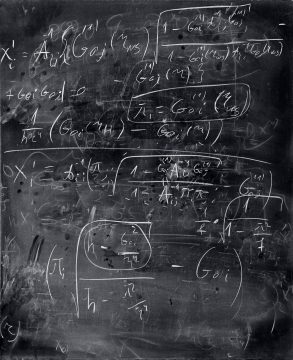 “I think I can safely say that nobody really understands quantum mechanics,” observed the physicist and Nobel laureate Richard Feynman. That’s not surprising, as far as it goes. Science makes progress by confronting our lack of understanding, and quantum mechanics has a reputation for being especially mysterious.
 The sleek blue-glass building of the Infosys corporation sits like an intruding spaceship amid the unpaved side streets and half-completed residential structures that surround it. Its giant porthole windows offer a peek into a Jetsons-esque world of workers gliding between floors on elevated moving sidewalks. For now, 19-year-old Nishank Nachappaa toils in the shadows of Infosys and the other high-tech companies that, like him, call the Electronic City section of Bangalore home. The high school graduate helps out at two dormitories for tech workers – one for young men, the other for young women – that his parents manage. His father maintains the buildings and his mother prepares meals for the 120 male and 30 female residents. Walk a block or two from the dorms and other corporate structures loom with multinational names such as Emerson and Yokogawa, Altametrics and Hewlett Packard.
 Like many other nations, Canada is blessed with enormous resource wealth. We are the 7th largest oil-producing nation in the world (Norway is the 15th), with vast forests, mineral deposits and prime farming land. The Canadian province of Alberta legally controls almost 80 percent of the country’s fossil fuel production, has a similar population to Norway yet somehow managed to end up with a
  The M.I.T. Media Lab, which has been embroiled in a scandal over accepting donations from the financier and convicted sex offender Jeffrey Epstein, had a deeper fund-raising relationship with Epstein than it has previously acknowledged, and it attempted to conceal the extent of its contacts with him. Dozens of pages of e-mails and other documents obtained by The New Yorker reveal that, although Epstein was listed as “disqualified” in M.I.T.’s official donor database, the Media Lab continued to accept gifts from him, consulted him about the use of the funds, and, by marking his contributions as anonymous, avoided disclosing their full extent, both publicly and within the university. Perhaps most notably, Epstein appeared to serve as an intermediary between the lab and other wealthy donors, soliciting millions of dollars in donations from individuals and organizations, including the technologist and philanthropist Bill Gates and the investor Leon Black. According to the records obtained by The New Yorker and accounts from current and former faculty and staff of the media lab, Epstein was credited with securing at least $7.5 million in donations for the lab, including two million dollars from Gates and $5.5 million from Black, gifts the e-mails describe as “directed” by Epstein or made at his behest. The effort to conceal the lab’s contact with Epstein was so widely known that some staff in the office of the lab’s director, Joi Ito, referred to Epstein as Voldemort or “he who must not be named.”
 AS A MEDICAL STUDENT