Sam Haselby in aeon:
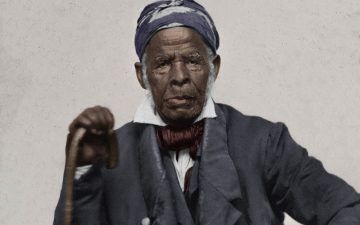 The first words to pass between Europeans and Americans (one-sided and confusing as they must have been) were in the sacred language of Islam. Christopher Columbus had hoped to sail to Asia and had prepared to communicate at its great courts in one of the major languages of Eurasian commerce. So when Columbus’s interpreter, a Spanish Jew, spoke to the Taíno of Hispaniola, he did so in Arabic. Not just the language of Islam, but the religion itself likely arrived in America in 1492, more than 20 years before Martin Luther nailed his theses to the door, igniting the Protestant reformation. Moors – African and Arab Muslims – had conquered much of the Iberian peninsula in 711, establishing a Muslim culture that lasted nearly eight centuries. By early 1492, the Spanish monarchs Ferdinand and Isabella completed the Reconquista, defeating the last of the Muslim kingdoms, Granada. By the end of the century, the Inquisition, which had begun a century earlier, had coerced between 300,000 and 800,000 Muslims (and probably at least 70,000 Jews) to convert to Christianity. Spanish Catholics often suspected these Moriscos or conversos of practising Islam (or Judaism) in secret, and the Inquisition pursued and persecuted them. Some, almost certainly, sailed in Columbus’s crew, carrying Islam in their hearts and minds.
Eight centuries of Muslim rule left a deep cultural legacy on Spain, one evident in clear and sometimes surprising ways during the Spanish conquest of the Americas. Bernal Díaz del Castillo, the chronicler of Hernán Cortés’s conquest of Meso-America, admired the costumes of native women dancers by writing ‘muy bien vestidas a su manera y que parecían moriscas’, or ‘very well-dressed in their own way, and seemed like Moorish women’. The Spanish routinely used ‘mezquita’ (Spanish for mosque) to refer to Native American religious sites. Travelling through Anahuac (today’s Texas and Mexico), Cortés reported that he saw more than 400 mosques.
Islam served as a kind of blueprint or algorithm for the Spanish in the New World. As they encountered people and things new to them, they turned to Islam to try to understand what they were seeing, what was happening. Even the name ‘California’ might have some Arabic lineage. The Spanish gave the name, in 1535, taking it from The Deeds of Esplandian (1510), a romance novel popular with the conquistadores. The novel features a rich island – California – ruled by black Amazonians and their queen Calafia. The Deeds of Esplandian had been published in Seville, a city that had for centuries been part of the Umayyad caliphate (caliph, Calafia, California).
More here.

 If you’re bad, we are taught, you go to Hell. Who in the world came up with that idea? Some will answer God, but for the purpose of today’s podcast discussion we’ll put that possibility aside and look into the human origins and history of the idea of the Bad Place. Marq de Villiers is a writer and journalist who has authored a series of non-fiction books, many on science and the environment. In Hell & Damnation, he takes a detour to examine the manifold ways in which societies have imagined the afterlife. The idea of eternal punishment is widespread, but not quite universal; we might learn something about ourselves by asking where it came from.
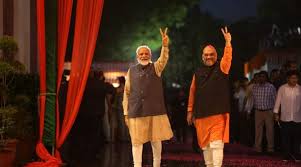
 In Varanasi recently, I took an auto-rickshaw from Godowlia to Assi Ghat. Like everyone else in town, the driver and I began talking politics. The 2019 general election was a week away and Prime Minister Narendra Modi was seeking reelection from Varanasi. The driver was an ardent Modi fan and would hear no criticism of him. He even claimed that demonetisation had punished the corrupt rich. One topic led to another and soon he was loudly praising Nathuram Godse as a patriot – Gandhi deserved no less than a bullet for being a Muslim lover. “You don’t know these people,” he thundered. “Read our history! Only Muslims have killed their own fathers to become kings. Has any Hindu ever done so? Inki jaat hi aisi hai. You too should open your mobile and read on WhatsApp. Kamina Rahul is born of a Muslim and a Christian; Nehru’s grandfather, also Muslim, Mughal. Outsiders all. Modi will teach them!” Fortunately, my destination came before his passion for the topic could escalate further.
 I
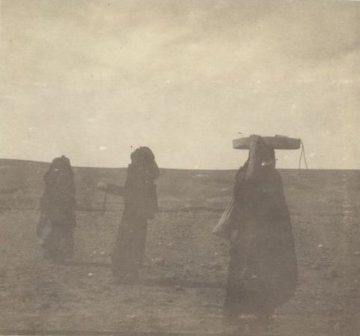
I In 1986, at the age of twelve, I joined Tim Rollins and Kids of Survival. I first met Tim as a seventh grader at the Intermediate School 52 where he was teaching at the time. Tim had only intended to stay at the school for a few weeks. The students had made charcoal drawings on the ceiling of the classroom, and the walls were covered in graffiti. Tim often described the art room as the “Hip-Hop Sistine Chapel.” He was convinced that there was a profound reason he was there.
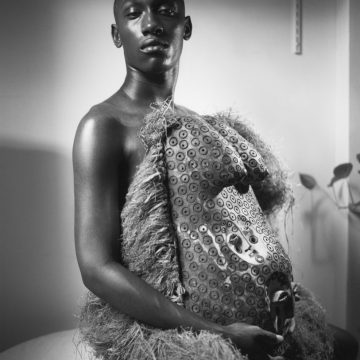 “Technology will surely drown us. The individual is disappearing rapidly. We’ll eventually be nothing but numbered ants. The group thing grows.” So said
  Dr. Arnold won fame and the Nobel Prize for developing a technique called directed evolution, a way of generating a host of novel enzymes and other biomolecules that can be put to any number of uses — detoxifying a chemical spill, or example, or disrupting the mating dance of an agricultural pest. Or removing laundry stains in eco-friendly cold water, or making drugs without relying on eco-hostile metal catalysts. Rather than seeking to design new proteins rationally, piece by carefully calculated piece — as many protein chemists have tried and mostly failed to do — the Arnold approach lets basic evolutionary algorithms do the work of protein composition and protein upgrades. The recipe is indeed an engineer’s dream: simple. You start with a protein that already has some features you’re interested in, such as stability in high heat or a knack for clipping apart fats. Using a standard lab trick such as polymerase chain reaction, you randomly mutate the gene that encodes the protein. Then you look for slight improvements in the resulting protein — a quickened pace of activity, say, or a vague inclination to carry out a task it wasn’t performing before, or a willingness to operate under conditions it deplored in the past.
 Consider a hypothetical society that severely marginalizes individuals with red hair and considers red hair to be a genetic disorder with a recessive pattern of inheritance. The “pathology” is determined to be an imbalance between the levels of the red pigment pheomelanin and dark pigment eumelanin in the hair filaments. Red-haired individuals—and parents of red-haired children—in this society go to extreme lengths to dye their hair black. In fact, this society has spent extensive resources to develop complex dyeing procedures, performed only by specially trained medical professionals, that work best for red hair and last longer than regular dyes.
 The Great Crash of 2007–2009 stripped American middleclass families of wealth. It gave rise to nativist politics on the right and socialism on the left, killing credence in neoliberal market capitalism in both the United States and Europe. It buried the Washington consensus that had energized bipartisan support for U.S. leadership around the world. Indeed, China has replaced the United States as the leading country whose investment drives the global economy.
 My friend Laurette has two cats, Zhanna and Pixie. When Laurette pets Zhanna, Pixie interferes by attacking Zhanna. By analogy to humans, it is natural to interpret Pixie’s behaviour as jealousy, but perhaps Pixie is just attempting to assert dominance or establish territoriality. There have been no experimental studies of cats to discriminate between jealousy and alternative hypotheses, but
  A few weeks ago, a friend of mine, Paul Embery, found himself hit by a Twitter storm. Paul is a trade unionist, a socialist and is emerging as a polemical journalist of some distinction. Like many, but not all who identify as Blue Labour, he argues strongly for the democratic and radical possibilities of Brexit, which he views as a class issue. He found himself engaged in a Twitter spat with Mike Harding, who describes himself on his website as a “singer, songwriter, comedian, author, poet, broadcaster and multi-instrumentalist”, and there is no reason to doubt that he is all those things and more. He views Brexit as a horrible prelude to a new world war. Mike is from Crumpsall in Manchester, Paul is from Dagenham in the borderlands of Essex and east London. It was never going to go well.
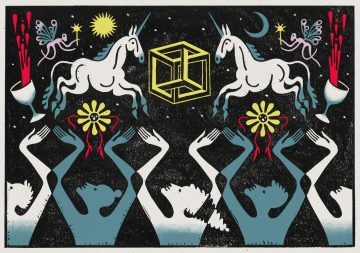 Many people believe that truth conveys power. If some leaders, religions or ideologies misrepresent reality, they will eventually lose to more clearsighted rivals. Hence sticking with the truth is the best strategy for gaining power. Unfortunately, this is just a comforting myth. In fact, truth and power have a far more complicated relationship, because in human society, power means two very different things. On the one hand, power means having the ability to manipulate objective realities: to hunt animals, to construct bridges, to cure diseases, to build atom bombs. This kind of power is closely tied to truth. If you believe a false physical theory, you won’t be able to build an atom bomb.
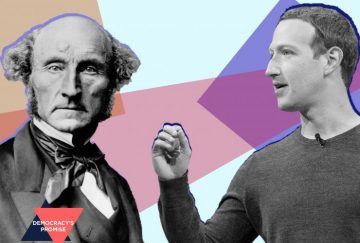 Over at the Boston Review, Henry Farrell and Bruce Schneier have the lead piece in a forum on the issue of information and democracy, with responses by Riana Pfefferkorn, Joseph Nye, Anna Grzymala-Busse, Allison Berke, Jason Healey, and Astra Taylor:
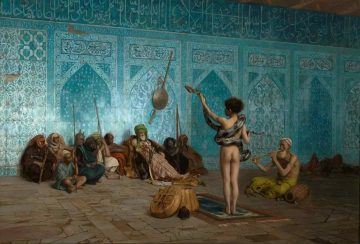 Adam Shatz in The New York Review of Books:
 Pratap Bhanu Mehta in Indian Express:
 IN THE SPRING