
Megan Scudellari in Nature:
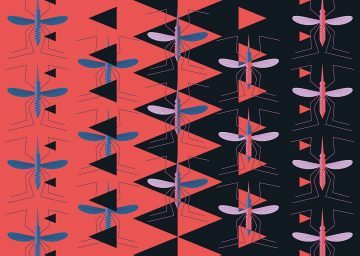 Austin Burt and Andrea Crisanti had been trying for eight years to hijack the mosquito genome. They wanted to bypass natural selection and plug in a gene that would mushroom through the population faster than a mutation handed down by the usual process of inheritance. In the back of their minds was a way to prevent malaria by spreading a gene to knock out mosquito populations so that they cannot transmit the disease. Crisanti remembers failing over and over. But finally, in 2011, the two geneticists at Imperial College London got back the DNA results they’d been hoping for: a gene they had inserted into the mosquito genome had radiated through the population, reaching more than 85% of the insects’ descendants1.
It was the first engineered ‘gene drive’: a genetic modification designed to spread through a population at higher-than-normal rates of inheritance. Gene drives have rapidly become a routine technology in some laboratories; scientists can now whip up a drive in months. The technique relies on the gene-editing tool CRISPR and some bits of RNA to alter or silence a specific gene, or insert a new one. In the next generation, the whole drive copies itself onto its partner chromosome so that the genome no longer has the natural version of the chosen gene, and instead has two copies of the gene drive. In this way, the change is passed on to up to 100% of offspring, rather than around 50% (see ‘How gene drives work’).
More here.
 That raises a whole range of very familiar and long-standing issues that have afflicted the Left, leading to debates in India (and no doubt in other places as well) between the organised Left and what has come to be called the “ultra-Left” and the insurgent Left.
 It doesn’t mean much to say music affects your brain — everything that happens to you affects your brain. But music affects your brain in certain specific ways, from changing our mood to helping us learn. As both a neuroscientist and an opera singer, Indre Viskontas is the ideal person to talk about the relationship between music and the brain. Her new book, How Music Can Make You Better, digs into why we love music, how it can unite and divide us, and how music has a special impact on the very young and the very old.
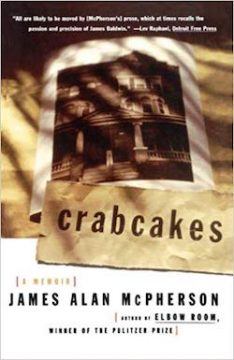 JAMES ALAN MCPHERSON’S memoir Crabcakes begins with the death of his tenant, Mrs. Channie Washington. A traditional memoir might have sketched McPherson’s upbringing: the strapped childhood in segregated Savannah, Georgia, as the son of an electrician and a maid, and his ascent to Harvard Law School in the late ’60s. He might have noted that during that time, his short story “Gold Coast” won a competition sponsored by The Atlantic, and that two years later, with the story collection Hue and Cry already under his belt, he received his MFA from the Iowa Writers’ Workshop. He could have also mentioned that his second collection Elbow Room, published in 1977, earned him a Pulitzer Prize: the first African American to win one for fiction.
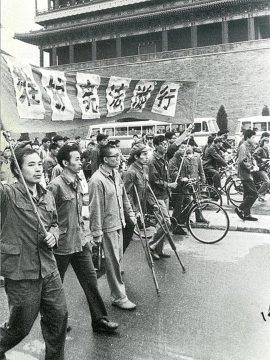 In short, Western narratives about China throughout the 1990s hinged on the logic that capitalist development must end with liberal democracy. In hindsight, however, precisely the opposite seems to have occurred in the People’s Republic. Rather than being a political albatross on the Party’s neck, the legacy of Tiananmen, the chaotic aftermath of Soviet collapse, and the difficulties in bridging east-west divisions in Europe, has paradoxically bolstered the Party’s legitimacy in China. Indeed, public opinion surveys in recent years have consistently found that a majority of Chinese citizens are not only content with the Party’s leadership but broadly more optimistic about their personal future and that of their country relative to those polled in the West. The same surveys also found that Chinese people tend to be unsympathetic to proposals for major shifts in China’s c
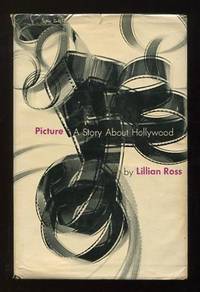 Great reporting isn’t usually harmed by the reporter having a poor character. It may even be improved by it. Lillian just happened to be hard-bitten in the right way. Her pieces relied on a ruthlessness, sometimes a viciousness, that she didn’t try to hide and that other people liked to comment on. She talked a lot about not being egotistical and so on, but reporters who talk a great deal about not obtruding on the reporting are usually quite aware, at some level, that objectivity is probably a fiction, and that they are most present when imagining they’re invisible. (Lillian was in at least two minds about this, possibly six. One minute she’d say a reporter had to let the story be the story, the next she’d say it was ridiculous: a reporter is ‘chemically’ involved in the story she is writing.) By the time I knew her, Lillian was struggling against a sense that she had caused pain to Shawn’s widow, Cecille, who was still alive, and permanently changed the public view of that most quiet and dedicated of New Yorker editors. Though I liked the book, I believed she was fooling herself if she thought there wasn’t something more than candour at work in her portrayal of Shawn’s family and the reality of his life with them. She claimed she was his ‘real’ wife and that her adopted son, Erik, was ‘theirs’. She knew this was tendentious and took out her anxiety on people who pointed it out.
 Before he became an internet sensation, before he made scientists reconsider the nature of dancing, before the
  Scientists
 When did nature become a good for cities? When did city dwellers start imagining nature to be something they were missing? Today, urbanites’ moral associations with nature are so obvious and widely shared that a recent New Yorker cartoon of a couple at the dinner table was captioned: “Is this from the community garden? It tastes sanctimonious.” For better or worse, most of us are so steeped in this view of nature that it is hard to imagine how it could be otherwise. But it once was.
 “I remember only the women,” Vivian Gornick writes near the start of her memoir of growing up in the Bronx tenements in the 1940s, surrounded by the blunt, brawling, yearning women of the neighborhood, chief among them her indomitable mother. “I absorbed them as I would chloroform on a cloth laid against my face. It has taken me 30 years to understand how much of them I understood.”
 With the ability to use tools, solve complex puzzles, and even
  The photos of
 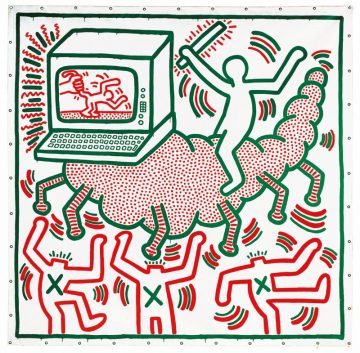 March 2019: a woman is standing in front of some Swatch watches on a daytime TV antiques show. The presenter asks which is her favourite. “Probably this one,” she answers, pointing to a watch adorned with a cartoon barking mutt. “I just like the dog – it makes me smile.” The story of how Keith Haring’s symbols became so ubiquitous that they ended up on the wrists of Middle England as much as on the bedroom walls of 1980s Aids activists is both the contradiction and the genius of the New York street artist, whose star burned fast and acid bright. Tate Liverpool’s superb retrospective traces Haring’s ten-year flight from street artist to global consumer brand, from scrawling on the subway to painting the Berlin Wall, and details the turbulent political backdrop behind his work. We know many of his motifs well – the dog, the crawling baby, the three-eyed face – his thick black lines and dancing figures, but there’s nothing superficial about these deceptively simple scrawls.