 Michael Kazin and Atossa Araxia Abrahamian in Dissent:
[Michael Kazin] Last fall, Atossa Araxia Abrahamian wrote a bracing essay for The Nation that criticized progressives in the United States who oppose free migration and defend the existence of nation-states. We should not, she argued, promote “the idea that someone arbitrarily born on the wrong side of a line is less deserving of a good life” or “play by the far right’s rules” that, in part, “got us into this mess.”
An ethical internationalism has always been a cardinal virtue of the left, one we should never abandon. But we can uphold that ideal without calling for scrapping borders and nations. In fact, there are both principled and practical reasons for American leftists to retain them.
One cannot engage effectively in democratic politics without being part of a community of feeling. For most Americans, their nation, with all its flaws, is that community. And nationalism in the United States has always served tolerant, democratic ends as well as racist and authoritarian ones. Think of Frederick Douglass, in 1852, basing his hopes for abolition partly on “the Declaration of Independence, the great principles it contains, and the genius of American Institutions.” Or of Franklin D. Roosevelt calling in 1944 for an “Economic Bill of Rights” in the middle of a war against fascism. Or of Martin Luther King Jr. proclaiming during the Montgomery Bus Boycott that “the great glory of American democracy is the right to protest for right.” Each figure, in a different way, was engaged in a transnational effort to advance equality and tolerance. But each also depended on the power and legitimacy of the United States to gain mass support for his ideas.
More here.
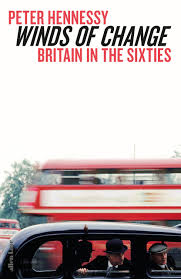 It is entirely characteristic of Hennessy to leave space in this seismic account for the free play of individual quirks. The Soviet leader
  Lenore Palladino in Boston Review:
 Suzy Hansen in The Nation:
 Leigh Claire La Berge in the LA Review of Books:
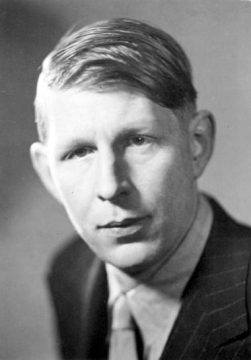 AJP Taylor, in his famous account in The Origins of the Second World War(1961), claimed that a second world war “was implicit since the moment when the first world war ended”. It became explicit at exactly 4.30am on Friday 1 September 1939, when the German panzer divisions that had been gathering on the Polish border began their advance. The front page headline of the New York Times that day tapped out the news in telegraphese: GERMAN ARMY ATTACKS POLAND; CITIES BOMBED, PORT BLOCKADED; DANZIG IS ACCEPTED INTO REICH. On 3 September the British prime minister
  The car crash brought it all into focus. For the short-story writer Etgar Keret, a new collection usually takes shape in response to some overwhelming event in his life. He’ll be writing his three- or four-page tales, saving them to folders on his computer that he occasionally loses, then boom, something happens that ties them all together. This time it was a literal boom. Two years ago, he was on his way from Connecticut to Boston when his driver, speeding to get to the next reading, hit another car on the highway. The windshield shattered, the airbags exploded, and the car filled with the smell of fuel. Keret had broken two ribs. “I was waiting for the whole shebang, for all my life to pass before my eyes,” he said. “Lots of thoughts entered my head. That I’d had a good life, but I was a little bit sad that it was short. I was hoping that my wife would get remarried. And I was thinking to myself that I should have switched to a new agent because it will really be more difficult for my wife to work with my current agent. Practical and tiny issues.”
 The city of Bihać in
 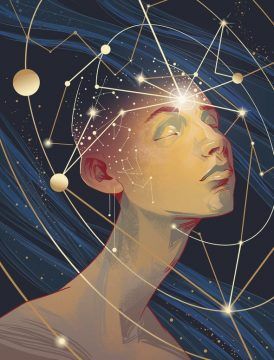 Physics seems to be one of the only domains of human life where truth is clear-cut. The laws of physics describe hard reality. They are grounded in mathematical rigor and experimental proof. They give answers, not endless muddle. There is not one physics for you and one physics for me but a single physics for everyone and everywhere. Physics often seems weird, but that’s a good sign—it is not beholden to preconceptions. In a world that can seem claustrophobic, where the same debates go round in circles, physics injects some genuine novelty into life and jolts us out of the ruts we fall into.
 After I was elected prime minister of Pakistan last August, one of my foremost priorities was to work for lasting and just peace in South Asia. India and Pakistan, despite our difficult history, confront similar challenges of poverty, unemployment and climate change, especially the threat of melting glaciers and scarcity of water for hundreds of millions of our citizens.
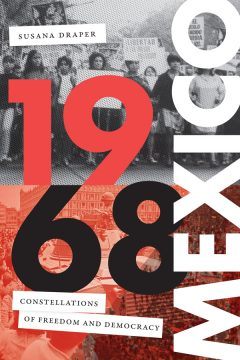 On October 2, 1968, Mexican police fired on unarmed student protesters in the Plaza de las Tres Culturas of Tlatelolco, in the historical center of Mexico City. While the state initially reported twenty-six dead, witnesses and independent investigators have estimated that two to four hundred people were killed. Many more were injured and imprisoned. Ten days after the massacre, president Gustavo Díaz Ordaz inaugurated the Olympic Games that were meant to showcase Mexico’s burgeoning modernity on the global stage, something the increasingly conspicuous mass protests had threatened to disrupt. The games themselves were used as a stage for political dissent when, on October 16, Tommie Smith and John Carlos gave a Black Power salute as the Star-Spangled Banner played at their medal ceremony, an iconic gesture linking Mexico’s student movement to another site in the global constellation of protests that year, the American civil rights movement. The Tlatelolco massacre and its impunity, closely followed by the symbolic performance before the international community of the legitimacy of the authoritarian rule of the PRI (Partido Revolucionario Institucional) by means of the Olympics, dealt a devastating blow to the mass movement in the streets. But the collective political and aesthetic projects that had begun in the laboratory of the Mexican student movement continued to evolve.
 Social media are now widely criticized after enjoying a long period of public approbation. The kinds of human activities that are coordinated through social media, good as well as bad, have always existed. However, these activities were not visible or accessible to the whole of society. As conversation, socialization, and commerce are aggregated into large-scale, public commercial platforms, they become highly visible to the public and generate storable, searchable records. Social media make human interactions hypertransparent and displace the responsibility for societal acts from the perpetrators to the platform that makes them visible.
 ‘One of the many things I regret about writing And the Ass Saw the Angel (1989) was that I didn’t set it in Australia. It could just as easily be set in Wangaratta rather than an imaginary part of the American South. I don’t know why I didn’t do that. I wish I had. For sure that book comes from growing up in the country, from living a life in country Australia. It’s not from listening to murder ballads. The river was the sacred place of my childhood and everything happened down there.
 Genes play a role in—but cannot alone predict—same-sex sexual behaviors, according to a study published today (August 29) in
  A woman rests in a field surrounded by apple trees. Savouring the sounds and smells of the shaded grove, she muses on the ‘sacred recess’ of her idyllic surroundings, and surrenders herself to fantasy. The wind is ‘honey sweet’, the air perfumed with ‘musk roses’. She is waiting for a lover. ‘Come to me from Crete,’ our narrator calls out to an anonymous and distant figure. Her words are charged with desire. ‘Ice-water babbles’ among ‘flickering leafage’ while ‘horses’ – a traditional symbol of masculine virility – ‘graze knee-deep in flowers’. What has triggered this outpour of erotic yearning? Are these the daydreams of a hot summer’s day? Is the subject drunk, as her eulogising of the local ‘nectar’ might suggest? Might she even, as some critics have speculated, be masturbating?