From aclu.org:
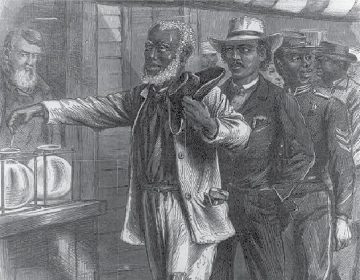 The Voting Rights Act is a historic civil rights law that is meant to ensure that the right to vote is not denied on account of race or color.
1867
1866 Civil Rights Act of 1866 grants citizenship, but not the right to vote, to all native-born Americans.
1869
Congress passes the Fifteenth Amendment giving African American men the right to vote.
1896
Louisiana passes “grandfather clauses” to keep former slaves and their descendants from voting. As a result, registered black voters drops from 44.8% in 1896 to 4.0% four years later. Mississippi, South Carolina, Alabama and Virginia follow Louisiana’s lead by enacting their own grandfather clauses.
1940
Only 3% of eligible African Americans in the South are registered to vote. Jim Crow laws like literacy tests and poll taxes were meant to keep African Americans from voting.
Here is an example of real literacy test:
The State of Louisiana Literacy Test (this test is to be given to anyone who cannot prove a fifth grade education)
Do what you are told in each statement, nothing more, nothing less.Be careful as one wrong answer denotes failure of the test. You have 10 minutes to complete the test.
Draw a line around the number of letter of this sentence.
Draw a line under the last word of this line.
Cross out the longest word of this line.
Draw a line around the shortest word of this line.
Circle the first, first letter of the alphabet in this line
In the space below draw three circles, one inside by (engulfed by) the other.
More here. (Note: Throughout February, at least one post will honor The Black History Month. This year’s theme is “African Americans and the Vote.” Readers are encouraged to send in their suggestions)

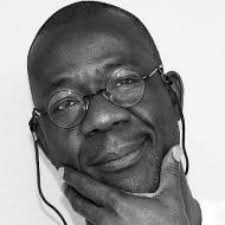 In the 1980s, the Guardian newspaper in Lagos published a weekly Literary Series, including full-length essays on notable writers as well as poems, stories and short reviews. Those essays were later collected into the two-volume Perspectives on Nigerian Literature, edited by Yemi Ogunbiyi. Of the 53 essays in the second volume, Teju wrote eight, the most contributions by a single person in that volume.
 As a technology entrepreneur, when I am approached by startup founders for fundraising advice, I ask: “What would the world look like if you got everything you’re asking for?” It’s a test to see whether they are setting out to solve the right problem or whether they are choosing their preferred course of action and justifying retrospectively.
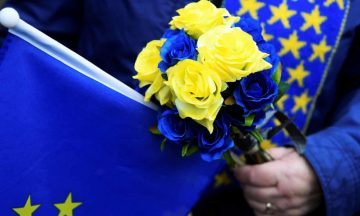 It’s done. A triumph of dogged negotiation by May then, briefly, Johnson, has fulfilled the most pointless, masochistic ambition ever dreamed of in the history of these islands. The rest of the world, presidents Putin and Trump excepted, have watched on in astonishment and dismay. A majority voted in December for parties which supported a second referendum. But those parties failed lamentably to make common cause. We must pack up our tents, perhaps to the sound of church bells, and hope to begin the 15-year trudge, back towards some semblance of where we were yesterday with our multiple trade deals, security, health and scientific co-operation and a thousand other useful arrangements.
 The integrating power of the erotics of poetry was on Heaney’s mind when he decided to take on the task of producing a modern English version of the quintessentially Anglo-Saxon Beowulf. Contemplating a version distinguished by many Hiberno-English uses, Heaney concluded, as he wrote in “The Irish Poet and Britain”, ‘So, so be it. Let Beowulf now be a book from Ireland.’
 In 1944, in Warsaw, German soldiers scrawled numbers on the buildings in white paint and then systematically demolished the city, while the Soviet army watched and waited across the Vistula. After the war, the Poles returned to Warsaw and, living in the rubble, began to rebuild. Devastated cities across Europe faced the same choices. Should the ruins be left in view, like the cathedral at Coventry, with new buildings erected beside them, a permanent memorial? Should the rubble (with its dead) be hidden and a new, modern city built on top of it? Or perhaps, as the Poles decided, the old city should be replicated, rebuilt in the same place, in every last detail—every cornice, lamppost, and windowsill—an act of defiance and despair, the fiercest response to the fact that we can’t bring back the past, we can’t bring back the dead. In this replication was a kind of terror—the calling forth of spirits and the speaking aloud of a harrowing, unanswerable doubt: that the replica might erase precisely what it was meant to memorialize.
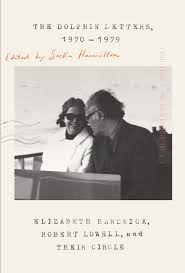 ‘Sometimes I think I am the enemy of womankind,’ Lowell told Hardwick. He hurt all three of his wives grievously, but he believed in their greatness as writers, enriched them creatively and improved their sense of self-worth. He gave the first, Jean Stafford, lifelong facial disfigurement after crashing the car they were in while drunk at the wheel, and later broke her nose during a drunken row in New Orleans. He also encouraged her during the writing of her first novel, Boston Adventure, which sold over 400,000 copies following its publication in 1944. The novel that Hardwick wrote after marrying Lowell, The Simple Truth, is a big improvement on its predecessor, and the novel she wrote as a response to The Dolphin after his death, Sleepless Nights, is her best. ‘Everything I know’, she attested, ‘I learned from him.’
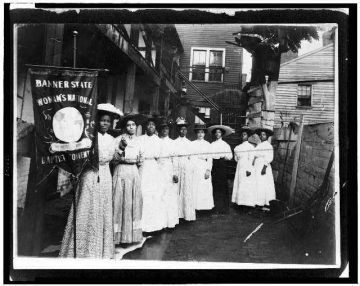 During the 19th and 20th centuries, Black women played an active role in the struggle for universal suffrage. They participated in political meetings and organized political societies. African American women attended political conventions at their local churches where they planned strategies to gain the right to vote. In the late 1800s, more Black women worked for churches, newspapers, secondary schools, and colleges, which gave them a larger platform to promote their ideas.
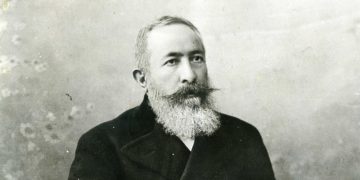 THE ERASURE OF the Palestinians on display this week as President Donald Trump and Israeli Prime Minister Benjamin Netanyahu unveiled a one-sided “
 While some details of the mechanisms of splicing remain to be worked out, it’s known that mature, edited mRNAs result from an interplay between multiple factors within and outside the transcript itself. Among these is the spliceosome, the machinery that carries out the splicing. Each splicing event requires three components: the splice donor, a GU nucleotide sequence at one end of the intron; a splice acceptor, an AG nucleotide sequence at the opposite end; and a branch point, an A approximately 20–40 nucleotides away from the splice acceptor. These three “splice sites” are recognized by two core small nuclear RNAs (snRNAs) of the spliceosome, U1 and U2, followed by a protein, U2AF. The binding of these molecules to a transcript recruits a complex of three more snRNAs—U4, U5, and U6—which facilitates the splicing reaction. A variety of factors affect how transcripts from a particular gene are spliced. Exon recognition by the spliceosome can be influenced by RNA binding proteins (RBPs), which bind to enhancer and silencer motifs within the mRNA and help or hinder spliceosome recognition of the splice sites. And because pre-mRNAs are frequently spliced as they’re transcribed, the speed of transcription by RNA polymerase II further tunes the window of opportunity for splice site recognition by the spliceosome.
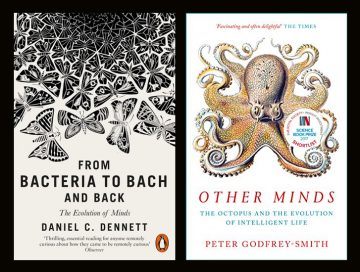 In this essay, I discuss Dennett’s From Bacteria to Bach and Back: The Evolution of Minds (hereafter From Bacteria) and Godfrey Smith’s Other Minds: The Octopus and The Evolution of Intelligent Life (hereafter Other Minds) from a methodological perspective. I show that these both instantiate what I call ‘synthetic philosophy.’ They are both Darwinian philosophers of science who draw on each other’s work (with considerable mutual admiration). In what follows I first elaborate on synthetic philosophy in light of From Bacteria and Other Minds; I also explain my reasons for introducing the term; I look at the function of Darwinism in contemporary synthetic philosophy; and I close by analyzing the sociological challenges to synthetic philosophy.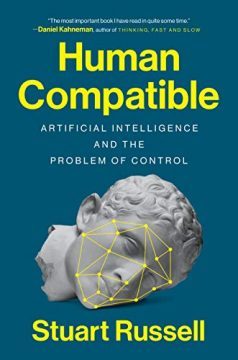
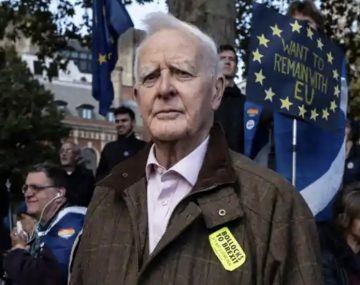 I’m not just a remainer. I’m a European through and through, and the rats have taken over the ship, I want to tell him. It’s breaking my heart and I want it to break yours. We need your voice to wake us from our sleepwalk, and save us from this wanton act of political and economic self-harm. But you’re too late.
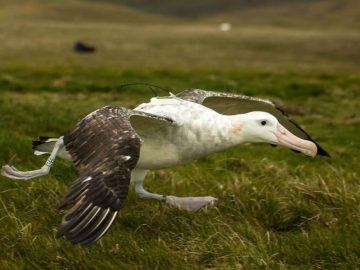 Boasting wingspans of up to 11 feet—the largest of any bird alive today—these feathered goliaths, native to the Southern Ocean and North Pacific, are built to soar. Gliding at speeds that often exceed 50 miles per hour, they can