
Nayanah Siva in Nautilus:
 The scientists crowded around Yuanchao Xue’s petri dish. They couldn’t identify the cells that they were seeing. “We saw a lot of cells with spikes growing out of the cell surface,” said Xiang-Dong Fu, the research team’s leader at the University of California, San Diego. “None of us really knew that much about neuroscience, and we asked around and someone said that these were neurons.” The team, who were made up of basic cellular and molecular scientists, were utterly puzzled. Where had these neurons come from? Xue had left a failed experiment, a dish full of human tumor cells, in the incubator, and when he looked two weeks later, he found a dish full of neurons.
It’s not often an unexpected cell type appears in a petri dish, as if from nowhere. Scientists all over the world have spent a lot of time and money actively trying to generate neurons in the lab—the implications for neurodegenerative disease would be massive. And yet this research team, who were actually studying the RNA-binding protein PTB, had unknowingly generated a whole dish of neurons.
“It puzzled me for quite a long time, and I didn’t know what was wrong with my cells,” said Xue, who is now a researcher at the Institute of Biophysics at the Chinese Academy of Sciences, in Beijing. Xue was attempting to deplete human tumor cells of PTB with small interference RNAs (siRNAs). He expected his cell lines, which are typically very proliferative, to keep growing, but they stopped, and so were cast aside for two weeks. Sure that the dish had become contaminated, Xue and colleagues tried the experiment again … and again … and again.
More here.
 Is the individual person a composite of a material body and an immaterial mind or soul? And if so, what is the relationship between these two ingredients?
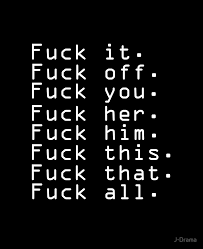 The work of cultural criticism never ends. A hundred years ago, Thomas R. Marshall, Woodrow Wilson’s vice president, proclaimed that “what this country needs is a really good five-cent cigar.” But who would say that now? Times have changed, tobacco has become an evil weed, and anyway, what the country needs now is a really good four-letter word.
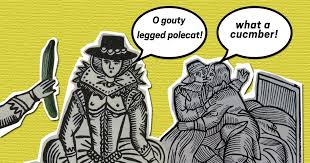 In Henry IV, Part One, Shakespeare’s Hotspur turns on his prissy wife: “Heart! You swear like a comfit-maker’s wife. ‘Not you in good sooth!’ and ‘as true as I live!’”. Instead Hotspur demanded a good mouth-filling oath. Something like his own “By God’s heart” was more suited to a lady of rank.
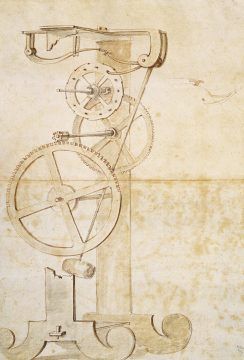 For nearly three full centuries, the most accurate way that humanity kept track of time was through
  JAMES MARTEL: I think that Benjamin has never been as relevant to questions of politics as he is today with the exception of his own lifetime. As I read him, Benjamin offers one of the best explanations both for the ongoing resilience of capitalism, despite all of its predations and all the instability that it creates, as well as the connection between fascism and liberalism that we are seeing being expressed today. He also offers, I think, the best way to understand how to address our contemporary moment and how to resist and upend capitalism, liberalism, and fascism all round.
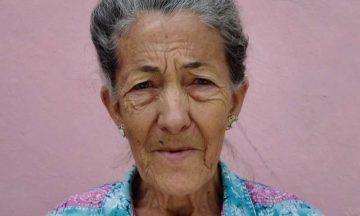 The BCG vaccine has a broad, stimulating effect on the immune system. This gives it an effective preventive action against various infections—possibly also against COVID-19. New studies are investigating that. BCG is frequently given to children, but a double-blind randomized clinical study, a collaboration between Radboud university medical center and the National and Kapodistrian University of Athens shows that elderly people also benefit from it. The results are published in Cell. At Radboudumc, Professor of Experimental Internal Medicine Mihai Netea is conducting research into this protective effect against various infections by the BCG vaccine, an effect called “trained immunity.” Prof. Mihai Netea said, “Two years ago we started the ACTIVATE study, with the aim of showing whether BCG vaccination could protect against infections in vulnerable
  It is a truism among scientists that our enterprise benefits humanity because of the technological breakthroughs that follow in discovery’s wake. And it is a truism among historians that the relation between science and technology is far more complex and much less linear than people often assume. Before the 19th century, invention and innovation emerged primarily from craft traditions among people who were not scientists and who were typically unaware of pertinent scientific developments. The magnetic compass, gunpowder, the printing press, the chronometer, the cotton gin, the steam engine and the water wheel are among the many examples. In the late 1800s matters changed: craft traditions were reconstructed as “technology” that bore an important relation to science, and scientists began to take a deeper interest in applying theories to practical problems. A good example of the latter is the steam boiler explosion commission, appointed by Congress to investigate such accidents and discussed in Scientific American’s issue of March 23, 1878.
 It is the nature of progress that what is now cutting-edge will, with the passing of time, become traditional. And it is the nature of human beings to remake and refine what has worked in the past, and call it new.
 Not too long ago nobody carried a mobile phone; now almost everybody does. That’s the kind of rate of rapid progress we’re seeing with our ability to directly edit genomes. With the use of
  Jack Gallant never set out to create a mind-reading machine. His focus was more prosaic. A computational neuroscientist at the University of California, Berkeley, Dr. Gallant worked for years to improve our understanding of how brains encode information — what regions become active, for example, when a person sees a plane or an apple or a dog — and how that activity represents the object being viewed.
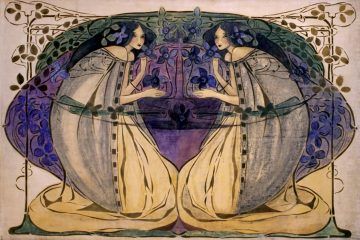 Most people have heard of Art Nouveau, but few remember two of the most influential figures in its conception. (No, not Gustav Klimt.) They were a pair of sisters named Margaret and Frances MacDonald, who, along with their Glasgow School of Art classmates Charles Rennie Mackintosh and Herbert MacNair, comprised the Glasgow Four. Art Nouveau wouldn’t be what it is without them.
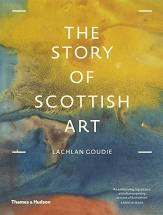 The painter and broadcaster Lachlan Goudie could not introduce The Story of Scottish Art in a more personal fashion. His preface begins, ‘My father, Alexander Goudie, was a painter; I grew up surrounded by Scottish art, I’ve been depicted in it and I’ve spent my adult life trying to add in some small way to its legacy. I am not, however, an academic, and this is not a textbook.’ Whether those words are meant to offer relief or be a warning is unclear, but I think the implication is that academics are pedantic and textbooks dry. Fairly often, alas, academics do not seem to be aware that they might treat language as a collaborator, even a medium, and textbooks, unless written exclusively in symbols and figures, in which case I must trust that they are beautiful, are unintelligible.