
Confused and Distraught
Again I am raging, I am in such a state by your soul that every
bond you bind, I break, by your soul.
I am like heaven, like the moon, like a candle by your glow; I am all
reason, all love, all soul, by your soul.
My joy is of your doing, my hangover of your thorn; whatever
side you turn your face, I turn mine, by your soul.
I spoke in error; it is not surprising to speak in error in this
state, for this moment I cannot tell cup from wine, by your soul.
I am that madman in bonds who binds the “divs”; I, the madman,
am a Solomon with the “divs”, by your soul.
Whatever form other than love raises up its head from my
heart, forthwith I drive it out of the court of my heart, by your soul.
Come, you who have departed, for the thing that departs
comes back; neither you are that, by my soul, nor I am that, by your soul.
Disbeliever, do not conceal disbelief in your soul, for I will recite
the secret of your destiny, by your soul.
Out of love of Sham-e Tabrizi, through wakefulness or
nightrising, like a spinning mote I am distraught, by your soul.
Rumi
from “Mystical Poems of Rumi 2” A. J. Arberry
The University of Chicago Press, 1991
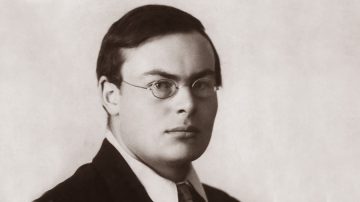 During the 1920s, Frank Ramsey made massive contributions to no fewer than four disciplines: philosophy, economics, mathematics and subjective utility theory. In 1999, the philosopher Donald Davidson caught his brilliance by coining the term the “Ramsey Effect”: when you discover that your exciting and apparently original philosophical discovery has already been presented, and presented more elegantly, by Frank Ramsey.
 In the 1970s, the late mathematician Paul Cohen, the only person to ever win a Fields Medal for work in mathematical logic,
  The U.S. government has never been a consistent promoter of human rights — other interests were often prioritized — but when it did act, it could be powerful. Yet U.S. influence on human rights has plummeted under President Donald Trump. If Joe Biden assumes the presidency, he will need to oversee a major transformation if he wants the U.S. government to be a credible human rights voice.
 Asad Raza’s expansive cross-disciplinary practice defies categorization. Situated somewhere between performance, installation and curation, its elusiveness can be attributed to many factors. Primary to these is the fact that Raza’s work rejects the rigid prescriptiveness that these disciplines often demand. Rather, his open-ended, site-specific installations supply fertile ground for interaction, ideas and communities to develop. In his piece ‘Absorption’, currently on view at Gropius Bau as part of ‘
 All the facts are already known, and against each fact the supporters of Donald Trump have woven careful rationalizations. The truths are ugly, and so they have been festooned with kitschy trappings; some fall from the lips of a First Lady who speaks of bringing Americans together in a dress that costs about what the average female wage-earner in the United States makes in a month. I imagine the homes of Trump supporters as staging areas for transforming these ugly truths: the 186,000 Covid-19 death toll wrapped in duct tape and Trump’s yellow ties until it cannot be seen, and set down in a corner. Also in that dark corner we see factual information about Kamala Harris’s birthplace in Oakland, California, rejected—her birth certificate obscured with black lettering that shouts foreigner, “anchor baby,” alien, spy, and bitch. In this way, millions of factories of false facts are slapped-and-dashed together in the homes of Trump’s supporters to create a world that accords with the words of their leader. There is no arsenal of truth that can penetrate into their homes or their hearts.
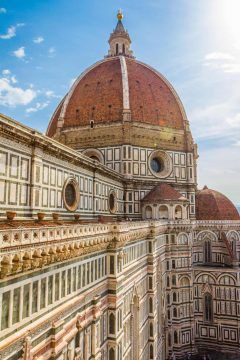 In 2019, a
 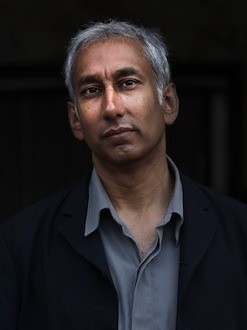 Over at Crooked Timber, first Chris Bertram:
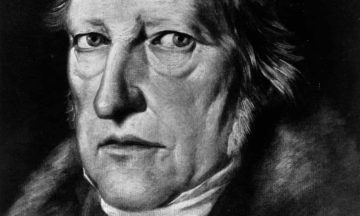 Philip Oltermann in The Guardian:
 Jesmyn Ward in Vanity Fair:
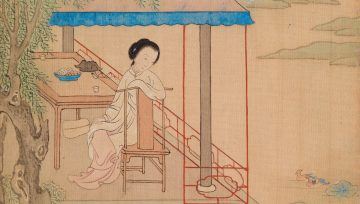 Julianne Chung in Psyche:
 Sara Tafakori in openDemocracy:
 I
I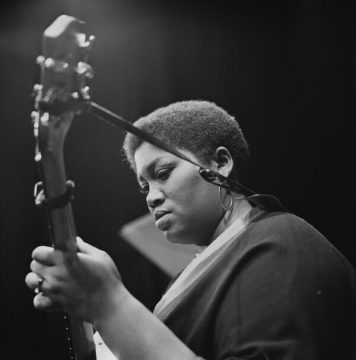 “Next a lone spotlight shone on Odetta wearing a dark loose-fitting dress, and she began singing ‘Water Boy,’ or, rather, she unleashed it. Accompanying herself with her large National acoustic guitar, eyes closed, brows knitted in concentration, she brought the full tragedy and anger of chain gang life to bear.”
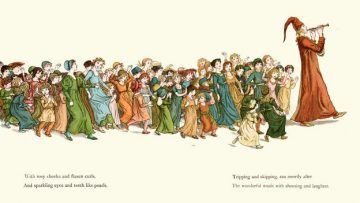 The tale in fact has survived for a very long time. Originating as medieval folklore, the story inspired a Goethe verse, Der Rattenfänger; a Grimm Brothers’ legend, The Children of Hamelin; and one of Robert Browning’s best-known poems, The Pied Piper of Hamelin. And although each writer tinkered with the story, the basics remained the same: the Piper was hired by Hamelin to rid the town of its plague of rats. Trailing after the hypnotic notes of the rat-catcher’s magical flute, the rodents politely filed through the city gates to their presumed doom.