
Charlie Wood in Quanta:
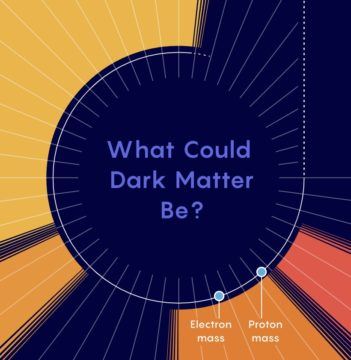 Ever since astronomers reached a consensus in the 1980s that most of the mass in the universe is invisible — that “dark matter” must glue galaxies together and gravitationally sculpt the cosmos as a whole — experimentalists have hunted for the nonluminous particles.
They first set out in pursuit of a heavy, sluggish form of dark matter called a weakly interacting massive particle, or WIMP — the early favorite candidate for the cosmos’s missing matter because it could solve another, unrelated puzzle in particle physics. Over the decades, teams of physicists set up ever larger targets, in the form of huge crystals and multi-ton vats of exotic liquids, hoping to catch the rare jiggle of an atom when a WIMP banged into it.
But these detectors have stayed quiet, and physicists are increasingly contemplating a broader spectrum of possibilities. On the heavy end, they say the universe’s invisible matter could clump into black holes as heavy as stars. At the other extreme, dark matter could spread out in a fine mist of particles thousands of trillions of trillions of times lighter than electrons.
More here.
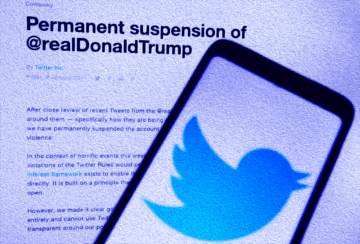 After years of providing oxygen to the political guerrilla tactics of Donald Trump, Mark Zuckerberg and Jack Dorsey finally decided that fanning the flames of violent insurrection through a firehose of incendiary falsehoods violated their terms of service (
 It’s so nice to be here. I’m looking forward to working with all of you amazing reporters and editors. You’ve all shown you’re capable of incredible work, and I respect you enormously. But at the same time, my arrival here is an inflection point. It’s impossible to look out on the current state of political discourse in this country and believe we are succeeding in our core mission of creating an informed electorate. It’s impossible to look out at the looming and in some cases existential challenges facing our republic and our globe — among them the pandemic, the climate crisis, income inequality, racial injustice, the rise of disinformation and ethnic nationalism — and think that it’s OK for us to keep doing what we’ve been doing. So let me tell you a bit about what we need to do differently.
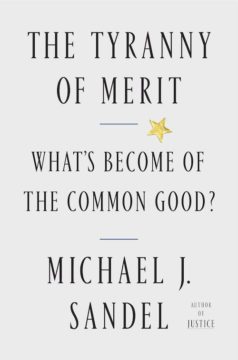
 Adam Przeworski in Boston Review:
 Christopher Kutz in the LA Review of Books:
 Andrew Elrod in Phenomenal World:
 This may be why I find the ambition of Jonathan Bate’s new book a little on the mad side. Crikey, but this is daring. Attempting to squeeze the short, dazzling lives of Fitzgerald and Keats, already so much written about, into one short volume, he asks a huge amount of himself, and of his reader. Flipping between 19th-century Hampstead and 20th-century Los Angeles, between Keats’s mooning after the barely outlined figure of Fanny Brawne and Fitzgerald’s tortured relationship with the altogether more vivid creation that was his wife, Zelda, has the potential to cause a certain amount of dizziness. I felt at moments as though I was caught between two lovers. When I was with Keats, I longed to get back to Fitzgerald; when I was with Fitzgerald, I would experience a sudden, fierce pang for Keats.
 How does great literature — the Grade A, top-shelf stuff — announce itself to the reader?
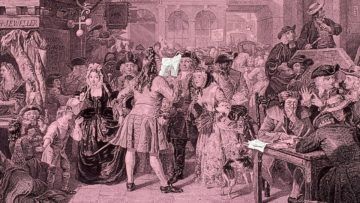 As Twitter and Facebook become more acrimonious and less trusted, an older means to get information has made a comeback: the email newsletter. Chances are that newsletters make up a larger part of your media diet than they did a couple of years ago. You may even be paying for some of them. In recent months several journalists have left jobs at established publications to earn a living by asking their most loyal readers to subscribe to a personal email newsletter instead. Entrepreneurs, cookery writers and academics have also embraced this model. Who needs a publisher if you can sell your writing straight to your readers? Most of these people are established experts in a particular field. They have chosen to bypass the involvement of advertisers and algorithms in favour of the pleasingly straightforward approach of delivering their thoughts directly to the inboxes of paying subscribers. Writers with large online followings can earn a respectable income even if only a small fraction of their fans sign up (typically for $5 a month, or $50 a year).
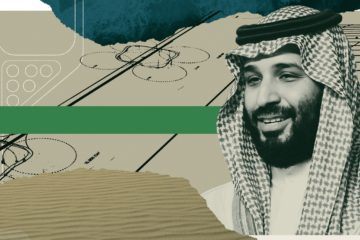 To the rest of the world, Saudi Arabia may look like a quasi-medieval kingdom where women still struggle for basic rights, where bearded clerics run the courts and where convicts are routinely beheaded by sword in public. But the Saudi monarchy — like its neighbors in Dubai and Abu Dhabi — has long cherished dreams of leapfrogging into a high-tech future. The last Saudi king created plans for six new cities in the desert, all billed as transformative steps toward a world beyond oil.
 We are writing this letter after a year unlike any other in our lifetimes.
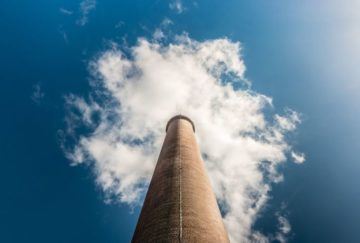 Can the world meet the challenge of climate change?