Emily Witt in The New Yorker:
 In the fall of 1972, a psychiatrist named Salvador Roquet travelled from his home in Mexico City to the Maryland Psychiatric Research Center, an institution largely funded by the United States government, to give a presentation on an ongoing experiment. For several years, Roquet had been running a series of group-therapy sessions: over the course of eight or nine hours, his staff would administer psilocybin mushrooms, morning-glory seeds, peyote cacti, and the herb datura to small groups of patients. He would then orchestrate what he called a “sensory overload show,” with lights, sounds, and images from violent or erotic movies. The idea was to push the patients through an extreme experience to a psycho-spiritual rebirth. One of the participants, an American psychology professor, described the session as a “descent into hell.” But Roquet wanted to give his patients smooth landings, and so, eventually, he added a common hospital anesthetic called ketamine hydrochloride. He found that, given as the other drugs were wearing off, it alleviated the anxiety brought on by these punishing ordeals.
Clinicians at the Maryland Psychiatric Research Center had been studying LSD and other psychedelics since the early nineteen-fifties, beginning at a related institution, the Spring Grove Hospital Center. But ketamine was new: it was first synthesized in 1962, by a researcher named Calvin Stevens, who did consulting work for the pharmaceutical company Parke-Davis. (Stevens had been looking for a less volatile alternative to phencyclidine, better known as PCP.) Two years later, a doctor named Edward Domino conducted the first human trials of ketamine, with men incarcerated at Jackson State Prison, in Michigan, serving as his subjects. At higher doses, Domino noticed, ketamine knocked people out, but at lower ones it produced odd psychoactive effects on otherwise lucid patients. Parke-Davis wanted to avoid characterizing the drug as psychedelic, and Domino’s wife suggested the term “dissociative anesthetic” to describe the way it seemed to separate the mind from the body even as the mind retained consciousness. The F.D.A. approved ketamine as an anesthetic in 1970, and Parke-Davis began marketing it under the brand name Ketalar. It was widely used by the U.S. military during the Vietnam War, and remains a standard anesthetic in emergency rooms around the world.
Roquet found other uses for it. After his lecture in Maryland, he offered experiential training to the clinicians there. “I was introduced to the strangest psychoactive substance I have ever experienced in the 50 years of my consciousness research,” the psychiatrist Stanislav Grof recalls in “The Ketamine Papers,” a book edited by the psychiatrist Phil Wolfson and the researcher Glenn Hartelius.
More here. (Note: Thanks to Syed Tasnim Raza)

 Once again, just like clockwork, here comes New Year’s Day. Once again, in a wave sweeping across time zones, the world counts backward from 10. Revelry and other traditions have been pared back this year as the coronavirus pandemic drags into yet another new year. The uncertain — but hopefully better — future will be welcomed in with a mixture of hope and trepidation. It’s an odd holiday. Jan. 1 is no great landmark in the course of human events; it is the anniversary of no remarkable birth, death or battle. The cosmos is not arranged in any particularly auspicious way. It is a date pulled out of a hat, an utterly arbitrary starting line for an eternal, repetitive relay race. The innocent baby takes the baton, sprints out with promise and hope, inevitably to stagger home a shattered old man, beaten down by 365 days of calamity, cruelty and chaos, especially so this year. And another baby invariably waits its turn.
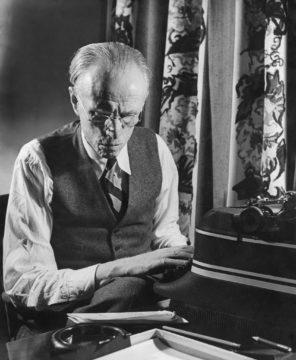 This is the centenary year of “Babbitt,” Sinclair Lewis’s best — and most misunderstood — novel. He had written five inconsequential books that had received respectable if not excited attention. And in 1920 — at the age of 35 — he had written “Main Street,” the most sensationally successful novel of the century to date: hundreds of thousands of copies sold, and a title that came to stand for the values, both narrow-minded and wholesome, of what we now call Middle America.
 In a utopia, there’d be an issue for everyone. For me, it was Uncanny X-Men No. 414, which I read on the floor of a Pine Sol–scented Barnes and Noble when I was 11. Seated pretzel-legged in one of the aisles, I found something unexpectedly weighty in the Marvel comic: Abused by his father, a boy literally explodes. A lapsed superhero named Northstar discovers him in his home’s rubble. Northstar is gay, we know, because Professor Xavier, founder of a school for “gifted youngsters” with mutant powers they need to learn how to control, wants to hire the flying, ultrafast Canadian; he’d like to diversify his teaching staff so that his students have homosexual role models.
 If you’ve ever had to buy hot dogs for a cookout, you might have found yourself solving a math problem involving least common multiples. Setting aside the age-old question of why hot dogs usually come in packs of 10 while buns come in packs of eight (you can read what the National Hot Dog and Sausage Council has to say about it
 The term deaths of despair comes from Princeton economists Anne Case and Angus Deaton, who set out to understand what accounted for falling U.S. life expectancies. They learned that the
  Is the American Dream still alive? If you speak to many of the immigrants we spoke to, who came to this country with nothing but grit, resilience, and a dream, they will tell you that it certainly is still alive. As a part of our series about
 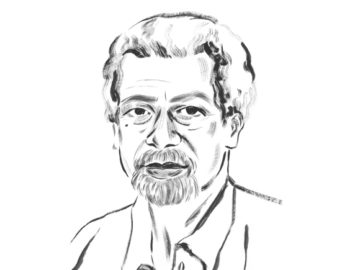 When Abdulrazak Gurnah was growing up in the 1950s in Zanzibar, a small island off the east African coast, he could not imagine a career as a writer. Though there were poets and storytellers, there were no literary publishers. At school he was taught the English canon. “You realise, in that literature, you’re completely and totally absent,” he tells me, “or present in some kind of diminished form.” But after moving to Britain in 1968, he did become a writer and, across 10 novels, has drawn on his island’s rich history to fill in those absences. In October, this quietly spoken man—always respected but hardly a household name—won the Nobel Prize in literature.
 T
T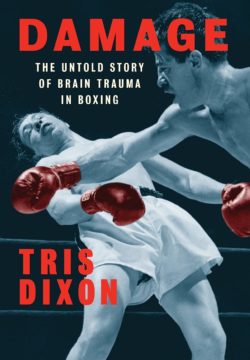 On Saturday, September 11, Evander Holyfield, who turned 59 in October, was knocked out in the first round by the 44-year old former UFC champion, Vitor Belfort, in a commission sanctioned bout in Florida.
 Every student of evolution will be familiar with the peppered moth, Biston betularia. It is right up there with the Galápagos finches as an example of evolution happening right under our noses. The story of the rapid spread of dark moths in response to the soot deposition that accompanied the Industrial Revolution, and the reversal of this pattern when air pollution abated, is iconic. Yet, as Emeritus Professor of biology Bruce S. Grant shows, there are a lot more subtleties to it than my one-liner suggests. Observing Evolution details research by himself and many others, and along the way addresses criticism – legitimate and otherwise – levelled at some of the earlier research. Eminently readable, this is a personal story of the rise, fall, and ultimate redemption of one of the most famous textbook examples of evolution in action.
 Ever since I started studying IR, I had a gnawing feeling that something about the whole enterprise was off. As I read more history, and also in other fields like economics, anthropology and psychology, I came to the conclusion that the ways in which we talk about international relations and foreign policy are simply wrong. The whole reason that IR is its own subfield in political science is because of the “unitary actor model,” or the assumption that you can talk about a nation like you talk about an individual, with motivations, goals, and strategies. No one believes this in a literal sense, but it’s considered “close enough” for the sake of trying to understand the world. And although many IR scholars do look at things like psychology and state-specific factors to explain foreign policy, they generally don’t take the critique of the unitary actor model far enough. The more I studied the specifics of American foreign policy the more it
  WHAT’S COMMONLY KNOWN ABOUT THE PORTUGUESE WRITER FERNANDO PESSOA is that he died young-ish at the age of forty-seven in 1935, drank heavily, and assigned authorship of his work to over a hundred “heteronyms,” pen names that carry more biographical heft than the average alias. Pessoa died having published only one book of poetry in Portuguese (Mensagem) and two self-published chapbooks of English-language poetry. The lion’s share of his work was found in a trunk containing about 25,000 pages of writings. Without much of a public record of his life as he lived it, celebrating Pessoa and researching Pessoa have always been roughly the same thing. Few have done as much of that work as Richard Zenith, an American who has translated a chunk of the Pessoa oeuvre and put in more than ten years writing an extremely definitive biography of a shape-shifting weirdo his country adores. When I was in Lisbon in 2018, a cab driver, unprompted, recited one of his poems to me on our way to the Casa Fernando Pessoa, a museum and historical site. More officially, Pessoa’s face was on the 100 escudo note before the euro fully replaced it in 2002. His mutating nationalism might be what made him a candidate for Portuguese pride, though his politics were hardly consistent.