
Sarah Scoles in The New York Times:
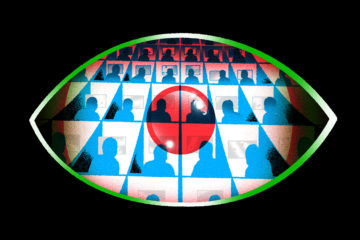 Are you an “insider threat?”
The company you work for may want to know. Some corporate employers fear that employees could leak information, allow access to confidential files, contact clients inappropriately or, in the extreme, bring a gun to the office. To address these fears, some companies subject employees to semi-automated, near-constant assessments of perceived trustworthiness, at times using behavioral science tools like psychology. Many employers are now concerned about retaining workers in the face of what has been called the Great Resignation. But in spite of worries that workers might be, reasonably, put off by a feeling that technology and surveillance are invading yet another sphere of their lives, employers want to know which clock-punchers may harm their organizations.
The language around this sort of worker-watching often mirrors that which is used within the government, where public agencies assess workers who receive security clearances to handle sensitive information related to intelligence collection or national security. Organizations that produce monitoring software and behavioral analysis for the feds also may offer conceptually similar tools to private companies, either independently or packaged with broader cybersecurity tools.
“When you think about insider risk in general, it probably emerges out of the government, and then makes its way into the private sector and commercial industry,” said Tom Miller, chief executive of Clearforce, which sells insider threat services to private clients.
More here.
 When I want to know what the future is going to be like, I go ask
  Last summer, three researchers took a small step toward answering one of the most important questions in theoretical computer science. To
  The upside of many NFTs having a uniform visual style is that, theoretically, as many of the medium’s biggest fans will stress, there is something inherently democratic about their design and their acquisition. If not every NFT creator makes the kind of money Bored Ape Yacht Club makes, they still have a fairly equal opportunity to share their work. Searching OpenSea for pieces is still easier by far than buying physical work from a gallery or an auction, and the only barrier to entry is a working knowledge of cryptocurrency. Buyers and artists who grew up on the internet of the 00s, meanwhile, may experience deja vu when given the opportunity to customise what is effectively an avatar, harking back to online cartoons like Blingees or Dollz Mania. When a rash of articles appeared in 2021 suggesting NFTs might be the Beanie Babies of the 2020s, the comparison was meant to be an insult; still, it is hard to overestimate the power of nostalgia when it comes to millennials on the web.
 During his lifetime, there was a long line of people who thought Admiral Hyman Rickover was an insufferable son of a bitch, a contemptible ass, an overbearing, opinionated, power-hungry menace. Biographer Marc Wortman called him, “obstinate, egotistical, and abrasive…” (119)
 It was at a party in Greenwich Village, in the spring of 1920, that the critic Edmund Wilson first encountered
  We now know who is rich in America. And it’s not who you might have guessed. A groundbreaking 2019
  N
N What you get from John Waters is crotch punching, exploding televisions, geysers of blood, deviants, wackos and reprobates. You get phrases like “ridiculous genital display” and “penis probation”; scatology, tickle fetishes and satanic babies. You get teeming panoramas of freaks in thrall to their own depravity. (Another painter comes to mind: Hieronymus Bosch.)
 Sam Anderson in the New York Times:
 Ryan Ruby in The New Left Review’s Sidecar:
 Patrick J. Deneen over at his substack The Postliberal Order (photo by Matt Cashore/University of Notre Dame):
 Suzanne Cope in Aeon:
 One of the recent trends on TikTok is an aesthetic called “night luxe.” It embodies the kind of performative opulence one usually encounters at New Year’s Eve parties: champagne, disco balls, bedazzled accessories, and golden sparkles. “Night luxe” doesn’t actually mean anything. It isn’t a