Verlyn Klinkenborg on Writing More Clearly

Verlyn Klinkenborg in Literary Hub:

Here, in short, is what I want to tell you.
Know what each sentence says,
What it doesn’t say,
And what it implies.

Of these, the hardest is knowing what each sentence actually says.

At first, it will help to make short sentences,
Short enough to feel the variations in length.
Leave space between them for the things that words can’t really say.

Pay attention to rhythm, first and last.

More here.

Sunday Poem

Three Poems by Lew Welch

1-Philosophy

Never ask Why What,
Always ask What’s What.
Observe, connect, and do.

The great Winemaster is almost a
a magician to the bulk of his Tribe,
to his peers he is only accurate.

“He knows the grape so well,” they say,
“he turned into a vine.”

2-College Graduation Address

(1) Freak out.
(2) Come back.
(3) Bandage the wounded and feed
……however many you can.
(4) Never cheat.

3-College Oath

All persecutors
Shall be violated!

from Ring of Bone, Lew Welch Collected Poems, 1950-1971
Grey Fox Press, 1979

Mummy of the Mysterious Lady may have had nose or throat cancer

Bob Yirka in Phys.Org:

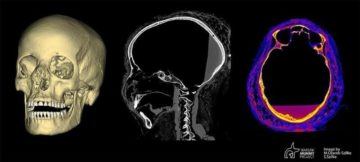
A team of researchers with the Warsaw Mummy Project, has announced on their webpage that a mummy in their collection that has come to be known as the Mysterious Lady may have had nasopharyngeal cancer. The mummy, which made headlines last year when researchers discovered she had been pregnant at the time of her death, was found in Thebes (now called Luxor) in Egypt sometime in the early part of the 19th century and was subsequently donated to the University of Warsaw in 1826. The sarcophagus holding the mummy was only recently opened for study.

…In taking X-rays and CT scans of the head and using them to create 3D representations of the skull, the researchers found what they describe as possible evidence of nasopharyngeal cancer—a type of cancer that originates in the back of the nose and in the throat. They also found what they describe as a hole behind the left eye, possible evidence of a metastatic tumor. They go on to suggest that if the woman did have neoplastic disease, it could have led to her death.
More here.

How to Make a Decision When There’s No ‘Right’ One

Russ Roberts in The New York Times:

In 1838, Charles Darwin faced a problem. Nearing his 30th birthday, he was trying to decide whether to marry — with the likelihood that children would be part of the package. To help make his decision, Darwin made a list of the expected pluses and minuses of marrying. On the left-hand side he tried to imagine what it would be like to be married (“constant companion,” “object to be beloved & played with — better than a dog anyhow”). On the right-hand side he tried to imagine what it would be like not to marry (“not forced to visit relatives & to bend in every trifle”).

Darwin was struggling with what I call a wild problem — a fork in the road of life where knowing which path is the right one isn’t obvious, where the day-to-day pleasure and pain from choosing one path over another are ultimately hidden from us and where those day-to-day pleasures and pains don’t fully capture what’s at stake.

More here.

Saturday, July 23, 2022

Renée Richards’s Historic US Open Matches

Julie Kliegman at Bookforum:

RENÉE RICHARDS, eighty-seven, has admitted she has some regrets. Among them is that she never pitched for the New York Yankees, a job MLB scouts once seemed to think she had a real shot at.

Her contributions to the sports landscape, though, ended up being far greater than a few years in pinstripes. Had she played for the Yankees, she might never have had a sex change (her preferred term). Had she never had a sex change, she never would’ve had to fight tennis officials for a spot in the women’s draw of the 1977 US Open.

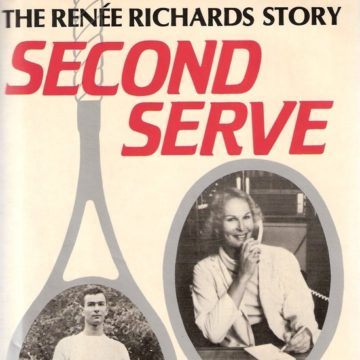
In Richards’s two autobiographies, Second Serve and No Way Renée, published in 1983 and 2007, respectively, she offers a glimpse into what it was like being a transsexual (also her term) in the 1970s—a time when trans people were met with derision, if they were acknowledged at all—even as it seems she’d rather be writing about almost anything else.

more here.

Abdulrazak Gurnah Reads

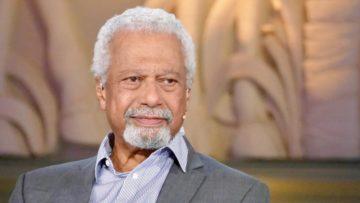
Abdulrazak Gurnah at The Guardian:

My earliest reading memory
Undoubtedly the Qur’an. Growing up in Zanzibar I started in chuoni, which is what we called Qur’an school, at the age of five and did not start government school until a year later, by which time I was certain to have been reading the short suras. Quite early on in government school, one of our class texts was a Kiswahili translation of Aesop’s Fables, with illustrations of the fox making a futile leap at the grapes and the hare lounging by the roadside as the tortoise came trundling by. I can still see those images.

My favourite book growing up
A Kiswahili translation of abridged selections from Alfu Leila u Leila (A Thousand and One Nights) in four slim volumes. It was there that I first read the story Kamar Zaman and Princess Badoura, which has stayed with me since.

more here.

Degrees of Separation

Louis Rogers in Sidecar (image by Carlo.benini – Own work):

In 2015, the American writer Jhumpa Lahiri published an essay in The New Yorker titled ‘Teach Yourself Italian’. Proceeding in a present tense of terse sentences, it detailed Lahiri’s relationship with the Italian language – an ‘infatuation’, which at various stages of her life she had pursued for ostensibly practical reasons: a doctorate on Italian architecture in English Renaissance drama; a holiday; a book tour. Finally compelled to relocate to Rome, Lahiri describes how she soon began writing in Italian, renouncing the language in which she had enjoyed a successful career as a writer ever since her Pulitzer-winning debut Interpreter of Maladies (1999). The essay’s conceit comes in the penultimate paragraph, where Lahiri notes in passing that she is ‘writing this sentence in Italian’. An editorial note confirms the article had indeed been translated. Lahiri’s journey into Italian was thus certified; for her English readers, she was now on the other side of a gauze.

Lahiri subsequently returned to the United States to take up a professorship at Princeton, but her work has remained – both linguistically and intellectually – on foreign shores. She writes her literary work in Italian, sometimes translating herself, while any writing in English takes the form of criticism and translations of Italian and Latin writing. This striking and unusual new course has however remained hard to make clean sense of, or, perhaps, to narrativise. A memoir, In Other Words (2015), written in Italian and published in a bilingual edition, gives a vivid sense of Lahiri’s experience of living in Italy and Italian, as well as what writing in another language has offered her – namely a freedom which is paradoxical, both permissive and restricting. Yet what drove her decision, and what sustains it, is left tantalisingly unarticulated.

More here.

Prejudice Rules

Elif BatumanEdna BonhommeHazel V. CarbyLinda ColleyMeehan CristAnne EnrightLorna FinlaysonLisa Hallgarten and Jayne KavanaghSophie LewisMaureen N. McLaneErin MaglaqueGazelle MbaAzadeh MoaveniToril MoiJoanne O’LearyNiela OrrLauren OylerSusan PedersenJacqueline RoseMadeleine SchwartzArianne ShahvisiSophie SmithRebecca SolnitAlice SpawlsAmia SrinivasanChaohua WangMarina WarnerBee WilsonEmily Witt in the LRB (image by WomenArtistUpdates – Own work):

Amia Srinivasan

The most famous​ philosophical treatment of abortion is an essay by Judith Jarvis Thomson published in 1971, two years before Roe v. Wade was decided, in the inaugural issue of the journal Philosophy and Public Affairs. ‘A Defence of Abortion’ opens by dispensing with the standard pro-choice premise that the foetus is not a person. A ‘newly implanted clump of cells’, Thomson writes, is ‘no more a person than an acorn is an oak tree’, but ‘we shall probably have to agree that the foetus has already become a human person well before birth.’ But is that what matters? Imagine, Thomson says, that you wake up to find that the Society of Music Lovers has hooked your circulatory system up to a famous violinist with a life-threatening kidney ailment. Unless you stay in bed, attached to him for nine months (you are the only one with the right blood type), he will die. Are you morally permitted to unplug the violinist?

The hospital director explains why not:

Tough luck, I agree, but you’ve now got to stay in bed, with the violinist plugged into you ... Because remember this. All persons have a right to life, and violinists are persons. Granted you have a right to decide what happens in and to your body, but a person’s right to life outweighs your right to decide what happens in and to your body.

Thomson suggests that most readers will find the doctor’s logic ‘outrageous’. Yes, the violinist is a person; but no, obviously, his right to life does not trump your right to bodily autonomy.

More here.

Resource Nationalism & Decarbonization

From the Jain Family Institute:

From Mexico to the Southern Cone, a renewed wave of left-wing electoral victories has yielded comparisons to the “pink tide” of the late-1990s and early-2000s. Where that turn took place in the context of a global commodity boom, these recent elections coincide with a surge in demand for minerals essential to the green transition. The moment has sparked renewed assertiveness by national governments over crucial natural resources, and heated debates over how to balance development goals, global decarbonization, and the needs of communities living on the frontlines of extractive economies—often as polluting and disruptive as the old carbon regime.

Here.

Saturday Poem

An August Afternoon

An August afternoon. Even here is heard
the rush of the glittering Raba.
We look at the mountain,
my mother and I. How clear the air is:
every dark spruce on Mount Lubon
is seen distinctly as if it grew in our garden.
An astonishing phenomenon—it astonishes my mother
and me. I am four and I do not know
what it means to be four. I am
happy: I don’t know what to be means
or happiness. I know my mother
sees and feels what I do. And I know
that as always in the evening
we will take a walk
far, up to the woods, already before
long.

by Bronislaw Maj
from
A Book of Luminous Things
edited by Czeslaw Milosz
Harcourt Brace, 1996

Liz Cheney’s Revenge on Donald Trump—and Her Own Party

Susan Glasser in The New Yorker:

So now we can answer the question: How does democracy die? It dies not in darkness, as the Washington Post’s Trump-era slogan would have it, but in the White House itself, in the private dining room off the Oval Office, with the sound of Fox News blaring in the background. That private dining room was Donald Trump’s de-facto headquarters for much of his Presidency. It was where he watched television and where he tweeted about what he watched on television—two of the activities that, perhaps more than any others, defined his tenure. It was also where Trump, on January 6, 2021, remained holed up for a hundred and eighty-seven minutes, as his followers stormed the U.S. Capitol, until he finally, reluctantly, released a video urging them to go home and telling them that he loved them.
…I’ll leave the final word, though, to Cheney, who as a direct consequence of her insistence on not shutting up about Trump and the tragedy of January 6th will likely lose her House seat in Wyoming’s Republican primary next month, before the House committee convenes again, in September. “We must remember that we cannot abandon the truth and remain a free nation,” Cheney said. And yet Republicans—the vast majority of them—have chosen Trump’s Big Lie over the hard truths that would enable our democracy to endure. For now. So there is a cliffhanger ending to the committee’s work after all.

More here.

How Would Your Life Change if You Knew When It Would End?

Leni Zumas in The New York Times:

We are all going to die. Most of us don’t know when. But what if we did know? What if we were told the year, the month, even the day? How would that change our lives? These questions drive Nikki Erlick’s debut novel, “The Measure,” which weighs Emerson’s claim that “it is not the length of life, but the depth of life” that matters.
One morning, adults around the world find on their doorstep (or outside their tent, or next to their shelter bed) a box labeled with their name. Inside is a piece of string whose length, it turns out, represents their life span. Short strings, long strings, medium strings — every person over 21 receives one, delivered in strange containers that materialize out of nowhere. As the weeks go by and data is gathered, scientists declare the strings to be accurate in forecasting how long their recipients will live. Some people choose to look at their strings; others throw the unopened boxes off bridges, preferring not to know how much time they have left.

More here.

Friday, July 22, 2022

This heatwave has eviscerated the idea that small changes can tackle extreme weather

George Monbiot in The Guardian:

We have seen nothing yet. The dangerous heat England is suffering at the moment is already becoming normal in southern Europe, and would be counted among the cooler days during hot periods in parts of the Middle East, Africa and South Asia, where heat is becoming a regular threat to life. It cannot now be long, unless immediate and comprehensive measures are taken, before these days of rage become the norm even in our once-temperate climatic zone.
The same formula applies to every harm humans do to each other: what cannot be discussed cannot be addressed. Our failure to prevent catastrophic global heating arises above all from the conspiracy of silence that dominates public life, the same conspiracy of silence that has, at one time or another, surrounded every variety of abuse and exploitation.

More here.

Can we think without using language? Science suggests that words aren’t strictly necessary for reasoning

Joanna Thompson in Live Science:

Humans have been expressing thoughts with language for tens (or perhaps hundreds) of thousands of years. It’s a hallmark of our species — so much so that scientists once speculated that the capacity for language was the key difference between us and other animals. And we’ve been wondering about each other’s thoughts for as long as we could talk about them.
“The ‘penny for your thoughts’ kind of question is, I think, as old as humanity,” Russell Hurlburt, a research psychologist at the University of Nevada, Las Vegas who studies how people formulate thoughts, told Live Science. But how do scientists study the relationship between thought and language? And is it possible to think without words?

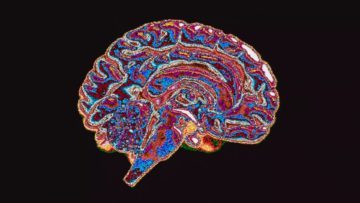
The answer, surprisingly, is yes, several decades of research has found. Hurlburt’s studies, for instance, have shown that some people do not have an inner monologue — meaning they don’t talk to themselves in their heads, Live Science previously reported. And other research shows that people don’t use the language regions of their brain when working on wordless logic problems.

More here.

How a cottage terrorism industry made a lion out of an al-Qaeda mouse

John Mueller and Mark G. Stewart in Responsible Statecraft:

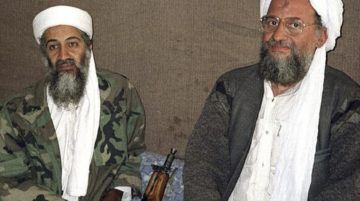
In her new book, The Bin Laden Papers, Nelly Lahoud, a senior fellow at New America, has gone through the huge collection of information purloined by Navy Seals in their 2011 raid on Osama bin Laden’s hideout, information that was declassified in 2017. The book essentially concludes that Carle had it right. Although “falsely” taken to be “a Leviathan in the jihadi landscape,” she says al-Qaeda has actually been notable mainly for its “operational impotence” while bin Laden, its fabled, if notorious, leader, continued to pursue “alarmingly sophomoric” goals and was “powerless and confined to his compound, over-seeing an ‘afflicted’ al-Qaeda.”

Al-Qaeda central was holed up in Pakistan after its abrupt enforced exit from Afghanistan in 2001, an experience, notes Lahoud, that “crippled” it and from which “it never recovered.”

More here.