
David Wallace-Wells in the New York Times:
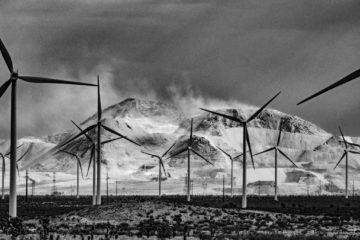 For decades, visions of possible climate futures have been anchored by, on the one hand, Pollyanna-like faith that normality would endure, and on the other, millenarian intuitions of an ecological end of days, during which perhaps billions of lives would be devastated or destroyed. More recently, these two stories have been mapped onto climate modeling: Conventional wisdom has dictated that meeting the most ambitious goals of the Paris agreement by limiting warming to 1.5 degrees could allow for some continuing normal, but failing to take rapid action on emissions, and allowing warming above three or even four degrees, spelled doom.
Neither of those futures looks all that likely now, with the most terrifying predictions made improbable by decarbonization and the most hopeful ones practically foreclosed by tragic delay. The window of possible climate futures is narrowing, and as a result, we are getting a clearer sense of what’s to come: a new world, full of disruption but also billions of people, well past climate normal and yet mercifully short of true climate apocalypse.
More here.
 Defenders of the Amazon rainforest were overwhelmed with relief on 30 October as Luiz Inácio Lula da Silva narrowly secured Brazil’s presidency.
 THE SUN IS BARELY VISIBLE
 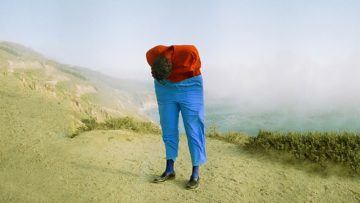 As a teenager growing up in Peckham, an ethnically diverse area of London, the photographer Nadine Ijewere observed the way that the women around her dressed. The neighbourhood “aunties”, as all older women were known, paired Nigerian patterns with Gucci handbags and Burberry motifs; they would
  A new national study has suggested that chemical hair straighteners could pose a
 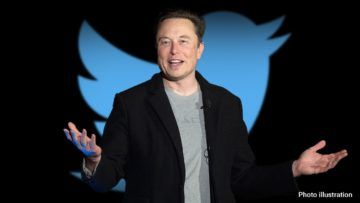 Twitter is a disaster clown car company that is successful despite itself, and there is no possible way to grow users and revenue without making a series of enormous compromises that will ultimately destroy your reputation and possibly cause grievous damage to your other companies.
 Lorraine Daston: You’re right about the contraction of the expansiveness of “science,” which in all the European languages that derived some cognate from the Latin scientia used to refer to any form of organized knowledge. But it contracts not only in English but also in French, albeit a bit later in the late nineteenth and the early twentieth century. The French term for the scientist or scholar goes from being savant, which is still a word you can easily encounter in nineteenth-century French, to scientifique to refer exclusively to a scientist. And it surely has to do with the soaring prestige of the natural sciences, which is also the case in Germany.
 A juvenile
  For some, late 2020 brought with it an air of optimism regarding the fate of right-wing populism. In the United Kingdom, Nigel Farage’s Brexit Party faded into obscurity, and the populist right’s GB News experiment
  “
“ Friday’s
 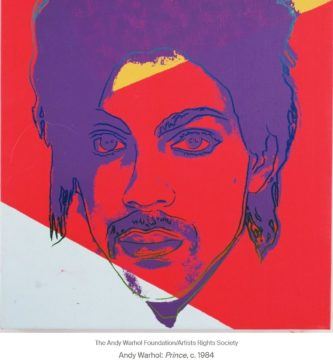 Liza Batkin in the New York Review of Books:
 Alberto Toscano in Sidecar:
 Nubar Hovsepian and