 John Bellamy Foster in Monthly Review:
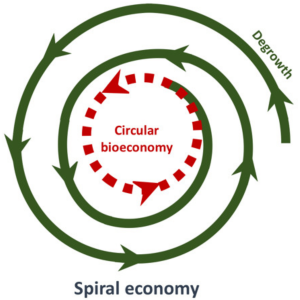
The word degrowth stands for a family of political-economic approaches that, in the face of today’s accelerating planetary ecological crisis, reject unlimited, exponential economic growth as the definition of human progress. To abandon economic growth in wealthy societies means to shift to zero net capital formation. With continual technological development and the enhancement of human capabilities, mere replacement investment is able to promote steady qualitative advancements in production in mature industrial societies, while eliminating exploitative labor conditions and reducing working hours. Coupled with global redistribution of the social surplus product and reduction of waste, this would allow for vast improvements in the lives of most people. Degrowth, which specifically targets the most opulent sectors of the world population, is thus directed at the enhancement of the living conditions of the vast majority while maintaining the environmental conditions of existence and promoting sustainable human development.2
Science has established without a doubt that, in today’s “full-world economy,” it is necessary to operate within an overall Earth System budget with respect to allowable physical throughput.3 However, rather than constituting an insurmountable obstacle to human development, this can be seen as initiating a whole new stage of ecological civilization based on the creation of a society of substantive equality and ecological sustainability, or ecosocialism. Degrowth, in this sense, is not aimed at austerity, but at finding a “prosperous way down” from our current extractivist, wasteful, ecologically unsustainable, maldeveloped, exploitative, and unequal, class-hierarchical world.
More here.
 Tony Wood in the LRB:
 In 1867, shortly after Prussia’s decisive military victories over Denmark (in 1864) and Austria (in 1866), a dinner guest asked the Prussian prime minister, Otto von Bismarck, about the prospect of a further armed conflict, this time against France. Would it be expedient to somehow provoke a French attack on Prussia in order to unify the German states against a common enemy? Bismarck rejected the idea: ‘Anyone who has ever looked into the glazed eyes of a soldier dying on the battlefield will think hard before starting a war.’
 P
P Over the last five decades, we’ve burned enough coal, gas and oil, cut down enough trees, and produced enough other emissions to trap some six billion Hiroshima bombs’ worth of heat inside the climate system. Shockingly, though, only
  Maybe you’ve heard there’s a Barbie movie coming out?
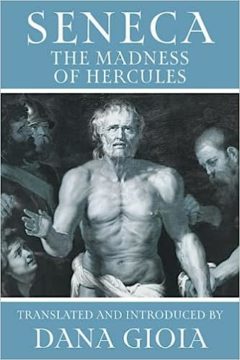 For 1,500 years, no writer except
  How bad have things gotten? In
 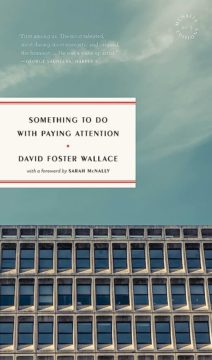 I have always appreciated Wallace most in his monologues and I can, like my father, hear confessions all day; Hideous Men ought to be my book. Instead, I found myself generally standing opposite to Smith’s assessments: I think ‘Forever Overhead’ is juvenelia, I find ‘Church Not Made with Hands’ to be rank fraud, and I would like to put ‘Octet’ in my ass and turn it into a diamond. Attempts to operate in the register of the profound fail; poetry deserts him, having once been insulted; and I did not laugh once, and then for a different reason, until I got to the line, ‘That’s right, the psychopath is also a mulatto.’
 Hofstadter has long argued that intelligence is the ability to look at a complex situation and find its essence. “Putting your finger on the essence of a situation means ignoring vast amounts about the situation and summarizing the essence in a terse way,” he said.
 This is not an atypical day for a cinephile in New York, where resolutely non-franchise fare — the experimental, the underground, the unclassifiable, the avant-garde — has been a vital, if not a defining, part of the filmgoing ecosystem since at least the founding of Amos and Marcia Vogel’s Cinema 16 in 1947. That spirit seems especially apparent in the past two years. Multiplexes may be going dark (the Cinépolis in Chelsea and the Regal UA Court Street in downtown Brooklyn are now shuttered; soon the Regal in Union Square will be), but micro-cinemas, notably Light Industry and Spectacle in Williamsburg, are thriving. Plans are currently underway for a brick-and-mortar space for Alfreda’s Cinema, which since 2015 has hosted screenings throughout the city devoted to underrecognized titles that, per its mission statement, “celebrate Black and non-Black people of color.” If my own moviegoing experiences since 2021 (following the year-long, Covid-mandated shuttering of NYC cinemas) are any guide, the audiences for works made far outside the conventional financing and distribution infrastructures are perhaps more heterogeneous — in age, race, gender, sexuality — than ever. I am optimistic about very little in our bleak world. New Yorkers’ seemingly unslakable desire to assemble with others in the dark to experience uncommon sights and sounds together, though, is a rare sign of hope that algorithms haven’t completely dominated viewing habits.
 Martin Sherwin was hardly your classic blocked writer. Outgoing, funny, and athletic, he is described by those who knew him as the opposite of neurotic.
 How hot is it outside today? And why did you think of a number as the answer, not something you felt?