
Peter Stanford at The Guardian:
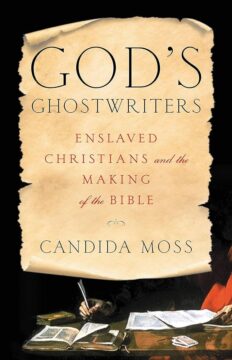 Graham Greene, who wrote so much about Catholicism in his novels, was regularly asked whether he was still a believer. It was listening to the gospel accounts of Jesus’s life, he replied, and hearing fleeting references thrown into the narrative that had no obvious purpose for being there – like the “other” unnamed disciple who sprints past Peter on his way to the empty tomb – that tempted him to believe the gospels might just be fact.
At least that speedy but redundant disciple is there in plain sight. In God’s Ghostwriters, Candida Moss argues there are many other figures passing all but hidden through the pages of the New Testament, who actually created and shaped these foundational texts of Christianity. In St Paul’s Letter to the Romans, she points out, the closing chapter contains a discordant line that I must have heard many times before but never clocked: “I, Tertius, the writer of this letter, greet you in the Lord.” Isn’t the writer supposed to be Paul?
more here.
 When Freida McFadden self-published her first novel, “The Devil Wears Scrubs,” more than a decade ago, she figured it would mark both the start and the end of her literary career.
 But I’d wager that if you wanted to see the most exciting drama happening at the MGM on this Friday night, you’d have to walk through the casino and look for the small sign advertising something called The Active Cell. This is the site of the play-in round for the Excel World Championship, and it starts in five minutes. There are 27 people here to take part in this event (28 registered, but one evidently chickened out before we started), which will send its top eight finishers to tomorrow night’s finals. There, one person will be crowned the Excel World Champion, which comes with a trophy and a championship belt and the ability to spend the next 12 months bragging about being officially the world’s best spreadsheeter. Eight people have already qualified for the finals; some of today’s 27 contestants lost in those qualifying rounds, others just showed up last-minute in hopes of a comeback.
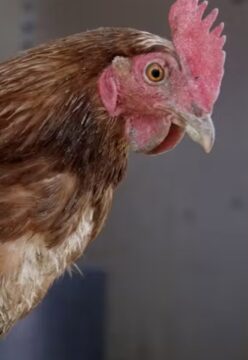 Bird flu poses a massive threat, and the potential for a catastrophic new pandemic is imminent. We still have a chance to stop a possible humanitarian disaster, but only if we get to work urgently, carefully and aggressively.
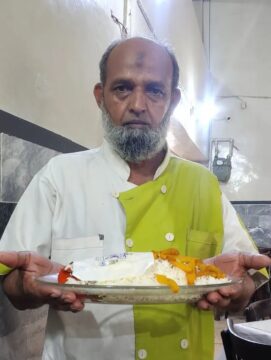 Stepping into High Ceiling and dimly lit Irani cafes with vintage furniture, mosaic chipped floors and tablecloths take one back to old Karachi. These desolate Irani cafes were once hubs of social and intellectual exchange and frequented by students, journalists, and intellectuals.
 Last year marked the fiftieth anniversary of Strauss’s death. With the notable exception of a tribute by the (now retired) Harvard professor Harvey C. Mansfield in the
 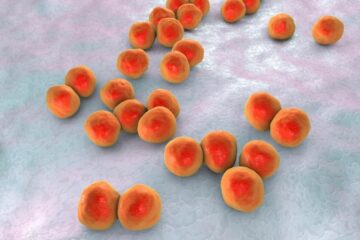 Despite their small size,
 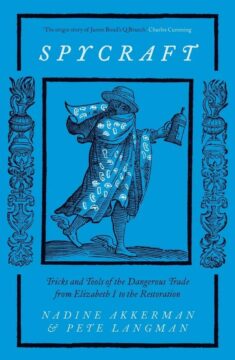 In the 17th century, the Uffizi offered its visitors a rather more diverse range of exhibits than it does now, among them weapons made by some distant precursor of Q Branch. The Scottish traveller James Fraser on a visit to Florence in the 1650s recorded what he saw: ‘A rarity, five pistol barrels joined together to be put in your hat, which is discharged at once as you salute your enemy & bid him farewell … another pistol with eighteen barrels in it to be shot desperately and scatter through a room as you enter.’
 Dear Reader,
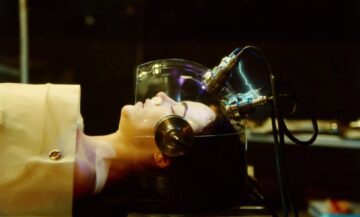 It seems no coincidence that Yorgos Lanthimos’s cinematic rendition of Alasdair Gray’s 1992 novel Poor Things, released at the end of 2023, would come at a time of obsessive commentary about the possibilities and threats of AI. While Lanthimos’s movie has nothing, ostensibly, to say about digital technologies (beyond its own production process), the publication this year of Julie Wosk’s Artificial Women: Sex Dolls, Robot Caregivers, and More Facsimile Females provides a context for considering the potential of the film in the public imaginary.
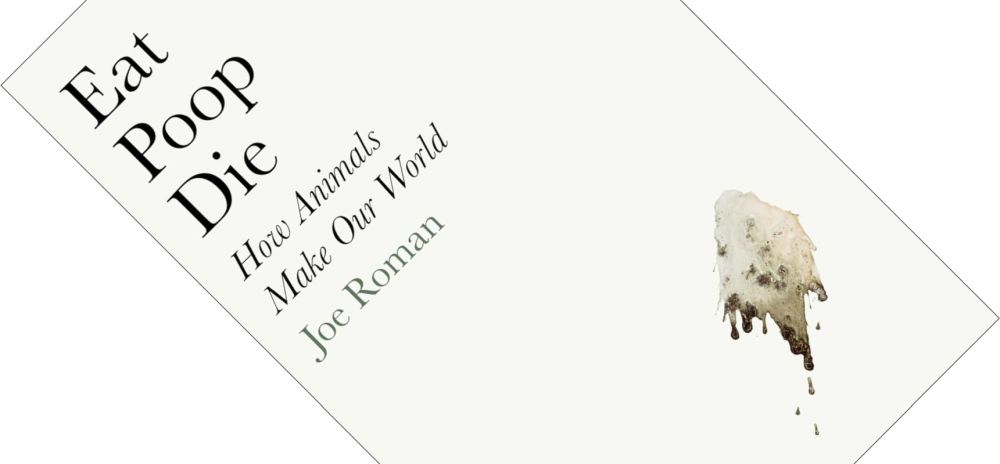 What a killer title. Rarely have I seen three snappy words so effectively capture the essence of a concept in biology. What concept is that? Zoogeochemistry. Many scientists have convincingly made the case that it is the small things that run the world. Though it is undeniably true that e.g. microbes and insects have shaped our planet, and continue to do so, it would be a mistake to think that larger animals are just along for the ride. I was stoked the moment the announcement for this book dropped and conservation biologist and marine ecologist Joe Roman did not disappoint. Eat, Poop, Die is fun and fascinating, while always keeping one eye firmly on the facts and complexities of ecology. Is it too soon to start earmarking titles for this year’s top 5? I think not.
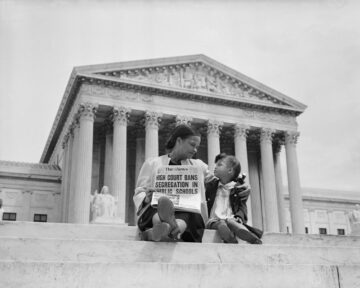 The 70th anniversary, last month, of the Brown v. The Board of Education decision has had me thinking about a certain conundrum regarding black students and education. Part of what has remained as the enduring legacy of Brown is Kenneth and Mamie Clark’s “Doll Test,” which featured in expert testimony for the case, and
 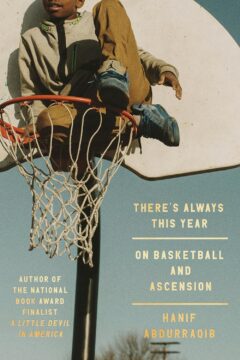 In this testament to both a sport and a state, Abdurraqib leads with his own heart, one that’s been broken over time by loss of family, friends, even a home. His previous works of cultural criticism (A Little Devil in America, Go Ahead in the Rain, They Can’t Kill Us Until They Kill Us) and poetry (A Fortune for Your Disaster, The Crown Ain’t Worth Much) are steeped in elegy and tempered by irony. He goes all out to sustain this difficult balance in his newest and, one could argue, most ambitious solo performance thus far, an awesomely discursive mixtape of memoir, film criticism, tone poem, and sports punditry interspersed with brief tributes to “legendary Ohio aviators” in whose company he includes Lonnie Carmon, the Black Columbus junk collector who built a plane from some of his salvage and flew it on weekends to astonish and inspire his neighbors. Other Buckeye State heroes need little to no introduction to the rest of us: John Glenn and John Brown, Toni Morrison and Virginia Hamilton.