by Kevin Baldwin
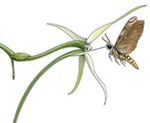
Though Darwin is best known for his theory of natural selection (1859), another contribution he made to biology was his recognition of coevolution and symbiosis (living together). Nature was more than simply “red in tooth and claw” (Tennyson 1849): Organisms not only compete, but can cooperate with each other to achieve new capabilities. One of Darwin's most famous inferences was that a newly discovered African orchid with a foot long corolla (!) must have a moth pollinator with a similarly long tongue (Darwin 1862). This moth was soon discovered and given the subspecies name praedicta, to indicate its prophesied existence.
Life abounds with examples of cooperation despite our preoccupation with competition and predation. Eukaryotes are much larger and more complex than the bacteria from which they evolved. They originated when large bacteria engulfed smaller ones that provided sugars (derived from photosynthesis) or high energy phosphate compounds in return for shelter in the larger bodies of their hosts. This event, called the endosymbiotic origin of eukaryotes is one of the most important transitions in the history of life. Lichens are a symbiosis of a photosynthetic algae and a nutrient scavenging fungus, which by themselves would not be terribly successful, but together can live in some of the most inhospitable places imaginable. The coevolution of flowering plants and pollinators is well known (see above). Floral nectar and pollen are traded for pollination services by insects, birds, and bats.
Reef building corals are basically tiny sea anemones that harbor symbiotic photosynthetic algae that trade their sugar production for nitrogenous waste produced by the coral host. Sugar is a source of energy that is exchanged for Nitrogen, an important component of proteins. This cooperation enables corals to have the high rates of calcium carbonate deposition necessary for healthy, growing reefs.
Recent molecular analyses tell us that the gene that directs coral exoskeletal development is the same one that directs human skeletal development! This deep homology indicates that corals and humans share a common ancestor from over half a billion years ago. The expanses of time and evolutionary change that separate us may make corals seem remote, but to me it is amazing and humbling to contemplate that relationship.