by Tasneem Zehra Husain
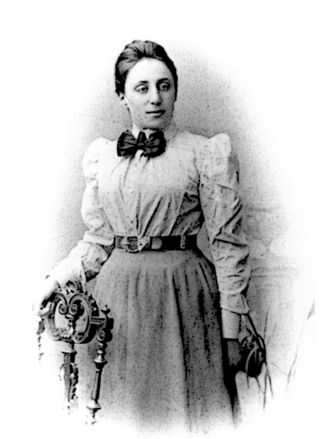
“Pure mathematics is, in its way, the poetry of logical ideas”. – Albert Einstein, (Obituary forEmmy Nother)
The first time you encounter a truly dazzling idea, its light seems almost blinding; slowly, your eyes grow more accustomed, and the glare dulls down to a glow which pleasantly illuminates your outlook. At least, that's how it usually happens, but Noether's Theorem is in a class of its own. I first came across it as a graduate student, about fifteen years ago, and to this day, I am stunned by its unfading brilliance.
I find it a travesty that Emmy Noether and her beautiful work are not more widely known. With International Women's Day just behind us, and Noether's birth anniversary around the corner, this seems like a good time to right that wrong. But before I introduce you to Emmy Noether, let me first tell you about her work. That, I am convinced, is how she would have wanted it.
Symmetries & Conservation Laws
The fact that the total energy of a system must always stay fixed, has been used to tremendous effect, countless times and in several contexts; from calculating the height to which a ball will rise, to predicting the existence of the neutrino. The laws of conservation of energy, momentum and charge, have long been considered sacrosanct, but for centuries, no one knew where they came from. To what do we owe the pleasure of their (very welcome) protection? Emmy Noether figured it out: Conservation laws arise out of symmetries, she said. And suddenly, just like that, there was a deeper underlying reason behind these mysteriously powerful statements – they had an origin.
Noether's theorem states that, to every (continuous) symmetry of a theory, there corresponds a conservation law.
What exactly does that mean? Physicist Philip Morrison writes, “symmetry is related to the indiscernibility of differences. Once you walk into the hall of a Palladian building, you can't quite remember whether you turned left or right”. ‘The indiscernibility of differences', while not a formal definition, is a good working description. An object is symmetric if some operation can be performed on it without leaving a trace: a circle, for instance, is rotationally symmetric, because can be rotated (about its center) through any arbitrary angle, and no one will know the difference.
The symmetries Noether was concerned with are far more abstract – they are symmetries of the equations that describe a process (more properly speaking, symmetries of the Lagrangian), not symmetries of the objects participating in the process. In other words, they refer to differences that are indiscernable to the laws of physics.
Read more »


![Image[1]](/wp-content/legacy/6a00d8341c562c53ef01a73d982b76970d-400wi "Image[1]")