
Solitary Confinement and the Exercise of Freedom

by Scott Samuelson

The sole cause of man’s unhappiness is that he does not know how to stay quietly in his room. —Blaise Pascal
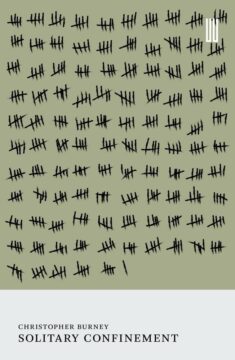
In its “Recovered Books Series,” Boiler House Press has just republished Christopher Burney’s Solitary Confinement, originally released in 1951, a profound, steely, and even sometimes funny account of the five-hundred and twenty-six days the author spent in a Nazi prison cell during World War II. Ted Gioia, who’s written a preface to the new edition, calls it “one of the great masterpieces of contemplative literature.” Even though I’ve made a point of exploring the masterpieces of contemplative literature, I hadn’t heard of Solitary Confinement until a few weeks ago. Given its publishing history, it seems that the book’s fate is to be praised as a masterpiece (by luminaries like Roberto Calasso and Frank Kermode), fall immediately into oblivion, and then be rediscovered a decade or so later—only to go through the same cycle all over.

The backstory of Solitary Confinement has the makings of a good movie. Christopher Burney (1917-1980) was born in England to upper-class parents, spent part of his childhood in India, dropped out of school at the age of sixteen (shortly after his beloved father keeled over from a heart attack around the tea table), and then wandered around Europe for a few years picking up languages. Because Burney had learned to speak French idiomatically without an accent, the British army enlisted him as a secret agent during the war. Blind-dropped into occupied France, he made his way to a crew of fellow operatives to disrupt German supply lines. When it was discovered that a double agent had infiltrated his group, Burney attempted to flee to Spain with the Nazis in hot pursuit. Surprised in his sleep by Abwehr agents who were tipped off by a hotel clerk, he was thrown into solitary confinement at Fresnes Prison in the south of France.

His cell was just ten feet long by five feet wide. The space was mostly taken up by a bed and a small table, which he turned on their side during the day to do exercises and walk back and forth. Read more »
Monday, March 10, 2014

Prison Reform as Enlightened Self-Interest

by Katharine Blake McFarland

Newgate-3I'm sitting in the empty bathtub with all my clothes on and my laptop in my lap, because it's the only place I can't hear the neighborhood jackhammer, when a headline from The Onion catches my attention: 15 Years In Environment Of Constant Fear Somehow Fails To Rehabilitate Prisoner. “About time,” I shout, to the empty bathroom. The satirical article goes on:

[O]fficials at Woodbourne Correctional Facility struggled Tuesday to make sense of how the prisoner had not been rehabilitated by 15 years of constant threats, physical abuse, and periodic isolation. “It just doesn't seem possible that an inmate could live for a decade and a half in a completely dehumanizing environment in which violent felons were constantly on the verge of attacking or even killing him and not emerge an emotionally stable, productive member of society”…

A story's inclusion in The Onion signals its self-evidence. The story—in this case, the inefficacy of incarceration—must be so obvious, so incontrovertible, that it's funny to dress it up as breaking news. It bodes well, I think, that this particular joke is getting some mainstream laughs because it hasn't always. (To be clear, by “joke” I mean “farce” and by “laughs” I mean “attention.” The distinction is important because lately prisons have become the object of increased media consideration, but sometimes the spotlight takes a precarious form. Does entertainment like Orange is the New Black help or hurt? Do we care? When it inspires fans to dress up in blackface and orange prison garb for Halloween, you might see the risk. A young friend of mine, someone who narrowly escaped the pipeline to prison himself, interpreted the name of the show as a reference to skin color, rather than fashion: “the new black,” he said, pointing to his bare arm. The intended joke was lost on him.)

And the notion that the prison system works—that it makes us safer, that it doles out appropriate punishment to deserving offenders and offers meaningful rehabilitative opportunities to those willing to change—has become a notion deserving of derision. It remains one of the greatest farces of our current justice system. I know a few who have served time and had an experience, sometimes a miracle, that changed them for the better. But mostly these experiences transpired in spite of, not because of, the environment. Incarceration, in its current form, does not rehabilitate but rather exacerbates criminality and mental illness.

Read more »