by Rishidev Chaudhuri
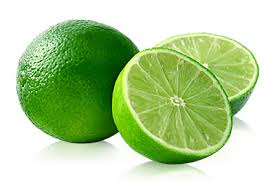
When asked excessively metaphysical questions (“Is the world finite?”), the Buddha would not answer and instead told the story of a man shot with a poisoned arrow, who refused to have a doctor attend to him until he knew who his assailant was, why he had been shot, what kind of bow was used and which animal's feathers were used to make the arrow. Taking a similar pragmatic stance, we will not inquire further into the ultimate causes of the lime shortage and simply discuss coping mechanisms (or, if you prefer, routes to salvation). And to fortify ourselves we will remember that possibility emerges within constraints and it is hard to create anything interesting without them.
To replace the lime we must first know the lime and understand its particular role. At least to a first approximation, this rests on its utility as a source both of acidity and of fragrant citrus oils[2], and so these are the dimensions we will seek to replace.
Much of what makes citrus fruits distinctive (as opposed to just generically sour-sweet) comes from particular aromatic oils and the oil glands in the peel are especially rich sources of these. The classical citrus aromas result from compounds like limonene which, unsurprisingly, smells like lemons and is extracted for use in both fragrances and cleaning products. But the peels also contain piney and herbaceous oils, in line with the general observation that almost nothing has a simple aroma. A nice way to introduce yourself to these aromatic oils (if you haven't already) is to use a vegetable peeler to cut a swath of lemon rind and twist it, which breaks the glands and releases the oil. This is a deservedly popular garnish for cocktails. Note that by “peel” I just mean the superficial yellow part; the white pith that lies underneath is bitter and should be avoided (though as in marmalade, small amounts of this bitterness can nicely complement added sugar).