“A grand jury would indict a ham sandwich, if that's what you wanted.”
~ New York State chief judge Sol Wachtler
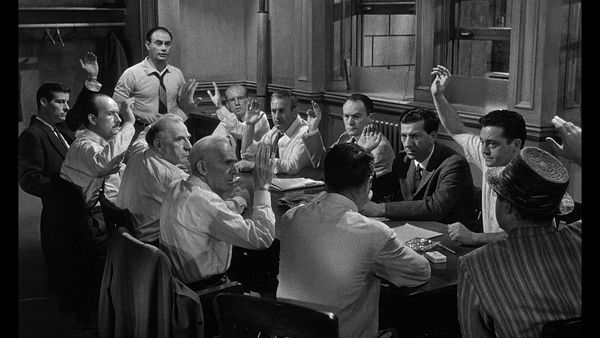
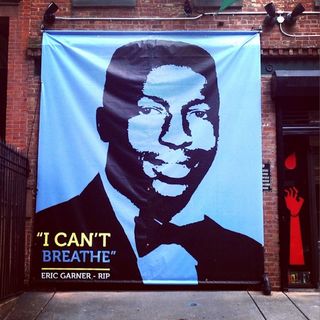
About a dozen or so years ago, I had the instructive misfortune to be called for Manhattan grand jury duty. To this day, though, it has armed me with plenty of anecdotes for any sort of “that's the way the system works” conversation. Once you see how the sausage of justice gets made in the courtroom, you can never really unsee it, and that's not a bad thing. The grand jury process – and its failures and possible remedies – is obviously central to the Michael Brown and Eric Garner cases, but in my opinion hasn't received nearly enough attention. Let me draw on some of my own experiences to illustrate why this is the case, and argue why any meaningful response to Brown, Garner and others must, at least for a start, be sited within the phenomenon of grand jury.
As context, New York City is one of the few cities that maintains continuously impaneled grand juries to maintain the flow of indictments that feeds the criminal justice system. When I served, there were four such juries, two of which were dedicated exclusively to drug cases. Fortunately, I was selected for one of the other two; after all, variety is the spice of life. During our month-long tenure of afternoon-shift service, we heard 94 cases, and we returned indictments, if I'm not mistaken, for 91 of those. For this service we were compensated $40 per day, which, in a fit of self-serving civil disobedience, I refused to report on my income tax return.
Keep in mind that the purpose of the jury is two-fold: to establish that a crime was committed, and that the person under indictment had some involvement with said crime. This involves the mapping of an often messy reality onto the abstract but finely delineated nature of criminal statutes. To achieve this, the prosecutor – almost always a fresh-faced Assistant District Attorney (ADA) seemingly just out of the bar exam – would present just enough facts to the jury to ensure probable cause for both the crime and the person charged with said crime. The evidence may include testimony from officers, experts or other witnesses, and it ought to be noted that probable cause is a much lower standard of proof than what petit juries encounter in trials, which is the beloved “proof beyond a reasonable doubt.”