by Claire Chambers
At a Sheikh Zayed Book Award event in 2017, Marina Warner told the audience that the Arabic root word 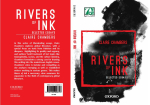
All this resonates with my new book, Rivers of Ink: Selected Essays, which was published by Oxford University Press last month. I eventually chose Rivers of Ink as my title when I realized how many words I'd written in my journalistic outpourings for this fine blog 3 Quarks Daily, as well as for Dawn and other outlets, over the course of five years. The phrase comes from the Spanish idiom verter ríos de tinta meaning to pour rivers of ink, corresponding to the English saying, 'much ink has been spilt'. If even a fraction of the ink cartridges I drained over the last half-decade were in service of equality, anti-racism, and internationalism, or (re)introduced readers to a confident and diverse body of texts, I will be happy.
Coincidentally, Rivers of Ink recalls the titles of two influential subcontinental novels: Qurratulain Hyder's Aag ka darya (River of Fire), which deals, amongst other subjects, with Partition and the post-Second World War South Asian diaspora; and River of Smoke, in which the nineteenth-century Opium Wars enable Amitav Ghosh to impart wisdom on present-day globalization and the political grounds of free trade arguments.