
by Timothy Don
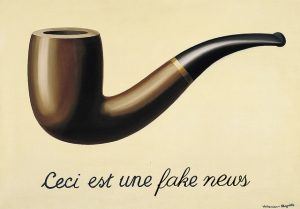
 I met Rene Magritte a few weeks ago at the Starline Social Club in Oakland. A surprisingly jolly fellow, it turns out he’s working these days as a pedicab driver in San Francisco. Surrealism isn’t my jam, but when he offered me a pickup the next morning at the BART and mushrooms and tickets for two to the retrospective of his work at SFMoMA, well—I had to accept.
There are many things one could say about the SFMoMA. It’s massive, it’s powerful, and it’s complicated. I have a sneaking suspicion that it operates as a kind of Leviathan in the Bay Area that sucks aesthetic energy into its great maw, gobbling up the local, less well-endowed swimmers and forcing an evacuation of the surrounding area that threatens to leave the gallery and studio scene like a bleached-out coral reef bereft of any but the largest predators. The regular reports of artists fleeing the Bay Area and moving to Los Angeles would seem to bear this out, as would the wriggling, lamprey-like presence of a Gagosian outpost since 2016 across the street.
That said, the collection SFMoMA contains is nothing short of incredible. Bracketing for the time being the delicious irony of the Fisher holdings—one of the world’s most extensive collections of post-war and contemporary art, a collection of some of the most sublime works of 20th century art, built from a fortune made by erasing the distinction between high and low culture (The Gap), valued at well over a billion dollars—visiting SFMoMA is an eye-widening, jaw-dropping experience. It has everything, all of it, and it is informed by a profound and generous curatorial intelligence. Each visit promises new understandings, a renewed interest in old favorites (“Here’s a room full of Paul Klee!”), and a reminder of what art and artists can do: the limitless reach of human creativity. It doesn’t engage in easy juxtapositions or cheap didactics. It just quietly and seductively invites you to join the conversation. There are some very smart people working there.
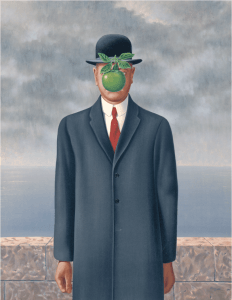
The Magritte exhibit was proof of that. It was exquisitely curated. But whether it was because I didn’t eat the mushrooms or because surrealism is a movement that appeared during the hour when the sun casts its shortest shadow, I found the curatorial effort behind the exhibit more compelling than the work itself. Sorry, but I was underwhelmed. Magritte (for my taste) is neither creepy enough, nor playful enough, nor philosophical enough to warrant bathing with. Spending that much time with that much of his work was a lesson in the limits of puns and dreams. There’s a reason that it appeals to children, and we are not living in child-like times. These are ugly, impoverished times. Wounded times. Magritte doesn’t help us negotiate them. So at the end of it, I went in search of some art that would explode in my face or deepen my emotions or fill me with awe. Give me some Kara Walker, please, or some William Kentridge. Like I said, SFMoMA has it all. Finally, I found myself looking at a bunch of paintings by Philip Guston. Read more »
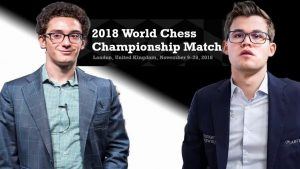 Magnus Carlsen and Fabiano Caruana faced off for the World Chess Championship over three weeks London. I’d been looking forward to the match all year, and following the progress of the two players towards it. This piece looks at the two players and the situation before the match, gives an account of the Championship games, and concludes with some reflections on the significance of the match for the participants, and for the sport.
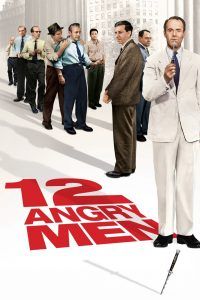 I recently rewatched “12 Angry Men” with The Philosophy Club at the University of Iowa as part of their “Owl of Minerva” film series. The 1957 film has the late, great Henry Fonda as the lone holdout on a jury ready to convict a poor, abused 18-year-old boy for allegedly stabbing his father to death. Over one long, tense evening (shown in something close to real-time), juror #8 – none of the jurors are identified by name, only number – forces the rest of the jury to methodically reexamined the evidence. It’s not a courtroom drama, it’s a jury-room drama in which only 3 of 1:36 minutes of running time take place outside the sweaty, claustrophobic jury room. The film is intense, moving, and effective. Afterwards, I made the following remarks.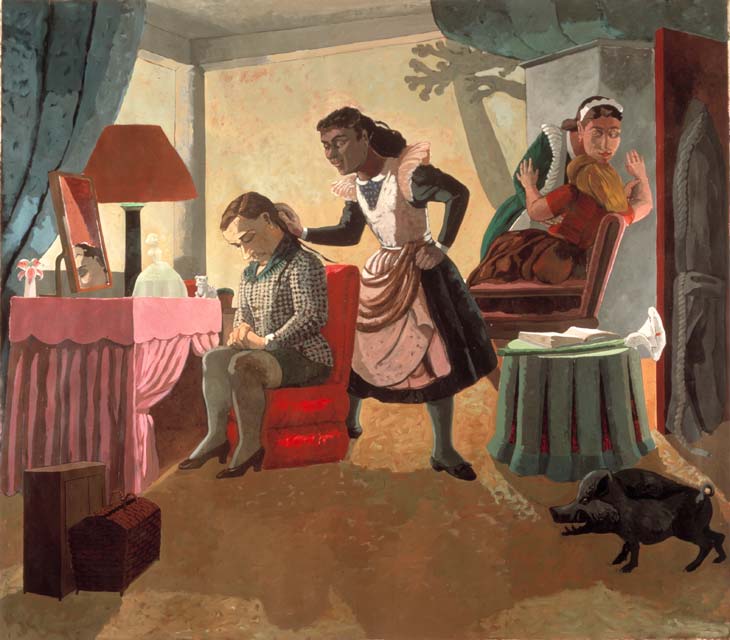

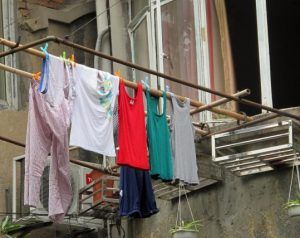 It’s getting colder now in Beijing, and I can’t help but feel for the clothing left outside to dry. They had to hang through the night and on through the weak sunrise, doing their best to catch the wind before the temperature drops again. How do they feel being out there for passers-by to see, all exposed, caught up in the dust and very small toxic particles?
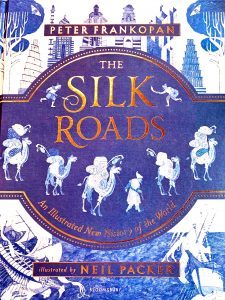 “You start with a scarf…each 90-by-90-centimeter silk carré, printed in Lyon on twill made from thread created by the label’s own silkworms, holds a story. Since 1937, almost 2,500 original artworks have been produced, such as a 19th-century street scene from Ruedu Faubourg St.-Honore, the company’s home since 1880. The flora and fauna of Texas. A beach in Spain’s Basque country” –- this is a fragment from an advertisement article for Hermès in this month’s issue of a luxury magazine. The article is called “The Silk Road.” Does it refer to the “Silk Road” in any way that justifies the title, beyond the allure of legend? No. Does it mention that the first scarves created for this very label, in 1937, were made with raw silk from China? No. Not necessary, not relevant to the target reader. In fact, the less we mention the “East” while trying to sell such luxury designer items, the better, aiming as we are for the rich collector, the global consumer of fashion (whether belonging to the East or West) willing to spend hundreds of dollars on a small square of silk, and more likely to associate such status symbols with Western Europe rather than with the “underdeveloped,” impoverished, overpopulated, conflict-ridden East.
 A few months back my boss and I had lunch with the person who, wearing a t-shirt that read “black death spectacle”, stood in protest in front of a painting of Emmett Till by Dana Schutz called Open Casket at the last Whitney Biennial. Shortly after his gesture another artist penned an open letter about how Schutz’s painting uses “black pain” as a medium, and how this use by non-Black artists needs to go. I’m not sure what the ethical verdict is (of whether or not Schutz made a gravely racist error), or whether the artist’s letter voiced an instance of over-reaching aesthetic censorship, nor will I make any attempt at trying to resolve that issue here; it would take far more space than what is available and is not my aim. Consider reading Aruna D’Souza’s recent book Whitewalling: Art, Race & Protest in 3 Acts for a thorough treatment (which, not so incidentally, the above mentioned protestor provided images for).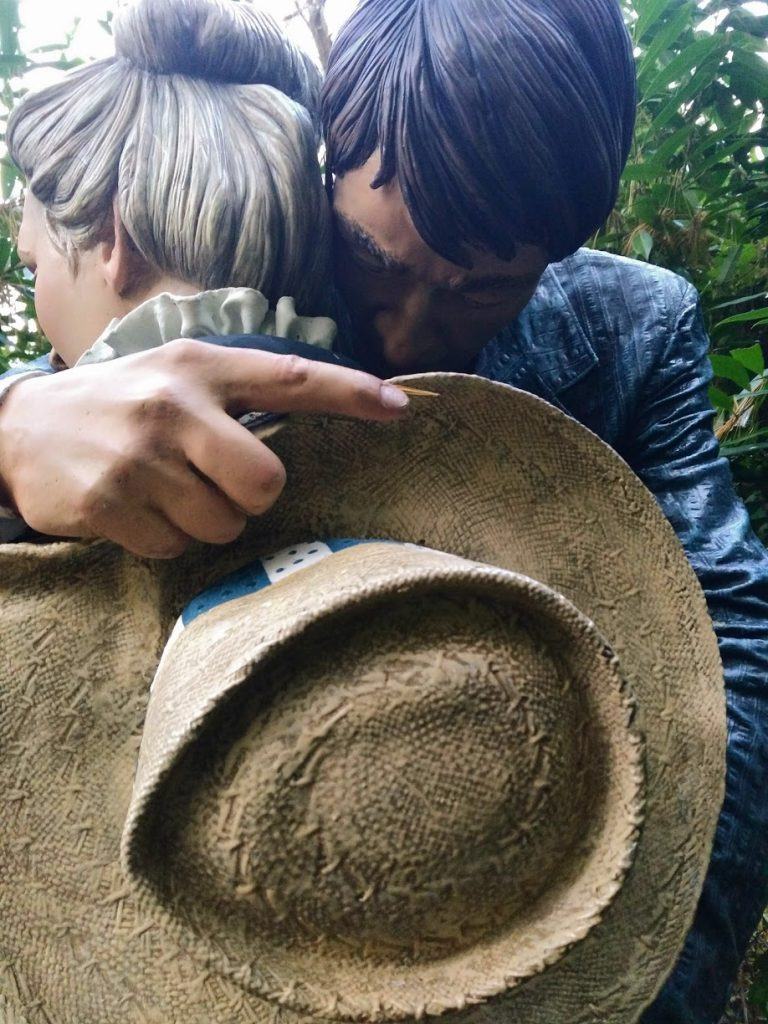
 Ever since my childhood I have been excited, even electrified, by movies. In my college days in Calcutta, in search of alternate experience beyond Indian and Hollywood movies, I used to frequent the local Film Society events, showing some commercially unavailable European fare. Short of funds these Film Society outfits mainly went for movies they could procure at low cost. The East European consulates in the city were particularly generous in making available films from their countries.
 Many decades ago, I packed my bags and left the shores of Australia and headed to the United Kingdom (UK). My secondary years of education had taught me to believe that my journey to the UK would amount to a ‘return’ to the ‘motherland’. A ‘return to the motherland’? Really? That says more about the education system I was exposed to, than just how naïve I was. However, having learned after my arrival that the UK was not, in fact, my ‘motherland’, I did discern that it had more to offer in terms of being ‘in’ the world than the distant shores of Australia, and I decided to stay. Thus, after many years resident in the UK, I considered myself as someone familiar with the country, until, that is, a change in my life circumstances provided me the opportunity to know the UK, or more specifically, England, in a totally different way.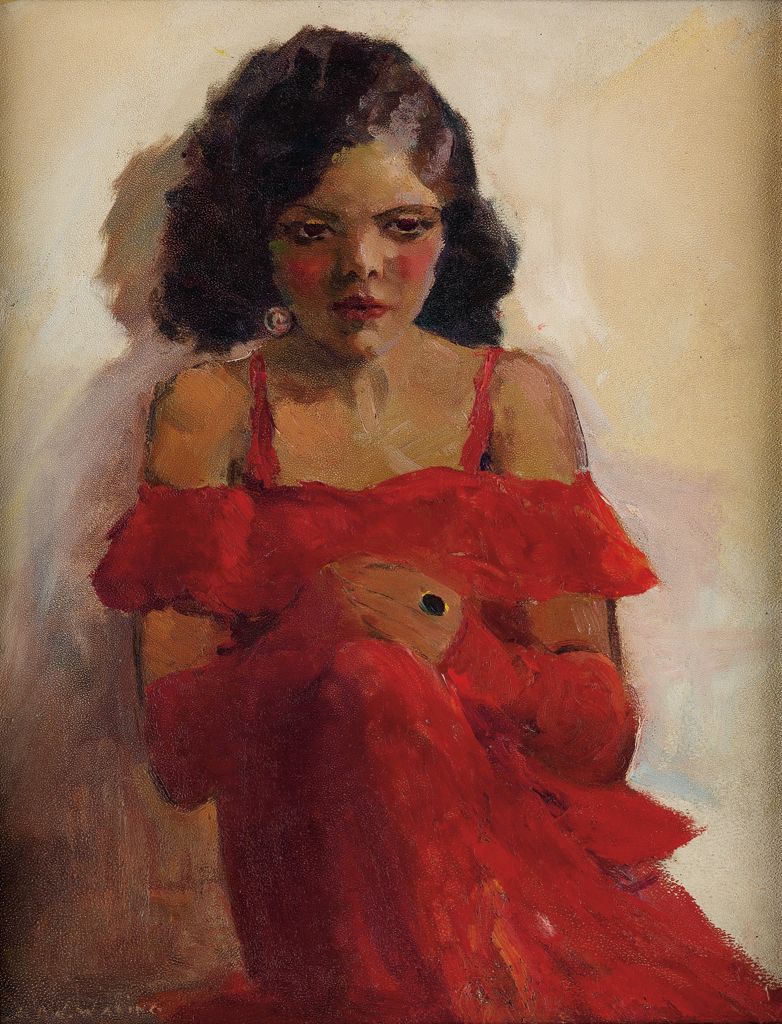
 We can agree that a verb in the present tense means that action is occurring now. What about the present progressive, which I used in the previous statement? That apparently confounds non-native English speakers because it means that an action is in the middle of happening. Friends have asked me, “What is the difference between I am playing tennis and I play tennis?” That example is actually a softball because the present progressive indicates that the first person is in the middle of playing a game and the simple present indicates the playing of the sport in general.
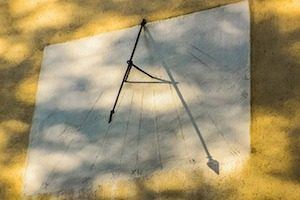 Before the second was defined in terms of the characteristics of the cesium atom, before leap seconds or leap days or Julian dates or the Gregorian calendar, before clocks, even before the sundial and the hourglass, there were sunrise, sunset, and shadows.
 The fall turned colors faster than ever before. The streets never saw any activity. The whole gambit of Prometheus hinged on a mere coin flip. Richard Albrook gingerly closed his book and took a look around.