
by Adele A. Wilby
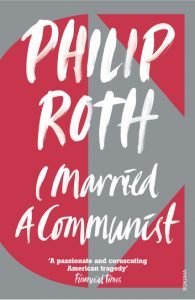 The link to Charles McGrath’s ‘No Longer Writing, Philip Roth Still Has Plenty to Say’ which appeared in the New York Times in January, only a few months prior to Roth’s death in May this year, was forwarded to me by a friend who thought I might find the article interesting. How indebted I am to my friend that he thought of me in those terms, for the sending of that article rekindled my acquaintance with Roth; life’s events and circumstances had left my reading of his work to the margins.
After reading that January interview, I was surprised and saddened to hear the announcement that Roth had died; despite his eighty-five years there was no suggestion of ill health on his part in the interview. However, the numerous critical and appreciatory obituaries propelled me into reflection on what I might have missed over the years by failing to read this major twentieth century literary figure that has now left us, and that it was time I returned to Roth to discover for myself what all the praise and criticism of his literature was all about. All that remained of my reading of Roth’s Portnoy’s Complaint and Human Stain forty years ago was the impression that they were good books. Fired up with a renewed enthusiasm to ‘return’ to the Roth I had left behind, unsure of what to select from his numerous writings, but armed with my own life story and political history, I chose his I Married a Communist to start reading him again.
I married a communist in the political heyday of the Cold War seventies and eighties, and we could be thought of as politically active in the decades that followed. Thus, with the value of hindsight, of having at least temporarily succumbed to a socialist ideology and politics, and the development of a healthy skepticism of all ideologies, I have to admit to a curiosity as to how Roth would present politically engaged persons, and the socialist politics of the era, albeit in the United States, and I was not disappointed.
My first reaction after reading the final sentence, closing the book and resting it on my lap was to heave a heavy sigh of great satisfaction. Roth, I felt, had written a great book. Read more »


 The past years have seen many debates about the limits of science. These debates are often phrased in the terminology of scientism, or in the form of a question about the status of the humanities. Scientism is a
 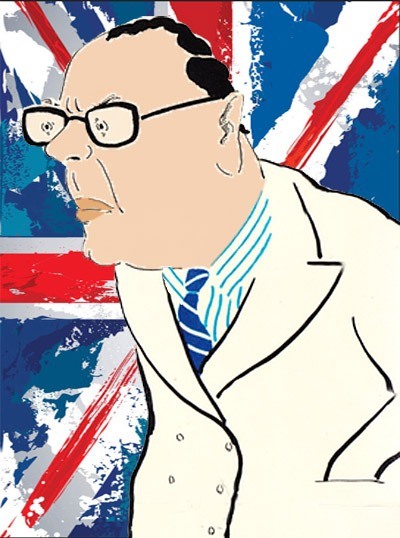 The career of Kenneth Widmerpool defined an era of British social and cultural life spanning most of the 20th century. He is fictional – a character in
 It’s a Saturday in May. I’m 17, and I’ve spent the morning washing and waxing my first car, a 1974 Gremlin. I’m so delighted that I drive around the block, windows down, Chuck Mangione playing on the radio. Feels so good, indeed. I’ve successfully negotiated a crucial passage on the road to adulthood, and I’m pleased with myself and my little car. Times change, though, and sometimes even people change. Forty years later, with, I hope, many miles ahead of me, I sold what I expect to be my last car.
 I like playing Scrabble, and part of the reason is creating new words. That and the smack talk. I played a game with the swain of the day decades ago, and he challenged my word, which was not in and of itself surprising. As you may recall, if you lose a challenge, you lose a turn. With stakes so stupendously high, you mount a vigorous defense. I ended up losing the battle (and probably won the war) and thought no more of it. The ex-boyfriend brought it up a few years ago; I think he has put that on-the-spot coinage next to a picture of me in his mind. It is a shame that the word he will forever associate with me is “beardful.”


 In the Municipal building on Livingston Street, two floors are reserved for Housing cases. In each court, dozens of people work and wait, a Bosch tableau with an international cast. HPD lawyers work the perimeter. They bring Respondents to the bench, confer with them in the hallway and negotiate with Petitioners on their behalf. HPD attorneys also lunch with landlord’s counsel. There is little ethical or proximate difference between Officers of the Court, save who signs their checks and the pay scales. To a person, they distribute a crushing weight, balancing malfeasance and negligence, plunder and systemic rot. The lasting effect of a day in Housing court isn’t the stipulation Management makes for repairs, nor the tenant’s payment (sometimes, less an abatement), it is feeling that force haul you down and watching others already borne off by it.


 The controversy over the
 The main job of ‘culture’ in a modern society seems to be shielding people from the demands of morality. In its intellectual role it justifies inequality between citizens. In its national history role it gives citizens a delusional sense of their country’s significance and entitlement, followed by a dangerous sense of grievance when this isn’t sufficiently recognised by the rest of the world. In its identitarian role it deflects demands for justification into mere proclamations of fact: ‘Why do we do this or that awful thing?… Because shut up. It is who we are.’