
by Pranab Bardhan
 My last column was about populism. One group populists invariably dislike are the ‘liberals’—the despised L-word in American politics. Some of the same people are often despised also by the Left all over the world as ‘neo-liberals’. It is not always easy to know who the latter are, as the word is used in different senses by different critics. Of course, keeping the term ill-defined and coarse serves the critics, as larger targets always make shooting practice easier.
Does ‘neo-liberalism’ stand for market fundamentalism? Except for some cranks, there are not that many of strict market fundamentalists in intellectual circles or among political leaders. If Milton Friedman and Friedrich Hayek are considered the economist high-priests of neo-liberalism, it is important to remember that Friedman advocated a substantial negative income tax for the poor and Hayek talked about a basic ‘floor income’ for everybody undergirding his version of the liberal economy. In politics neither Margaret Thatcher nor Ronald Reagan could (or even really attempted to) get rid of a significant welfare state and social security.
Sometimes my leftist friends dislike neo-liberalism because it is pro-capitalist. But they are often friendly with Keynesians. After all Keynes, while showing the limitations of market mechanism in solving the problem of mass unemployment, was essentially pro-capitalist in his role as savior of capitalism, and openly dismissive (unduly so) of Marx. “The Class War”, he once wrote, “will find me on the side of the educated bourgeoisie”. Keynes was not neo-liberal, was he?
Matters are made even more complicated by many public policy thinkers who are pro-market, but not necessarily pro-business. This tradition actually goes back to Adam Smith. There are many passages in the Wealth of Nations that can be interpreted as being in favor of free markets but definitely against prone-to-collude business magnates. Read more »


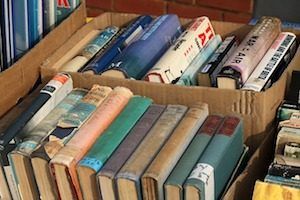 Every October there’s a huge book fair in my town, where used books donated by the community are put up for sale in a large hall at the fairgrounds. It’s no exaggeration to say that it’s a high point of my year.
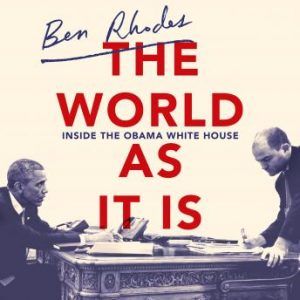 As the first African American president of the United States (US), Barack Obama is a uniquely historical personality. Each of us has our opinions, or will formulate opinions, as to the success or limitations of his eight years in office as a Democratic president from 2009-2017, and as to the person who is Obama. Helping us in the formulation of our views on Obama and his presidency, is Ben Rhodes book, The World As It Is: Inside the Obama White House.
 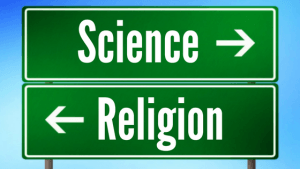 One of the most simple, elegant and powerful formulations of the conflict between science and religion is the following bit of reasoning. ‘Faith’ is belief in the absence of evidence; science demands that beliefs are always grounded in evidence. Therefore, the two are mutually exclusive. This is an oft-repeated argument by modern atheists, and it connects different aspects of what is usually called the ‘Conflict Thesis’: the idea that science and religion are opposed to each other not just now, but always and necessarily.
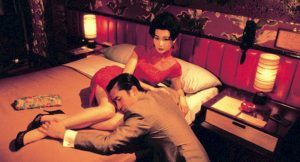 In the Mood for Love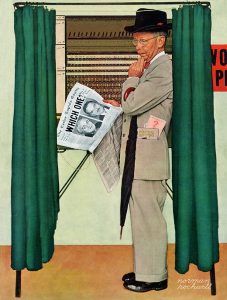

 One of the things I love about sports is they’re a low-stakes environment in which to practice high-stakes skills. For most people, most of the time, the results of a sporting match don’t affect the long-term quality of their lives. This is what I mean by “low-stakes.” In the grand scheme and scope of our lives, the outcomes of games rarely matter. Which is what makes sports such a great place to practice skills that really can and do impact our lives for the better. This is what I mean by “high-stakes.”
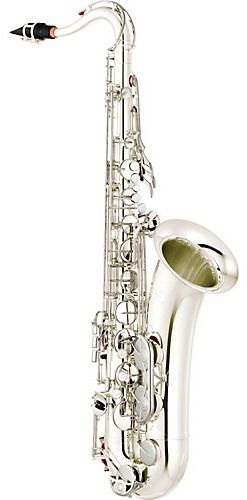 In the fall of 1970, I brought a Bundy tenor saxophone home from school. I was nine and in Mrs Farrar’s 5th grade class. To celebrate, my father slid an LP called “Soultrane”out of a blue and white cardboard jacket. The first sounds from the record player’s single speaker: a muscular folk song with rippling connective tissue that quickly spun free into endless cascades. Dad explained that it was my new horn, in the hands of John Coltrane. I didn’t know his name and nothing that day seemed possible, anyway.
 Recently, CNN sent their reporter to cover yet another Trump rally (in Pennsylvania), but this time reporter Gary Tuchman was assigned the more specific task of interviewing Trump supporters who were carrying signs or large cardboard cut-outs of the letter “Q” and wearing T-shirts proclaiming “We are Q”.