by Christopher Bacas
“I don’t think everyone should have money. It shouldn’t be for everybody—you wouldn’t know who was important. How boring. Who would you gossip about? Who would you put down? Never that great feeling of somebody saying “Can I borrow twenty-five dollars” —Andy Warhol

It starts with the phone. On a nightstand, in the pocket, or ringing under a falling tree in that hypothetical forest. If they offer a gig, unless it’s on a sacred day, you take it. No, is the road less travelled, yes, an adventure. Not often the trailblazing kind. You may work for intrepid souls, but you’ll be chopping wood or carrying quarter notes.
I got a preparatory call. A pianist buddy sounded me about dates, explaining that Billy, a singer, had been off the scene for a while. He sold me on the band, a very strong lineup. The pay was above average, too. Billy called me in a few minutes. We hadn’t met and he never heard me play, but he piled up awkward compliments.
Billy was the son of diplomats, educated in the finest schools and an attorney. Past, present, future, he never once mentioned his own work. The first gigs were an education. We packed a sextet around a piano bar in the city’s fanciest hotel. Attending, high rollers and local television personalities. Joining us, duetting singers and jazz royalty. The duets weren’t rehearsed, a fact Billy aggressively promoted. The other singers were always so highly skilled and poised that his apologies came off as false modesty. The jazz greats were gracious. Billy also introduced any substitute players with the unsmiling caveat “I don’t know him. My pianist recommended him.” Read more »
 Step-by-step, breath-by-breath, thought-by-thought, our feet carry us toward our future. (How Things Find Us, Kevin Dann)
 impermanence, I think anything I buy should last forever. (See this shirt?


 Like most people of a certain age, at any one time I have the unfortunate experience of knowing several people, some close, some not, who have cancer. It has become standard for the friend or spouse of the ill person to join one of the many message boards devoted to the subject and post updates to keep their friends and relatives informed. Others use Facebook to share information. Currently there are three people whose lives I follow, mostly from a distance, all with serious forms of cancer, one newly diagnosed but metastasized, two others who have been fighting for months and months.

 “Luddite” is a word that is thrown around a lot these days. It signifies someone who is opposed to technological progress, or who is at least not climbing on board the technological bandwagon. 21st century luddites tend to eschew social media, prefer presentations without PowerPoint, still write cheques, and may even, in extreme cases, get by without a cell phone. When used in the first person, “luddite” is often a badge of honour. “I’m a bit of a luddite,” usually means “I see through and am unimpressed by the false promise of constant technological novelty.” Used in the third person, though, it typically suggests criticism. “So-and-so’s a bit of a luddite,” is likely to imply that So-and-so finds the latest technology confusing and has failed to keep up with it, probably due to intellectual limitations.

 The traffic had been slow all day but by four pm, it was reduced to a trickle. Those cars that passed him on the street did so in two and threes as if they were sticking together for safety like lumbering animals caught out in a storm. It was, in fact, a very harsh winter day. The afternoon temperatures dipped well below zero: one of the coldest days ever recorded in Chicago. The only sounds now were from an occasional plane passing overhead, and from distant cackling from those venturesome neighbors who had left snug homes to experience the cold. He could hear the sound of his feet crunching through the snow.
 One of the biggest early 20th century philosophical challenges to the belief in God stemmed from the doctrine of verificationism.
 The wine world is an interesting amalgam of stability and variation. As
 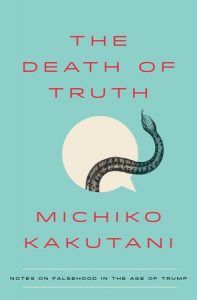 A contemporary truism, ironically enough, is that we now live in a “post-truth” era, as attested by a number of recent books with
  In October of 1859, Abraham Lincoln received an invitation to come to New York to deliver a lecture at the Abolitionist minster Henry Ward Beecher’s Plymouth Congregational Church in Brooklyn.
 47-year old Teburoro Tito stood at the head of his delegation on an island way out in the Pacific Ocean. At the stroke of midnight on January 1