
by Tim Sommers
In the first scene of the first episode of “The Wire”, McNulty asks the Corner Boy who witnessed the murder of his friend “Snotboogie”, for stealing the money from the pot in a crap game, why they let Snotboogie play, since he always tried to steal the money. The Corner Boy replies, “Got to. This is America, Man.”
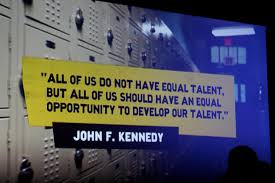
This is America. Everybody gets to play. More than that, everybody gets an equal, or at least a fair, shot. Everybody deserves equal opportunity. Justice itself demands that we strive for equality of fair opportunity. Right?
I’m not sure. But I think not. I think equality of opportunity is a bad idea – all the worse because it seems so obviously like a good idea.
But how can one deny that we should strive for equality of fair opportunity? Here’s one way. If you think property rights override everything else, and you always have the right to do what you will with your property no matter what; then it follows that you don’t have to hire gay people if you don’t want to and you don’t have to serve people of color at your restaurant if you don’t want to. This is how Rand Paul, who fancies himself a libertarian, got in trouble – questioning the Civil Rights Act of 1964.
I have no sympathy for this way of being against equal opportunity. Of course, nondiscrimination, what is often called “formal” equality of opportunity, is a requirement of justice. I just don’t think we should call that equal opportunity. I would prefer that we treat the right not to be discriminated against as a basic liberty on par with free speech or the right to vote – maybe, even as part of, or an extension, of equality before the law. Read more »

 Racing down a German autobahn at impossible speeds is like running past a smorgasbord when you don’t have time to eat. Exit signs fly by, pointing to delicious, iconic destinations that whet the appetite but that one has no time for: Hameln, Wittenberg, Quedlinburg, Eisenach, Erfurt, Altenburg, Jena, Weimar, Dessau—markers of histories whose tentacles reach into the present in ways that belie their sleepy status on the map. You suppress the urge to slow down and take the off-ramp instead of moving right along to a big-city destination You opt to remain on the asphalt treadmill with arrival anxiety, telling yourself that one day you will take the time to explore all this, just not right now.
 Two weeks ago the 9th US Circuit Court heard



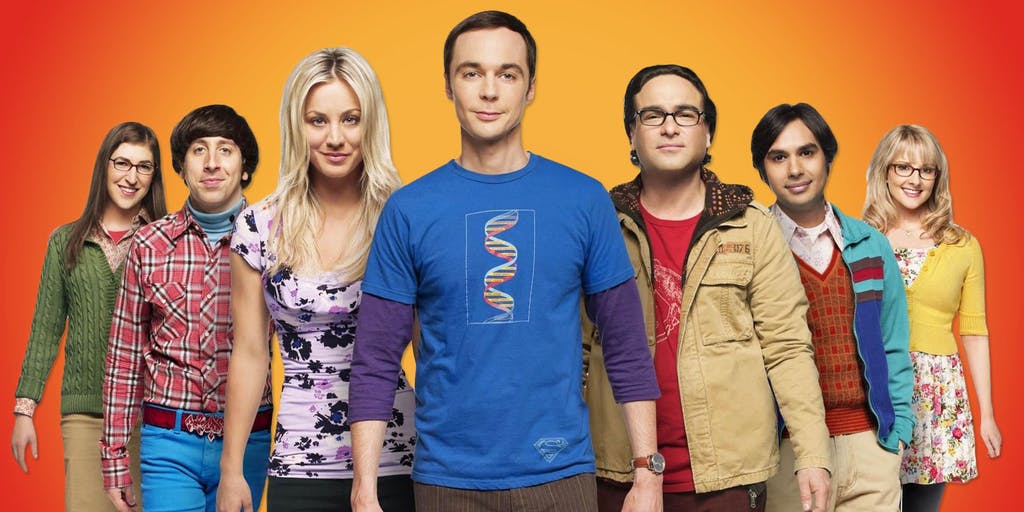 The Big Bang Theory has been one of the most successful sitcoms in TV history. Last month it ended. In many ways, it ended a long way from where it had begun; many commentators have noticed how the show
 The Doomsday Scenario, also known as the Copernican Principle, refers to a framework for thinking about the death of humanity. One can read all about it in a recent
 ![Henri Matisse created many paintings titled 'The Conversation'. This, from 2012, is of the artist with his wife, Amélie. [Hermitage Museum, St. Petersburg, Russia].](https://3quarksdaily.com/wp-content/uploads/2019/06/Matisse_Conversation-360x292.jpg)
 Books about how to write are so frequently described as life-changing and essential (usually by publishers, but sometimes by reviewers) that I was initially unmoved by enthusiastic reviews of Clear and Simple as the Truth: Writing Classic Prose, by Francis-Noël Thomas and Mark Turner. However, the praise seemed to focus on the fact that the book had changed the reviewers’ attitudes toward what writing is and how it works, and that interested me. I decided to get a copy, and I’m glad I did. The book describes and illustrates a particular style of writing but also, and perhaps more importantly, it really did give me a different framework for thinking about what style is and, yes, what writing is.
 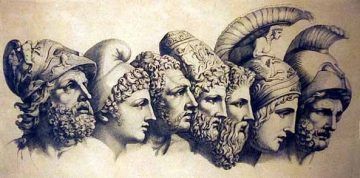 Did completing your taxes seem a Herculean task? Did cleaning your adolescent bedroom compare to mucking the Augean stables? Are you more jovial or saturnine by nature? Do you or anyone you know suffer from narcissism? Did you see the movie Titanic? Have you ever been hypnotized? Do you want to go on an odyssey? These questions are all so tantalizing, no?
 The relation between what is natural and what is morally good is a topic that has concerned philosophers from ancient times to the present. Those who view the part of a human being that belongs to the material world as sordid, unclean, and irrational have understood morality to require the suppression or the taming of nature; the angel in us must control the beast. This outlook is endorsed by Plato and is commonly found in Christian theology. Hobbes’ social contract theory, which presents moral life and political order as the way we escape the miseries of the state of nature, also takes morality and nature to be in certain respects opposed. Many others, though, have looked to nature for some sort of moral guidance. The Stoics viewed the implacable order observed in the heavens as a model for a serene human life. Defenders of rigid social hierarchies pointed to the successful arrangements in a bee hive. Critics of homosexuality argue that it is “unnatural,” while advocates of gay rights deny this. Appeals to what one finds in nature have bolstered social Darwinism, the subordination of women, arguments for and against slavery, egalitarianism, and the idea of universal human rights.

 The authority of scientific experts is in decline. This is unfortunate since experts – by definition – are those with the best understanding of how the world works, what is likely to happen next, and how we can change that for the best. Human civilisation depends upon an intellectual division of labour for our continued prosperity, and also to head off existential problems like epidemics and climate change. The fewer people believe scientists’ pronouncements, the more danger we are all in.