by Niall Chithelen
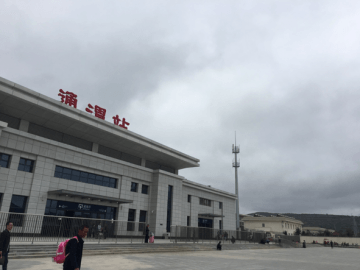
Drive the laneless roads of Lanzhou, sit the high-speed train, and then you are in the center of Tongwei county, a city among ancient villages, covered in construction works, ground floors of sliding glass storefronts, signs of green, blue, red, or black, with yellow or white lettering. And yet nothing shines here; this is not a colorful place.
A man who seems to be helping to organize your travel in the area met you at the train station and he reappears at lunch. You are not sure who he is, but he knows people here. He answers the phone with a gust of air.
A local museum sits behind a heavy locked door on the third floor of a building which is otherwise unremarkable and quite short on windows. Some artifacts in the museum are thousands of years old, some are hundreds. Also on display are two posters from the 1930s, written haphazardly by young members of the Red Army, messages to the “ordinary people” in the area. The tour guides are expert and excited. When you leave, they close the door again and lock it. The last group of visitors was days ago.

The landing outside the museum is lit only by a sign of dry red light. A young child wanders around the museum, stands on the landing, wary of the visitors. His attention is focused on a phone screen, and, watching him walk in front of the sign unfazed, you wonder if his memories too will bear the darkness of this building, hued red around their edges. Read more »

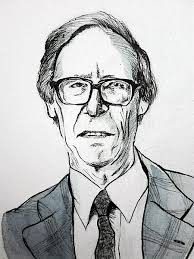
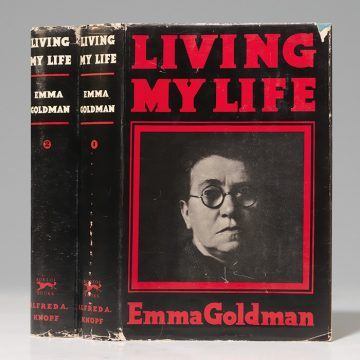 In a political era where many of the ‘isms’ in radical politics: Marxism, socialism, communism, anarchism, Trotskyism have either been discredited or have lost their appeal and force in western democracies, I found it refreshing to visit the life of one individual deeply involved in shaping those radical movements in the twentieth century: the anarchist, Emma Goldman, in her autobiography Living My Life.
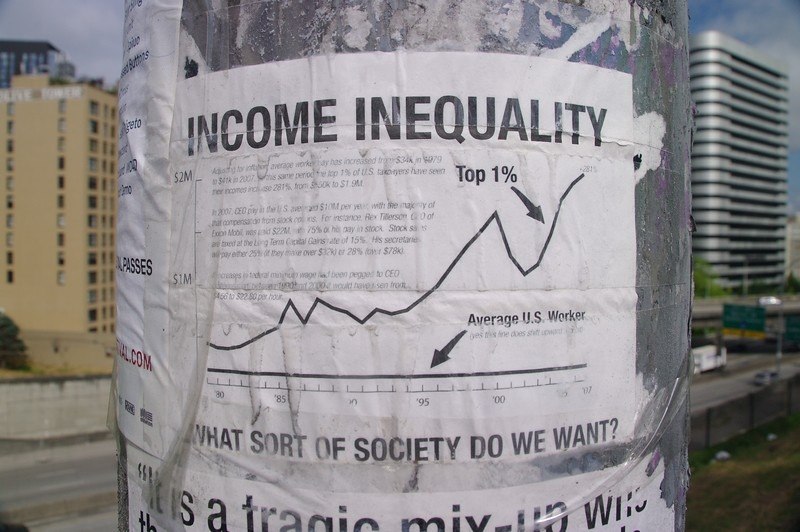 There is widespread concern about increasing or high economic inequality in many countries, both rich and poor. At a global level, according to the World Inequality Report 2018, the richest 1% in the world reaped 27% of the growth in world income between 1980 and 2016, while bottom 50% of the population got only 12%. Over roughly the same period, however, absolute poverty by standard measures has generally been on the decline in most countries. By the widely-used World Bank estimates, in 2015 only about 10 per cent of the world population lived below its common, admittedly rather austere, poverty line of $1.90 per capita per day (at 2011 purchasing power parity), compared to 36 per cent in 1990. This decline is by and large valid even if one uses broader measures of poverty that take into account some non-income indicators (like deprivations in health and education) for the countries for which such data are available.
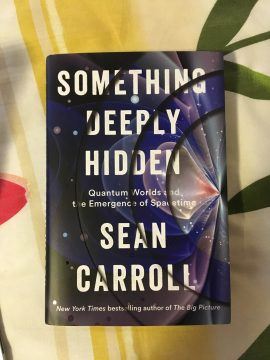 For me, a highlight of an otherwise ill-spent youth was reading mathematician John Casti’s fantastic book “
 Have you ever been in this situation where you had to get a group of 3 men and their sisters across a river, but the boat only held two and you had to take precautions to ensure the women got across without being assaulted?

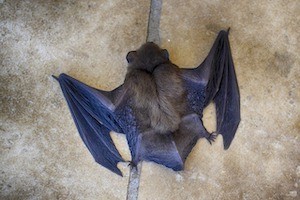 Last weekend, a bat got into my house somehow. I first heard it in the small hours of Friday night as it scratched around somewhere near the furnace flue. I didn’t know if it was an animal settling into a new home in my attic, or if perhaps it was going out periodically to get food and bringing it back to feed babies in an established nest. All became clear very late the next night, when the bat managed to get out of the enclosure around the flue and then exit the closet where the furnace is. After some drama that I need not recount here, it flew out the front door, and I stopped gibbering on my front walk and went back inside.
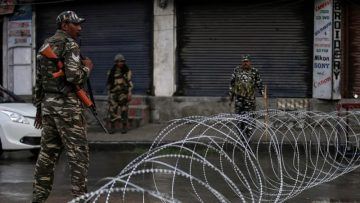 Trapped