
by Jeroen Bouterse
 Have you ever been in this situation where you had to get a group of 3 men and their sisters across a river, but the boat only held two and you had to take precautions to ensure the women got across without being assaulted?
This problem is one of 53 puzzles in the oldest extant puzzle book in the Western (Latin) tradition: the Propositiones ad acuendos iuventes or problems to sharpen the young. Its authorship is uncertain but it is often and plausibly attributed to Alcuin, who possibly sent them to the Frankish ruler Charlemagne in 800 AD.[1] I hope you will allow me a brief introduction of these puzzles, before I go on to do what I hope will by then be redundant, namely spelling out why I think you should be thrilled by their existence.
Slugs and Pigeons
Alcuin’s puzzles are diverse, but puzzles of the same type often show up more than once. For example, some have us figure out a number based on a multiple of it, provided in a somewhat convoluted manner: a man seeing a certain number of horses and wishing that he possessed that number, and then that number again, and then a quarter more than that, for then he would possess a hundred horses (puzzle 4). There are questions that effectively ask how often a given area fits into another given area, how items can be distributed in discrete quantities given certain conditions, or how long it will take for one animal to overtake another or to cover a given distance. The first puzzle, for instance, has a leech invite a slug over for lunch, only to have us realize that it will take the poor creature centuries to get to its destination. Read more »


 Last weekend, a bat got into my house somehow. I first heard it in the small hours of Friday night as it scratched around somewhere near the furnace flue. I didn’t know if it was an animal settling into a new home in my attic, or if perhaps it was going out periodically to get food and bringing it back to feed babies in an established nest. All became clear very late the next night, when the bat managed to get out of the enclosure around the flue and then exit the closet where the furnace is. After some drama that I need not recount here, it flew out the front door, and I stopped gibbering on my front walk and went back inside.
 Trapped






 A recent article by Jane Mayer in The New Yorker, “The Case of Al Franken,”
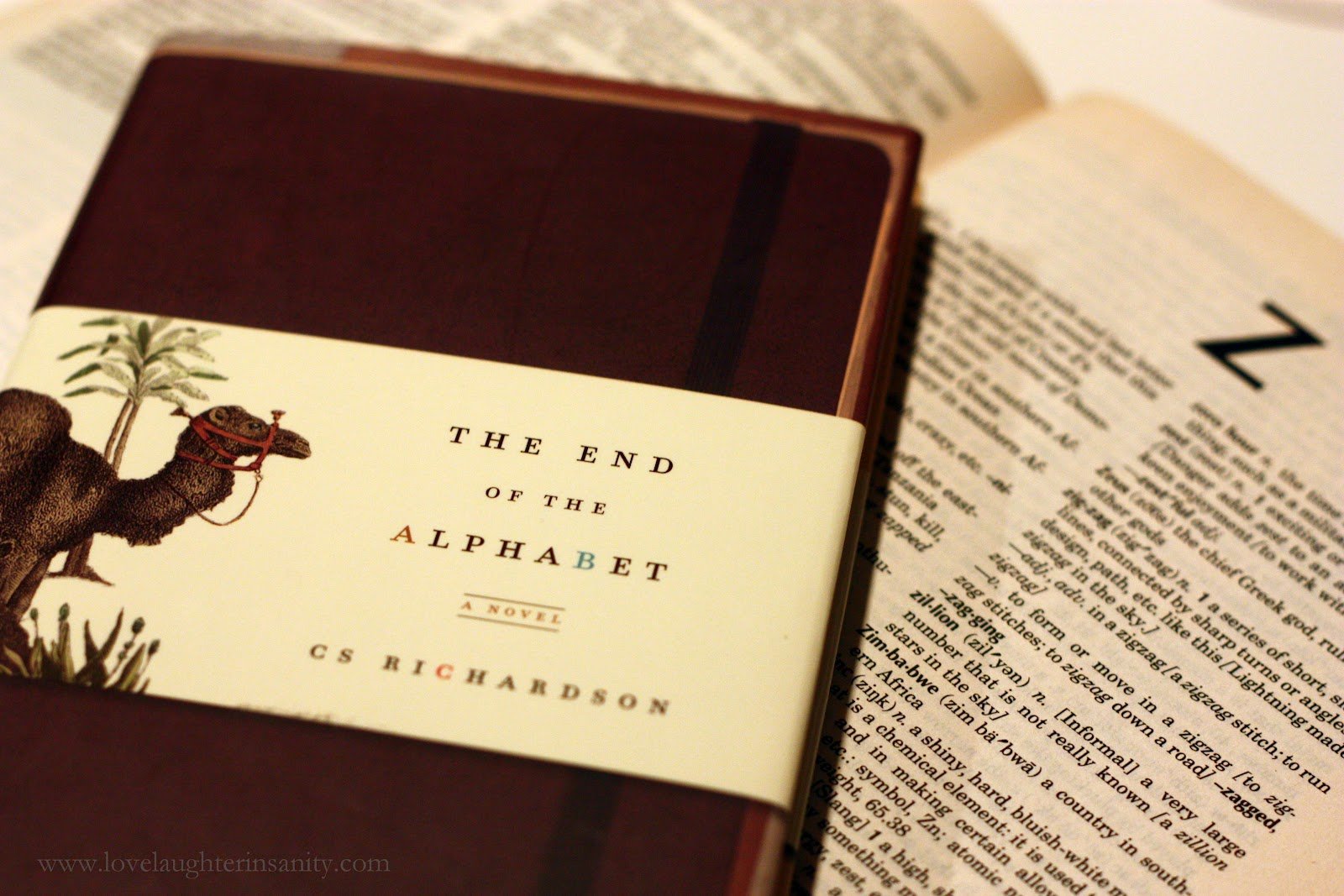 Ambrose finds out he has only weeks to live. How to spend that time is the premise of The End of the Alphabet (2007). It’s a condensed weepie in which Ambrose decides to visit a series of places with his wife that will take them through the alphabet. Somehow Richardson manages to stick to a minimalist elegance which probably saves the book from being schmaltzy book club fodder. And heck, you’d almost look forward to dying the way it’s put. Bucket list: die like this.
 As a child, author and poet Annie Dillard would traipse through her neighborhood, searching for ideal places to stash pennies where others might find them. In her novel