
by Tim Sommers

Katrina Forrester begins “The Future of Political Philosophy” (adapted from her just released book “In the Shadow of Justice: Liberalism and the Remaking of Liberal Philosophy”) with a series of dramatic claims. “Since the upheavals of the financial crisis of 2008 and the political turbulence of 2016, it has become clear to many that liberalism is, in some sense, failing,” this is “due in part to the nature of political philosophy today” and, in particular, to the fact that “for the last five decades, political philosophy in the English-speaking world has been preoccupied” with John Rawls. Let’s start with the first claim, that liberalism is failing. Forget “failing”, for the moment, my question is, ‘Which liberalism?’
I think that the kind of liberalism that is failing is “neoliberalism” which is, of course, “neo” – that is, a “new” kind of liberalism. Neoliberalism argues for (i) the marketization of most public services and (ii) that inequality doesn’t matter. Marketization is supposed to make the provisioning of public services more efficient and cheaper. And inequality doesn’t matter both because the absolute level of poverty is all that counts and (as Bill Clinton loved to say) “a rising tide raises all boats”. This kind of liberalism was always more a political, than intellectual, movement – and a duplicitous one at that. This liberalism, that began in the Reagan and Thatcher era and continued through Clinton/Gore right up to now, is, I agree, failing.
However, this kind of liberalism has nothing to do with John Rawls. He would have objected to (ii) the second claim on principle – on his account inequality is only justified when it makes the least well-off as well-off as possible and inequality tends to undermine the fair value of political liberties, corrupting democracy. As for (i) the first claim, he would have thought of it as empirical. Sometimes the market is a more efficient way of provisioning for public goods, sometimes it isn’t. But since Rawls believed that no one had the right to own the means of production, and that capitalism has led to wide-spread, systemic inequality, he would have objected not just to privatizing public schools or utilities, but also to private control of capital itself. To suggest that because Rawls has been hugely influential in academic philosophy, he is somehow linked to contemporary neoliberalism is just wrong. But, maybe, Forrester just means that Rawls (or Rawlsians) can’t – or didn’t – muster a sufficient rejoinder to neoliberalism. I think she’s wrong about that too, as I will explain shortly. Read more »

 The Biophilia Effect: A Scientific and Spiritual Exploration of the Healing Bond Between Humans and Nature, by Austrian biologist Clemens G. Arvay, is a mind-expanding read. It is part of the relatively recent resurgence of interest in incorporating exposure to nature into physical and psychological healing regimens. Until recently, the notion of “taking the cure” by relaxing at a Swiss resort in a natural setting was seen as archaic, thought to have been prescribed only because medicine had not advanced to a point where a “real” treatment could be used. Not that everyone had abandoned the idea: Erich Fromm used the term “biophilia” in his 1973 work The Anatomy of Human Destructiveness to describe “the passionate love of life and of all that is alive.” American biologist Edward O. Wilson published Biophilia in 1984, positing genetic bases for humans’ tendency to gravitate to nature. Now scientists en masse are studying nature’s extraordinary healing effects. In Japan, shinrin-yoku–“taking in the forest atmosphere,” or as it is more often translated in the West, “forest bathing”– is officially recognized as a method of preventing disease as well as a supplement to treatment. In 2012, Japanese universities created an independent medical research department called Forest Medicine. Scientists around the world have begun to participate in this research.
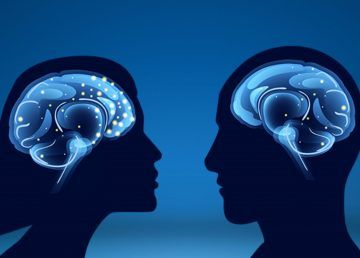 Two months ago I
  Many feminists, and indeed scholars more generally, frequently, and rightly, decry the writing of women out of history. Books such as Cathy Newman’s Bloody Brilliant Women, attempt to redress the historical omission and accord recognition to women who have made major contributions to the progress of humanity. However, while these developments are to be welcomed, it has to be acknowledged that women’s history has its darker side also: women have been complicit in the perpetration of historical wrongs. Sarah Helm’s If This Is A Woman documents the dehumanisation of female prisoners by female guards at the notorious all woman concentration camp at Ravensbrück during World War II; Laura Sjoberg and Caron E. Gentry’s Mothers, Monsters, Whores: Women’s Violence in Global Politics points out the potential of women to support and participate in acts of genocide. And, as Stephanie E. Jones-Rogers’s They Were Her Property: White Women as Slave Owners in the American South informs us, women were deeply involved in another historical wrong: slavery in the United States. Women were, as Jones-Rogers’ says, ‘co-conspirators’ in the institution of slavery in the US, and their involvement constitutes an aspect of the wider history of white supremacist organisations in the US.


 Now that the Emmys are over and we Americans have patted ourselves and a few Brits on the back for outstanding work, it’s time to consider one of the grandest achievements of the past year, a Netflix series from South Korea called Mr. Sunshine, which has, inexplicably, been ignored by media critics in the West.
 Oversized photography equipment. Tangled wires.
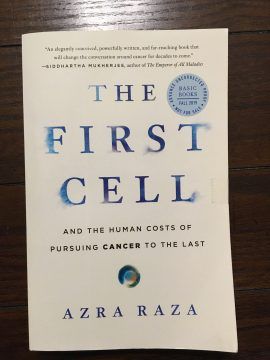 A few days ago I finished watching a new
  Sometimes, history moves faster than thought. Something like that is happening in the United States in these early days of fall. Though the season is taking longer than normal to turn, the political season has changed more quickly than anyone expected. The opinions of last week – such as the long article I had written for 3QD on the prospects of Donald Trump and the Democrats in 2020 – have suddenly become irrelevant, and I find myself writing this wholly surprising piece on the possible impeachment of Donald Trump. As these lines are being written, 223 Democrats and one Independent in the US House of Representatives – a clear majority –
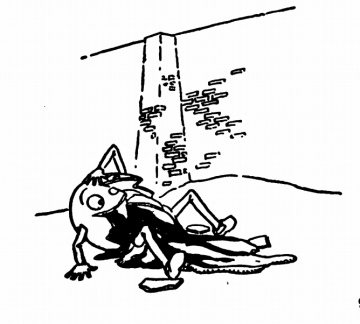
 I remember the first time I thought I might be able to get on board with Stoicism. I read a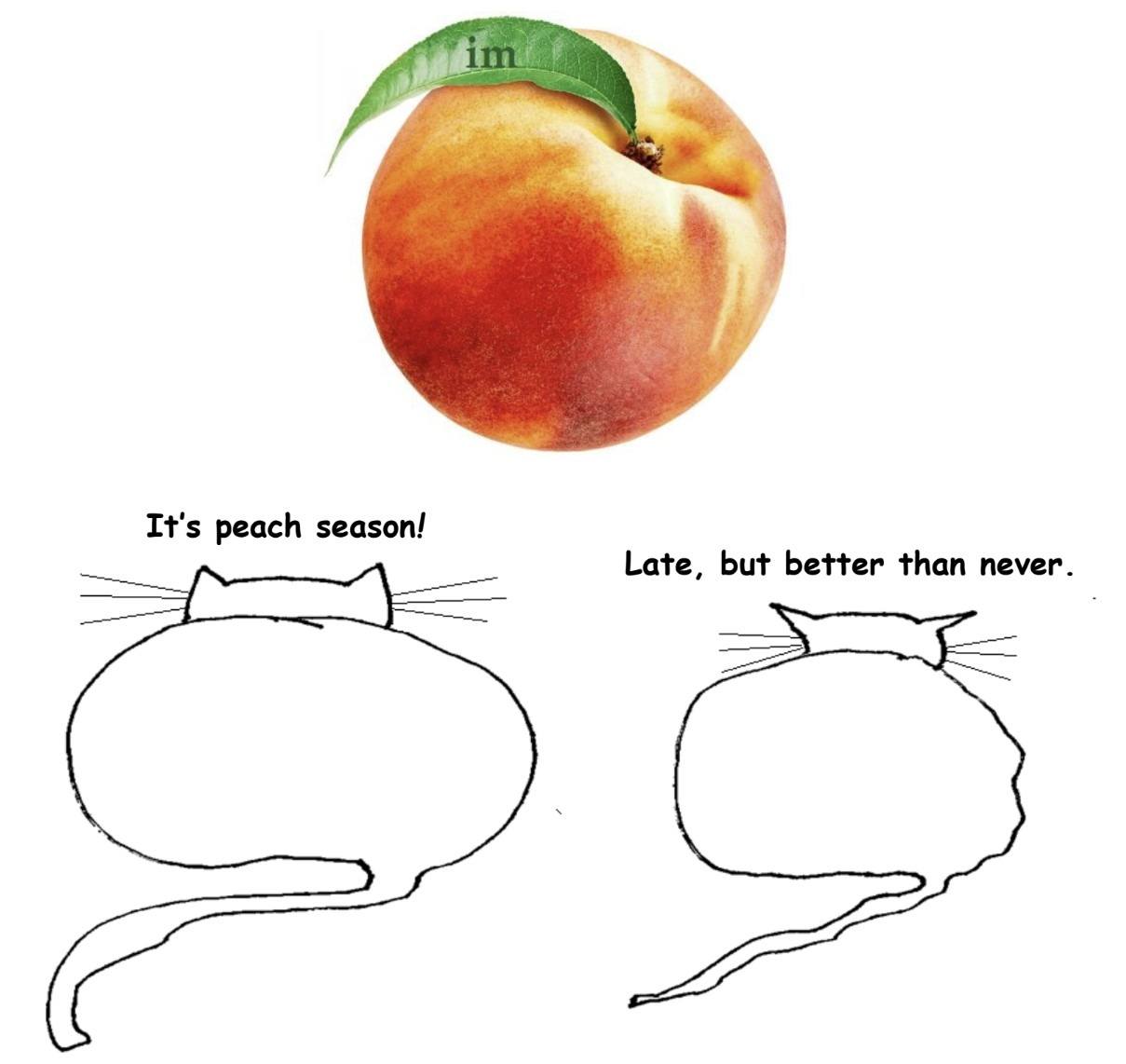

 Do you remember when the Irish playwright and critic George Bernard Shaw suggested significant changes to English spelling so that it would make more sense? Probably not, because it was more than 70 years ago. According to him