by Scott F. Aikin and Robert B. Talisse

In ordinary contexts, one is said to be civil when one maintains a soft tone and calm manner in the face of opposition. It is consequently seen as uncivil to be uncompromising, trenchant, and exercised in debate. Civility, it seems, is the requirement that disputants adopt a stance towards one another that minimizes the escalation of hostility. The thought is that disagreement tends to be most productive when enacted in cooler temperatures.
Civility in this ordinary sense of the term is something to be commended. When disputes become needlessly heated, they fly off the rails. And when disputes escalate in this way, the problems and questions over which people divide go unaddressed. Incivility leads either to standstills or to circumstances where one side simply imposes its will on the other. Neither makes for healthy relations.
However, when it comes to political disagreements among democratic citizens, ordinary civility presents a puzzle. Although democracy is commonly associated with its most familiar institutional mechanisms such as elections, voting, campaigns, representative offices, and so on, these draw their justification from the deeper moral ideal that democracy serves. This ideal is self-government among social equals. In other words, democracy is the moral proposal that a relatively stable and just political order is possible in the absence of rulers, lords, and bosses. To be sure, all politics involves the exercise of coercive power; however, in sharing political power as equals, democratic citizens are never simply subjected to force. In a democracy, political power is both constrained by constitutional provisions that protect individual rights and accountable to those over whom it is exercised.
At any rate, that’s the ideal of democracy. It goes without saying that real democracies fall far short. Hence the question arises of whether any existing political order is truly democratic. Read more »
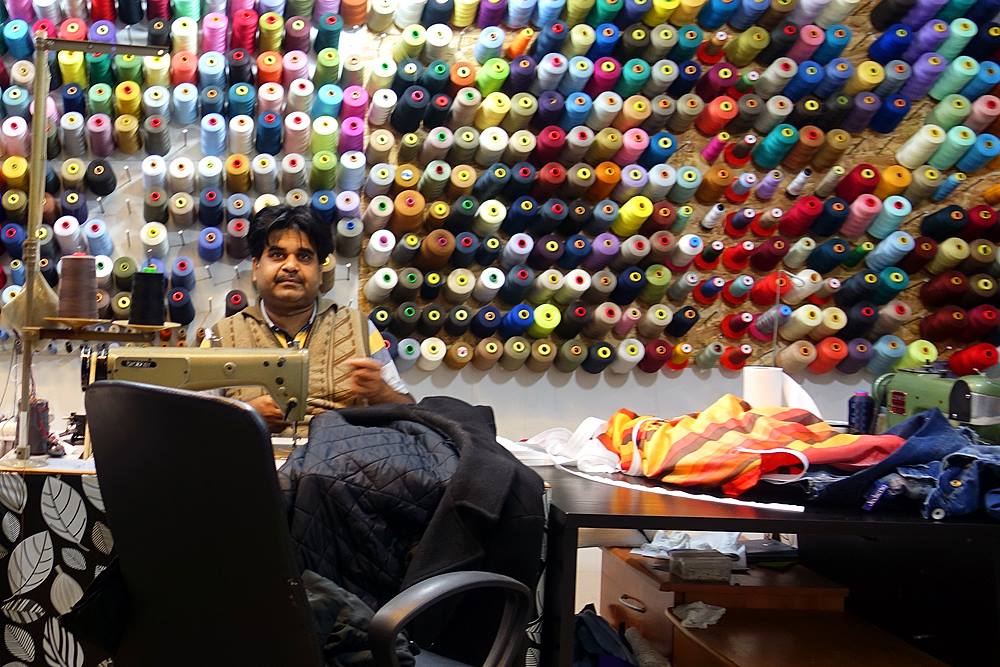
 Now that the Emmys are over and we Americans have patted ourselves and a few Brits on the back for outstanding work, it’s time to consider one of the grandest achievements of the past year, a Netflix series from South Korea called Mr. Sunshine, which has, inexplicably, been ignored by media critics in the West.
 Oversized photography equipment. Tangled wires.
 A few days ago I finished watching a new
  Sometimes, history moves faster than thought. Something like that is happening in the United States in these early days of fall. Though the season is taking longer than normal to turn, the political season has changed more quickly than anyone expected. The opinions of last week – such as the long article I had written for 3QD on the prospects of Donald Trump and the Democrats in 2020 – have suddenly become irrelevant, and I find myself writing this wholly surprising piece on the possible impeachment of Donald Trump. As these lines are being written, 223 Democrats and one Independent in the US House of Representatives – a clear majority –
 I remember the first time I thought I might be able to get on board with Stoicism. I read a

 Do you remember when the Irish playwright and critic George Bernard Shaw suggested significant changes to English spelling so that it would make more sense? Probably not, because it was more than 70 years ago. According to him
 Things are changing. Always, everywhere, immensely and minutely, the history of mankind unfolds as we rotate around a grand burning star (also, everything everywhere else changes; the history of mankind may be of the least consequence on a cosmic scale, but I digress). I digress too early; I include parentheticals too soon; I stall with flowery descriptions of the sun. Because – ugh – I’m going to talk about “how divided we are as a nation.” It’s such a tired phrase; I don’t want to write about it. It’s stale because it’s static, and anyway, the declaration is often accompanied by divisive rhetoric. Wherever one may fall on the political spectrum (and here I’m being gracious; how often do we now identify with a “side”), they likely have established opinions of those who lie elsewhere. It does seem increasingly difficult to imagine a sweeping reconciliation when we continue to pour our definitions in concrete and defend our positions by reason of consistency. Inflexibility begets inability to listen, and thus to understand, which is why we find our differences so baffling and allow our prejudices to influence our opinions. So, finally, here it is: my own personal take on how we can get people to stop saying how divided we are. Bear with me, because I’m going to try and sell contradictions as potential energy for unity.
 Firstly, of course we should rescue the art first. Secondly, of course we should not.